
 Pin Recipe
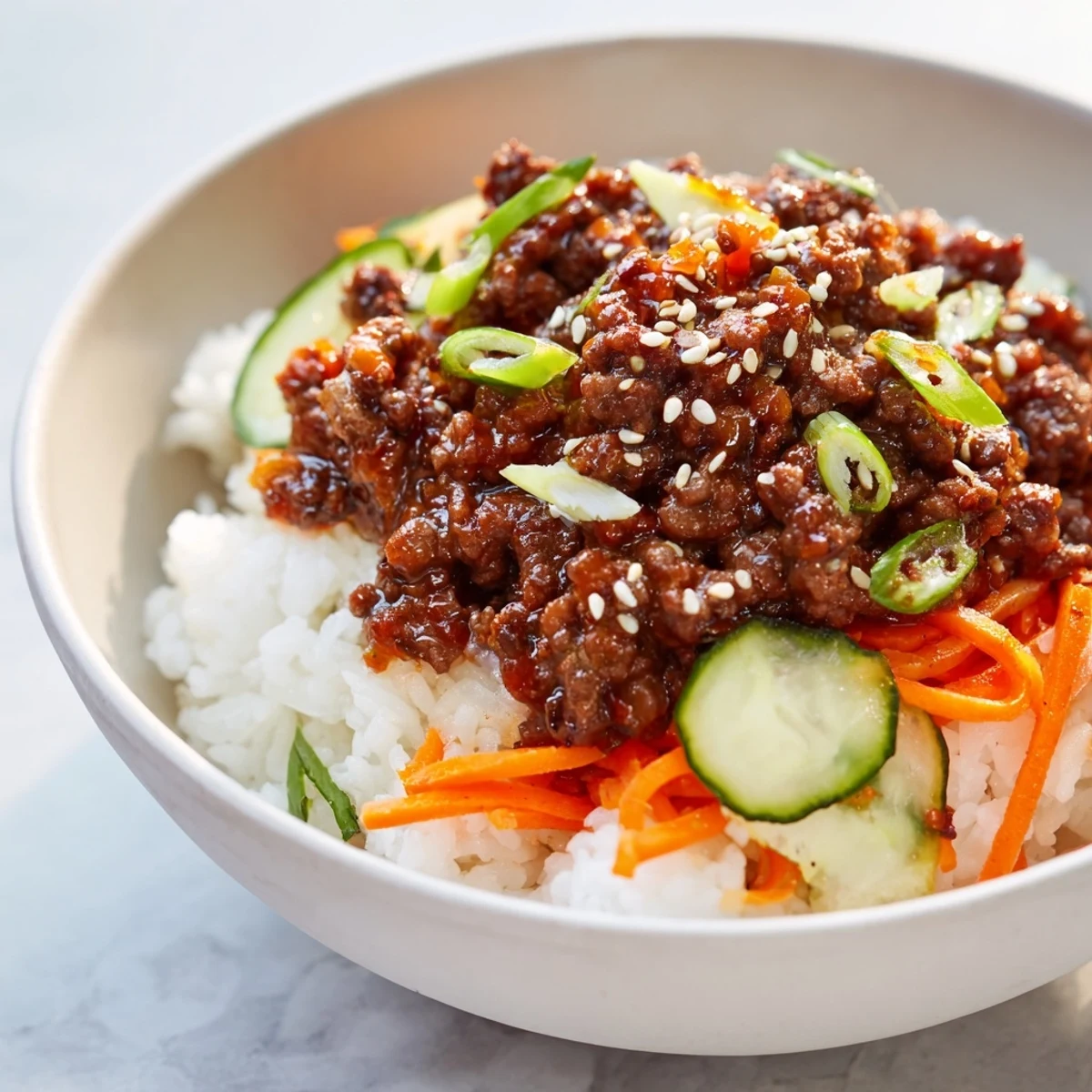
 These Korean-inspired beef bowls deliver bold flavors in under 30 minutes. Lean ground beef gets coated in a homemade sauce blending soy sauce, brown sugar, sesame oil, garlic, ginger, and gochujang for that signature sweet-spicy kick. The beef cooks quickly in a skillet while rice steams, then everything gets assembled into bowls with crisp julienned carrots, refreshing cucumber slices, scallions, and toasted sesame seeds. The combination of warm, savory beef with cool, fresh vegetables creates perfect texture contrast. Optional kimchi adds authentic tang, while cilantro brings brightness. This dish adapts easily—swap ground beef for turkey or tofu, adjust heat levels, or use tamari for gluten-free needs.
The first time I made Korean beef bowls was on a Tuesday evening when my fridge was practically empty but I needed something that felt like a real meal. I stumbled upon a jar of gochujang in the back of a cupboard and decided to see what happened when I let it shine with ground beef instead of the marinade I usually used. Now it is the dinner my friends actually request when they come over, and I love how something so simple can taste like it came from a restaurant kitchen.
Last summer my sister came to visit and I made these bowls for us on her first night in town. She took one bite, closed her eyes, and asked if I would teach her how to make it before she left. We ended up eating it three times that week, and now she sends me photos every time she makes it for her own family.
Ingredients
- 500 g (1 lb) lean ground beef: Ground beef cooks quickly and absorbs the bold sauce beautifully, but you can swap in ground turkey or chicken if you prefer something lighter
- 60 ml (1/4 cup) low-sodium soy sauce: Low-sodium soy sauce gives you control over the salt level while still providing that deep umami foundation, and tamari works perfectly if you need it gluten-free
- 2 tbsp light brown sugar: The molasses in brown sugar mellows the salty elements and helps the sauce cling to every crumble of beef
- 1 tbsp sesame oil: Toasted sesame oil is one of those ingredients that makes everything taste more authentic, so do not skip it or substitute with plain oil
- 4 garlic cloves, minced: Fresh garlic is non-negotiable here because jarred minced garlic lacks the sharp bite that cuts through the rich beef
- 1 tbsp freshly grated ginger: I have tried powdered ginger in a pinch and it is just not the same, so take the extra minute to grate it fresh
- 1 tbsp gochujang: This Korean chili paste brings a fermented depth that red pepper flakes alone cannot match, but you can use the flakes if that is what you have
- 2 tsp rice vinegar: A splash of vinegar cuts through the sweetness and brightens the entire dish
- 300 g (1 1/2 cups) jasmine or short-grain white rice: Jasmine rice has a natural floral aroma that pairs beautifully with Korean flavors, but short-grain rice gives you that sticky texture that helps everything cling together
- 2 medium carrots, julienned: The crunch of raw carrots against the tender beef creates such a satisfying texture contrast
- 1 small cucumber, thinly sliced: Cucumber adds a cool, refreshing element that balances the heat
- 4 scallions, thinly sliced: Scallions provide a mild onion bite and a pop of green color that makes the bowls look as good as they taste
- 2 tbsp toasted sesame seeds: Toasting your own sesame seeds in a dry pan for two minutes makes a huge difference in flavor
Instructions
- Get the rice going first:
- Rinse the rice under cold water until the water runs clear, which removes excess starch and keeps each grain separate. Add the rice and water to a saucepan, bring it to a boil, then reduce to a simmer, cover, and cook for 12 to 15 minutes until tender. Fluff gently with a fork before serving.
- Whisk together the sauce:
- In a small bowl, combine the soy sauce, brown sugar, sesame oil, garlic, ginger, gochujang, and rice vinegar. Whisk until the sugar has completely dissolved and the mixture is smooth.
- Brown the beef:
- Heat a large skillet over medium-high heat and add the ground beef. Cook for about 5 minutes, breaking it up with a spatula as it browns, then drain any excess fat if there is a lot pooling in the pan.
- Add the sauce and coat:
- Pour the sauce over the browned beef and cook for another 2 to 3 minutes, stirring constantly. The beef should be evenly coated and the sauce will thicken slightly as it bubbles.
- Assemble the bowls:
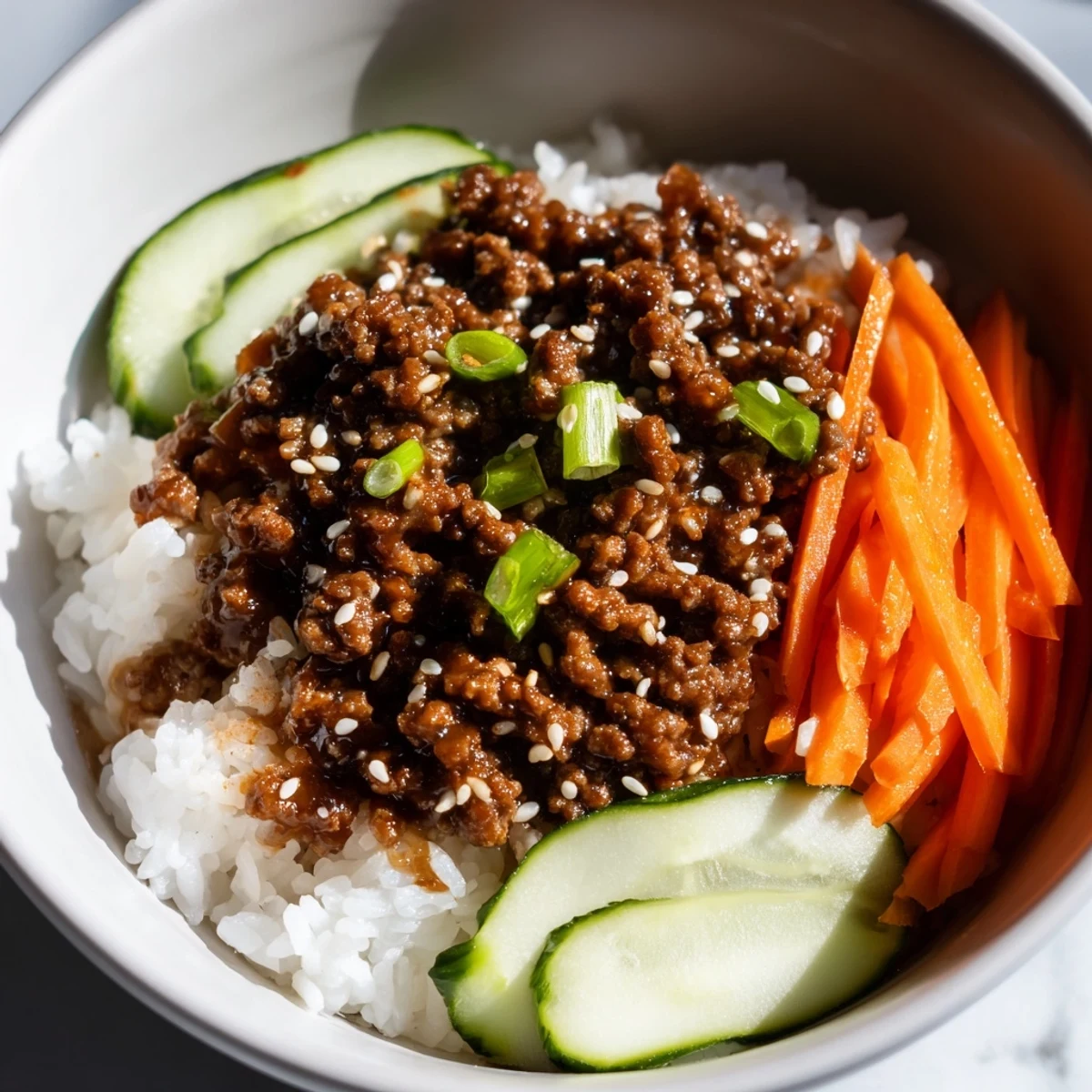
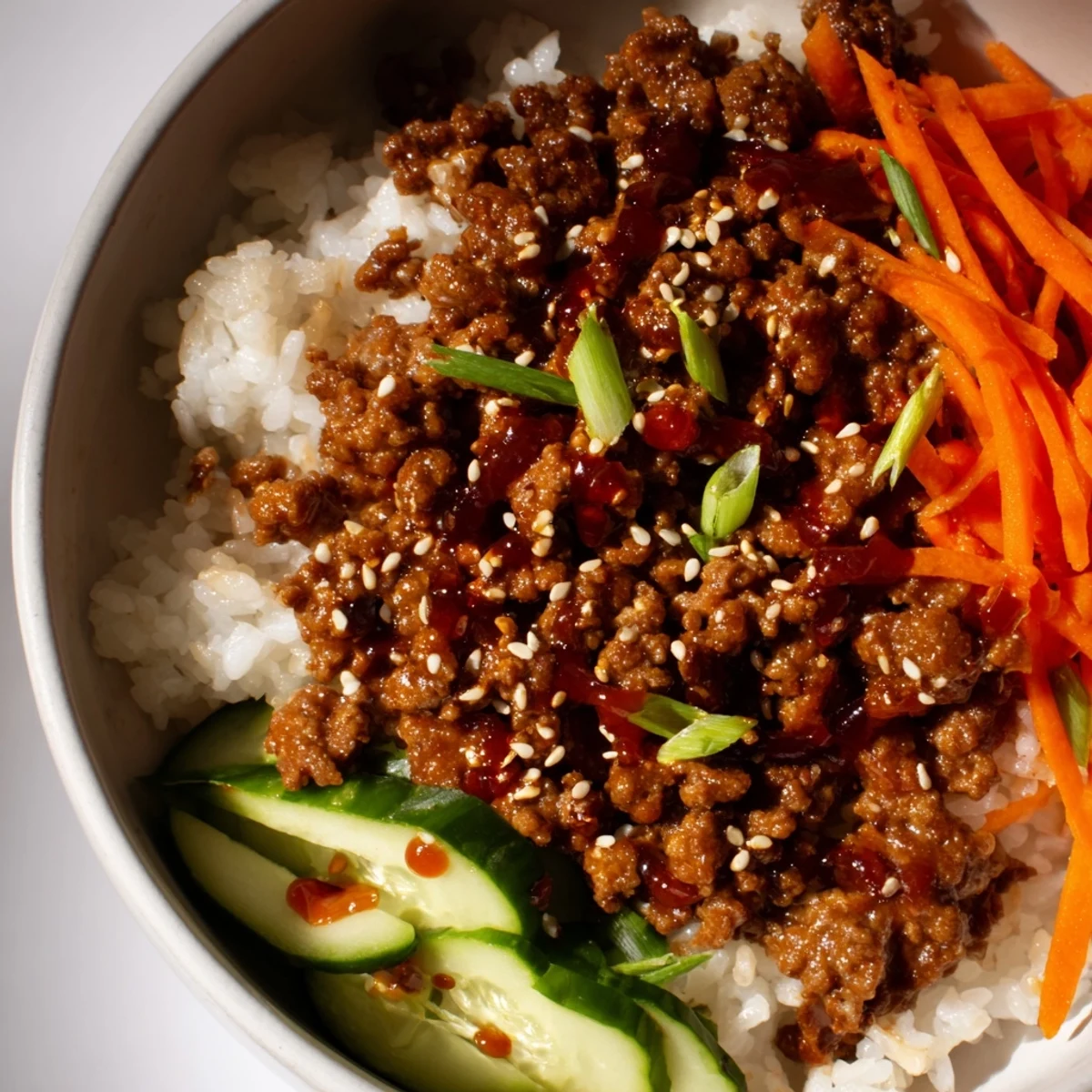
- Divide the steaming rice among four bowls and top each with a generous portion of the saucy beef. Arrange the carrots, cucumber, scallions, and sesame seeds on top, adding kimchi or cilantro if you like.
- Serve while hot:
- These bowls are best enjoyed immediately while the beef is still hot and the vegetables are crisp.
 Pin Recipe
 My daughter declared this her birthday dinner last year, which surprised me because she usually requests pasta. There is something about assembling your own bowl and mixing everything together that makes the meal feel interactive and special.
Making It Your Own
Once you have the basic sauce down, you can adjust the gochujang depending on how much heat you enjoy. I usually start with one tablespoon and add more if I am feeling brave that night.
Perfect Rice Every Time
Rinsing the rice until the water runs clear is the step most people skip, but it makes such a difference in texture. I learned this from a Korean friend who laughed at my cloudy rinsing water and showed me how to do it properly.
Topping Ideas
Sometimes I add a fried egg on top because the runny yolk creates an extra rich sauce when mixed into the rice and beef.
- Sautéed spinach or bok choy adds a nice wilted green element
- Pickled radishes bring a tangy crunch that cuts through the richness
- A drizzle of sriracha mayo over the top takes it to the next level
 Pin Recipe
 I hope these Korean beef bowls find their way into your regular weeknight rotation. There is something deeply satisfying about a meal that comes together so quickly but tastes so thoughtful.
Recipe FAQs
- → What makes the sauce authentic?
-
The sauce combines soy sauce, brown sugar, sesame oil, garlic, ginger, gochujang Korean chili paste, and rice vinegar. This blend creates the characteristic sweet, savory, and slightly spicy flavor profile of Korean cuisine.
- → Can I make this gluten-free?
-
Yes, simply substitute tamari for the soy sauce and ensure your gochujang is certified gluten-free. Most other ingredients naturally contain no gluten.
- → What protein alternatives work well?
-
Ground turkey or chicken cook similarly and absorb the sauce beautifully. For a vegetarian version, use crumbled firm tofu—press and drain it first, then brown before adding the sauce.
- → How do I adjust the spice level?
-
Reduce or omit the gochujang for milder flavor. For more heat, add extra gochujang, red pepper flakes, or a drizzle of sriracha when serving. Taste and adjust as the beef simmers.
- → Can I prepare components ahead?
-
The sauce can be mixed and refrigerated up to 3 days in advance. Vegetables may be sliced a day early and stored in water to maintain crispness. Cook beef and rice fresh for best texture.
- → What other toppings can I add?
-
Fresh options include shredded cabbage, spinach, bean sprouts, or pickled radishes. Fried eggs, sliced avocado, or nori strips also complement the flavors. Kimchi adds traditional tang.
