
 Pin Recipe
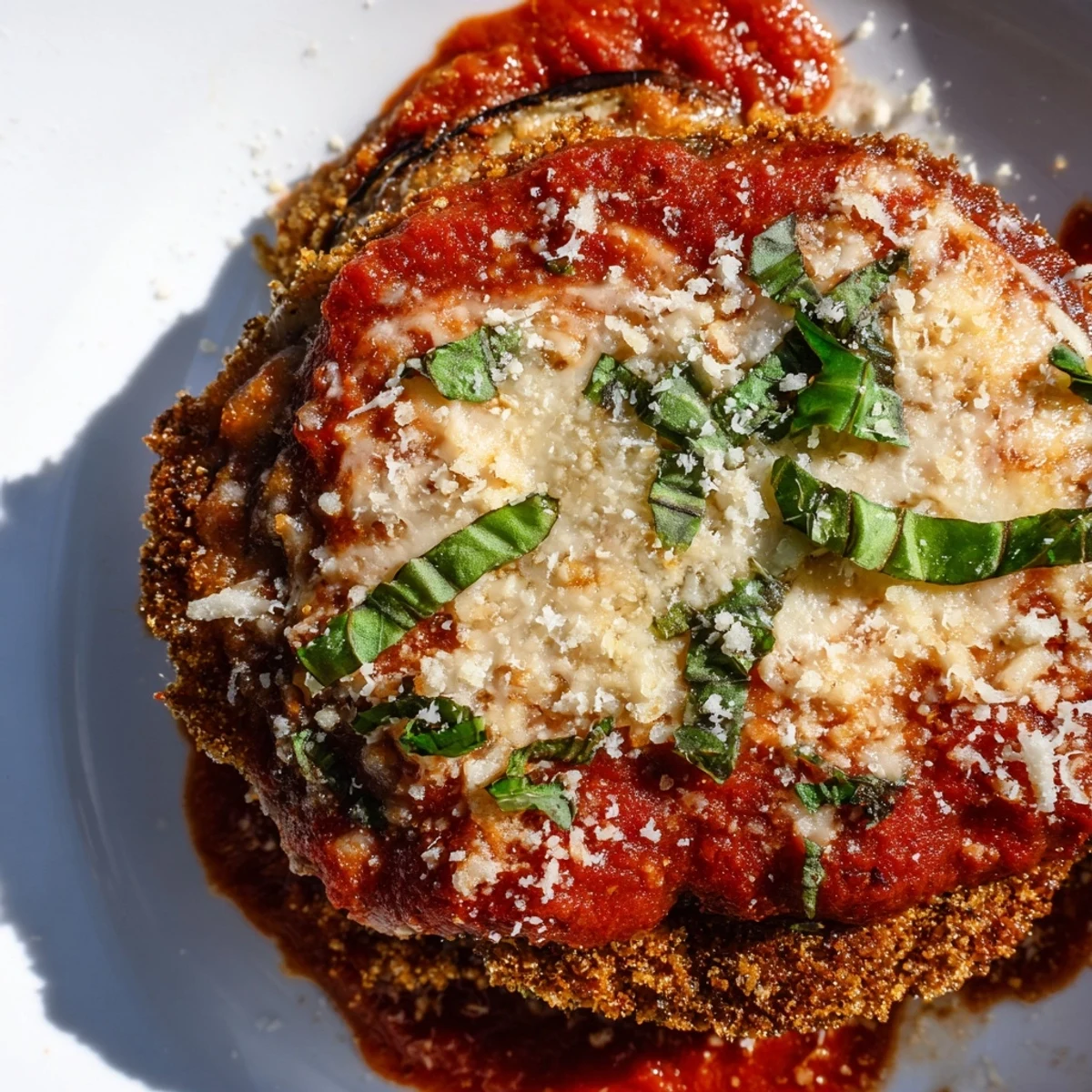
 This comforting dish features sliced eggplant, salted and baked until crisp, then layered with rich marinara sauce and a blend of melted mozzarella and Parmesan cheeses. Seasoned breadcrumbs add a crunchy coating, while fresh basil adds a fragrant finish. Baked to a golden, bubbly perfection, this Italian-American classic offers a satisfying combination of textures and flavors perfect for a vegetarian main course.
There's something magical about the way eggplant transforms when you bake it instead of frying—crispy on the outside, tender within, without needing a pot of oil sputtering on the stove. I discovered this years ago when my neighbor mentioned she'd stopped making eggplant Parm the traditional way, and I was skeptical until I tasted hers. Now it's my go-to on nights when I want that comforting Italian-American flavor but don't want the kitchen smelling like a deep fryer for three days afterward.
I made this for my sister's surprise dinner last fall, and she kept asking why restaurant versions never tasted this fresh and bright. The secret was letting those eggplant slices sit salted for thirty minutes beforehand—something I'd read about in a cookbook but never actually trusted until I saw how much liquid beaded up on their surface. That small patience paid off in every bite.
Ingredients
- Large eggplants (2), sliced into 1/2-inch rounds: The thickness matters more than you'd think—thinner slices turn mushy, thicker ones stay tough in the center, but that sweet spot at half an inch gives you a perfect texture throughout.
- Salt (1 tablespoon for sweating): This step isn't just tradition; it genuinely removes bitter water from the eggplant and prevents your final dish from being watery and sad.
- All-purpose flour (1 cup): Your first layer of the breading trilogy, helping everything stick together and creating that initial seal.
- Eggs (3 large) and milk (2 tablespoons): The binder that makes your breadcrumb coat actually adhere instead of falling off the moment you touch the slice.
- Italian-style breadcrumbs (2 cups): These already have herbs built in, which saves time and ensures flavor distribution without weird pockets of seasoning.
- Grated Parmesan cheese (1/2 cup for breading, 1/2 cup for assembly): The cheese in the coating adds nutty depth that store-bought breadcrumbs alone can't deliver.
- Dried oregano (1 teaspoon) and garlic powder (1 teaspoon): These two do the heavy lifting in the coating—don't skimp on either one.
- Black pepper (1/2 teaspoon): A small amount here becomes surprisingly noticeable in every bite.
- Marinara sauce (3 cups): Whether homemade or bottled, this is your flavor backbone—if you're using store-bought, grab a quality brand or it'll taste thin and one-dimensional.
- Shredded mozzarella cheese (2 cups): Whole milk mozzarella melts better and browns more beautifully than part-skim, though either works.
- Fresh basil leaves (2 tablespoons, chopped): Scatter this over the finished dish just before serving to add a bright, peppery note that makes people pause and ask what you did.
Instructions
- Sweat the eggplant:
- Slice your eggplants into half-inch rounds and lay them out on a baking sheet like you're arranging them for a portrait. Sprinkle salt on both sides—this draws out moisture and bitterness—then leave them alone for thirty minutes. You'll see beads of liquid form; pat them dry with paper towels and you're already halfway to success.
- Prepare your oven and workspace:
- Heat your oven to 400°F and line two baking sheets with parchment paper lightly greased with oil. Set up three shallow bowls: one with flour, one with beaten eggs mixed with milk, and one with breadcrumbs tossed together with Parmesan, oregano, garlic powder, and black pepper. Having everything ready means you'll move through the breading process smoothly.
- Bread each slice:
- Take an eggplant slice, dredge it in flour (tap off excess), then dip it in the egg mixture so it's thoroughly coated, then press it into the breadcrumb mixture, turning to coat both sides. Arrange each breaded slice on your prepared baking sheets without overcrowding.
- Bake the eggplant until crispy:
- Pop the sheets into your 400°F oven and bake for twenty minutes, then flip each slice and continue baking for another ten minutes. The eggplant should turn golden and feel crispy when you touch it—this step is what makes the whole dish sing.
- Build your layers:
- Lower the oven to 375°F and spread one cup of marinara sauce across the bottom of a 9x13-inch baking dish. Layer half your baked eggplant slices over the sauce, then top with another cup of marinara, one cup of mozzarella, and a generous sprinkle of Parmesan. Repeat those layers with the remaining eggplant, sauce, mozzarella, and Parmesan, finishing with cheese on top.
- Final bake:
- Cover the dish with foil and bake for twenty minutes to let everything warm through and meld. Remove the foil and bake for another ten minutes until the cheese is melted, bubbling at the edges, and just beginning to turn golden brown.
- Rest and serve:
- Let the dish sit for ten minutes—this matters because it gives the layers time to set so you can cut neat, beautiful portions. Scatter fresh basil over the top just before serving, and watch people's faces light up when they realize how good something baked instead of fried can taste.
 Pin Recipe
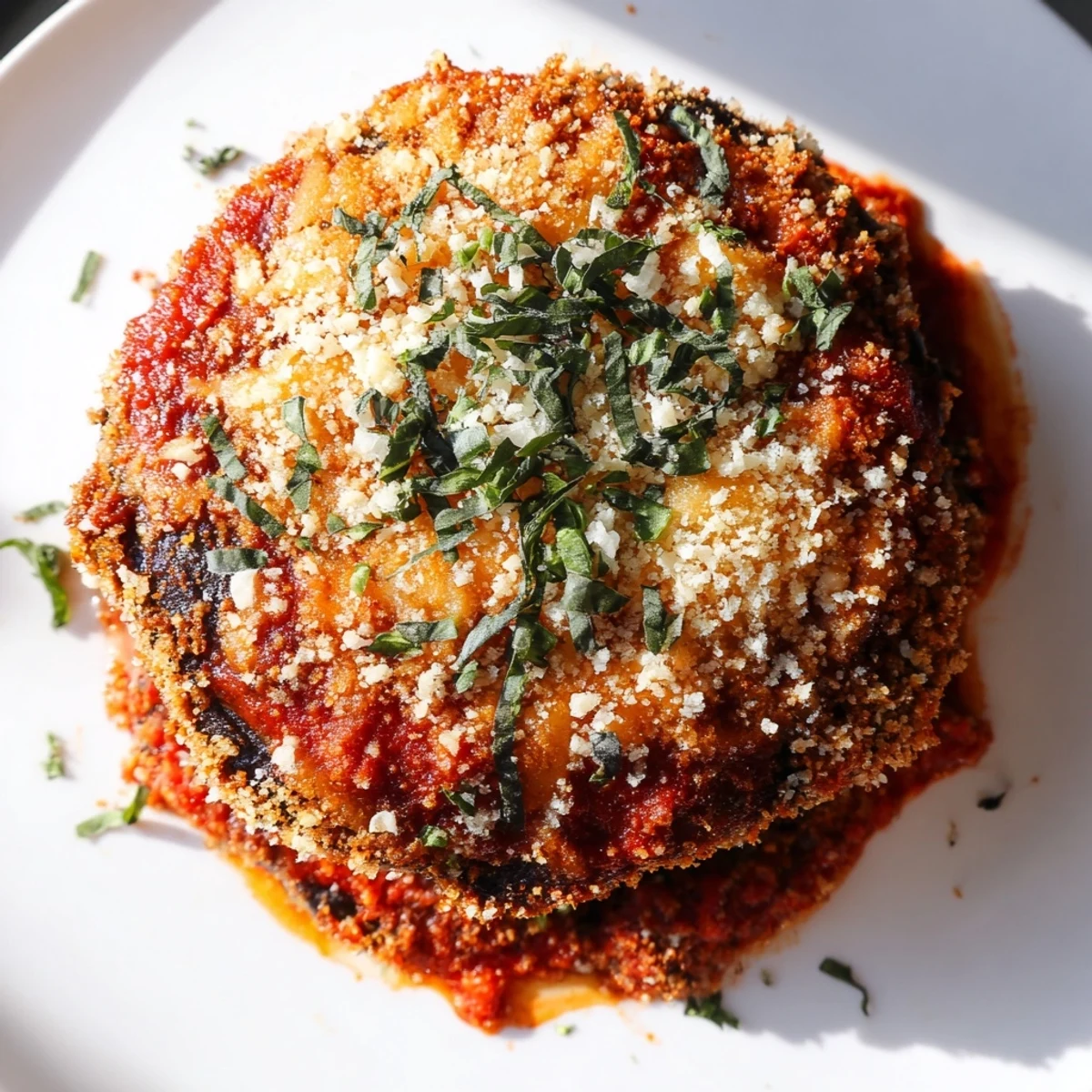
 My mom used to make eggplant Parm only for special occasions, treating it like a restaurant-caliber dish that belonged on tablecloths and good china. The first time I realized I could make it on an ordinary Tuesday night was when the whole thing clicked for me—that this wasn't a fancy dish pretending to be approachable, but genuinely good comfort food that happened to look impressive.
Why Baking Changes Everything
The difference between fried and baked eggplant Parm isn't just about calories or kitchen smoke. When you bake the eggplant first, it loses its water and becomes almost meaty in texture, then when you layer it with sauce and cheese, it absorbs those flavors instead of sitting on top of them like fried versions sometimes do. You also get to control the browning precisely—there's no guesswork about oil temperature or whether a slice is cooking too fast on one side. The result feels lighter and more refined, but honestly tastes just as satisfying.
Building Better Layers
The secret to a balanced eggplant Parm is thinking about each layer as its own complete component before assembly. Your baked eggplant should taste good on its own, seasoned and crispy; your sauce should be flavorful enough that you'd eat it with pasta; your cheese should be the finishing statement, not the dominant flavor. When you stack them with intention instead of just dumping everything in a dish, the final bake brings them together into something harmonious where you can taste each element.
Make It Your Own
This recipe is a foundation, not a boundary—I've made it with a layer of ricotta mixed with spinach, with roasted red peppers tucked between slices, even with a drizzle of balsamic vinegar across the top. The core technique stays the same, but once you understand how eggplant behaves and how the components work together, you can experiment with confidence. Fresh basil at the end bridges everything, but try mixing in a little fresh parsley too, or even a torn piece of buffalo mozzarella if you're feeling fancy.
- Slice your eggplants the same thickness so they cook evenly—a mandoline makes this easier but a sharp knife works fine if you're careful.
- Don't skip prepping your baking sheets with parchment and oil or your crust won't crisp up on the bottom.
- Taste your marinara sauce before you assemble—if it needs more salt or a pinch of sugar, fix it now rather than hoping the cheese will balance it out later.
 Pin Recipe
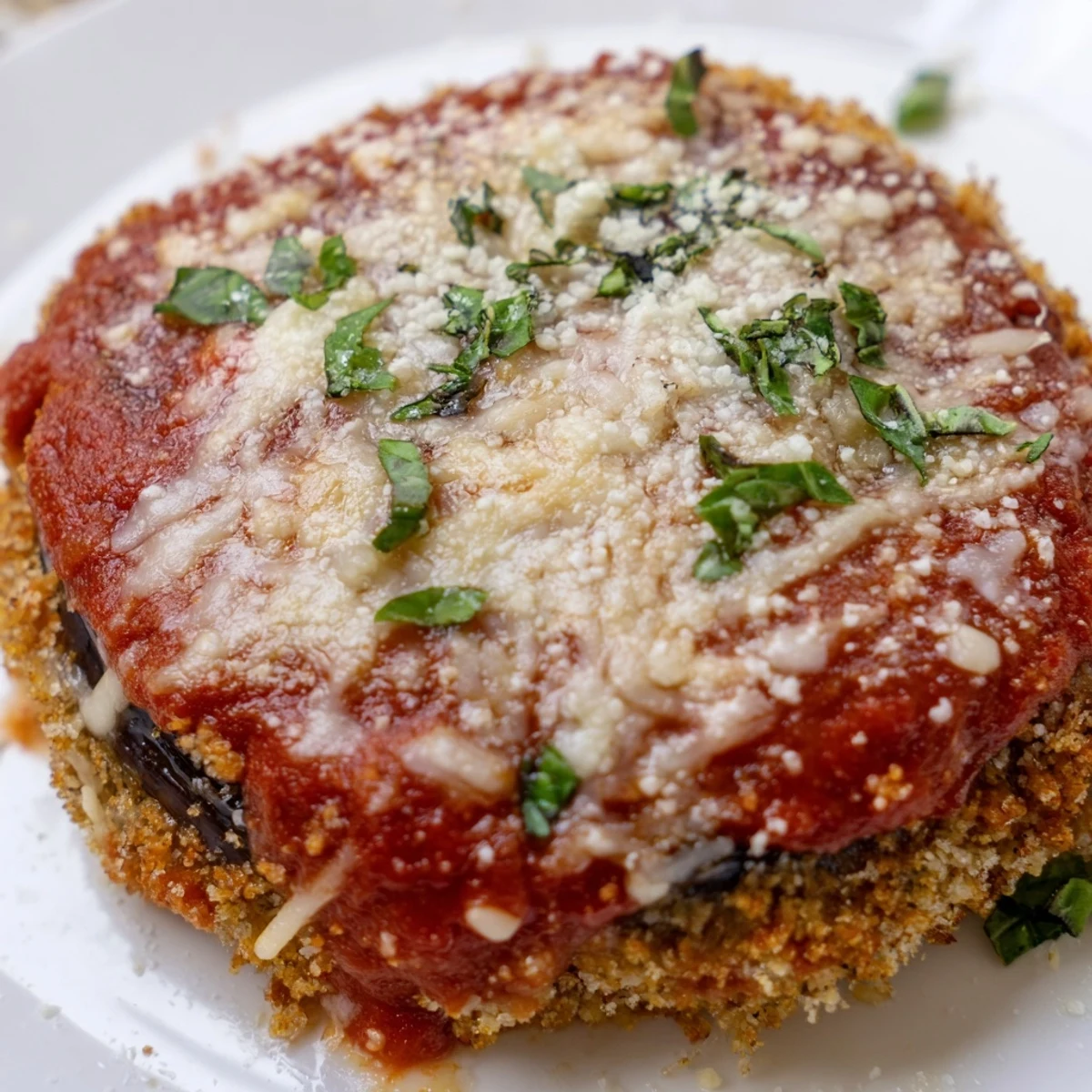
 Every time I pull this out of the oven with its golden, bubbly cheese and rich tomato aroma, I remember why comfort food became a category in the first place. It's about more than feeding yourself—it's about creating a moment where everything tastes right and the kitchen feels like home.
Recipe FAQs
- → How do I prevent eggplant from becoming soggy?
-
Salting sliced eggplant and letting it sit draws out excess moisture. Patting dry before breading helps achieve a crisp texture during baking.
- → Can I use store-bought marinara sauce?
-
Yes, store-bought marinara works well; just check labels for allergens and choose one with robust flavor to complement the dish.
- → What baking temperature ensures crispy coating?
-
Baking eggplant slices at 400°F initially crisps the breading, then lowering to 375°F during assembly melts the cheeses without sogginess.
- → Are there lighter alternatives for the cheese?
-
Using part-skim mozzarella reduces fat content while still providing meltiness and flavor.
- → What herbs enhance the overall flavor?
-
Fresh basil sprinkled before serving adds a bright, fresh aroma that complements the baked eggplant and tomato sauce.
