
 Pin Recipe
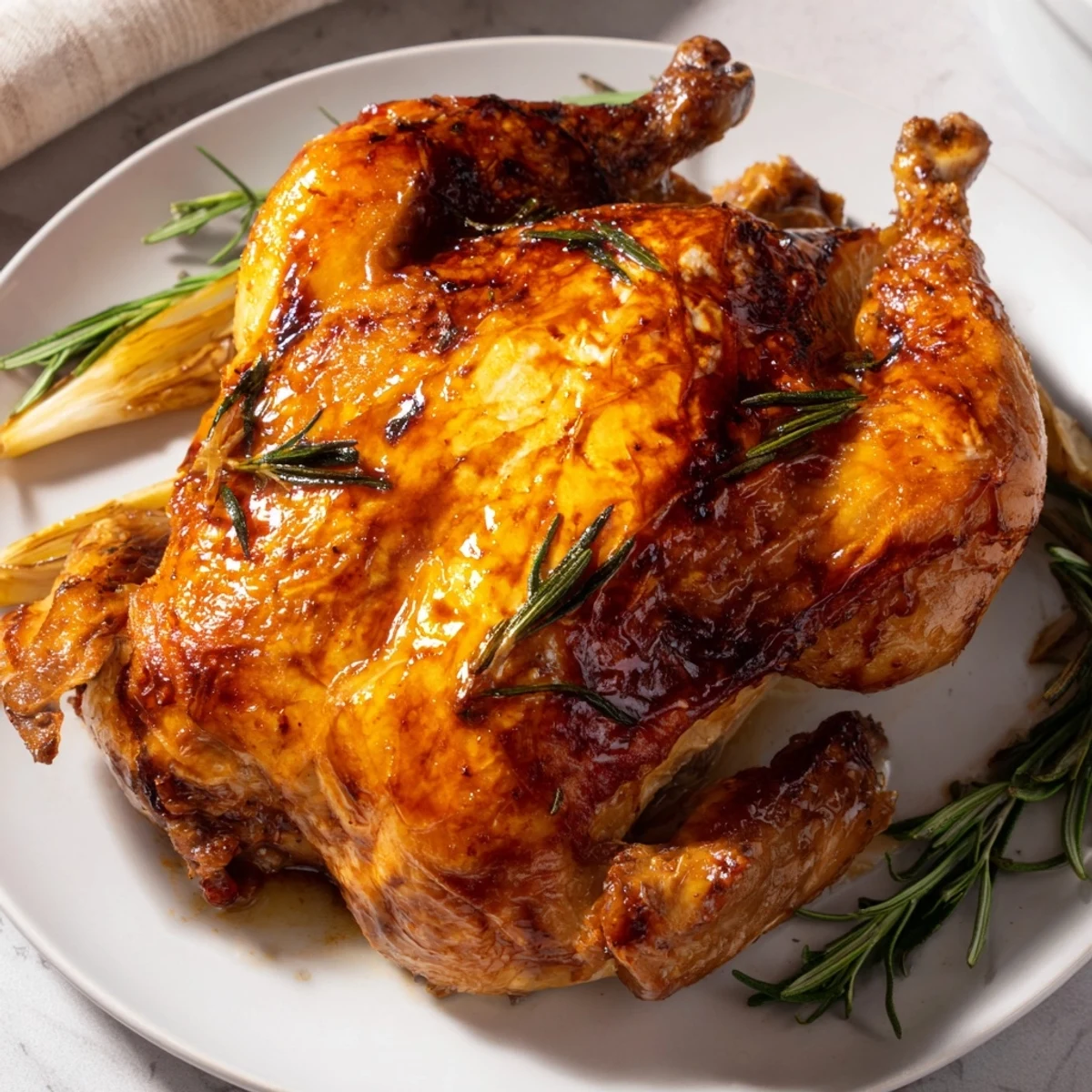
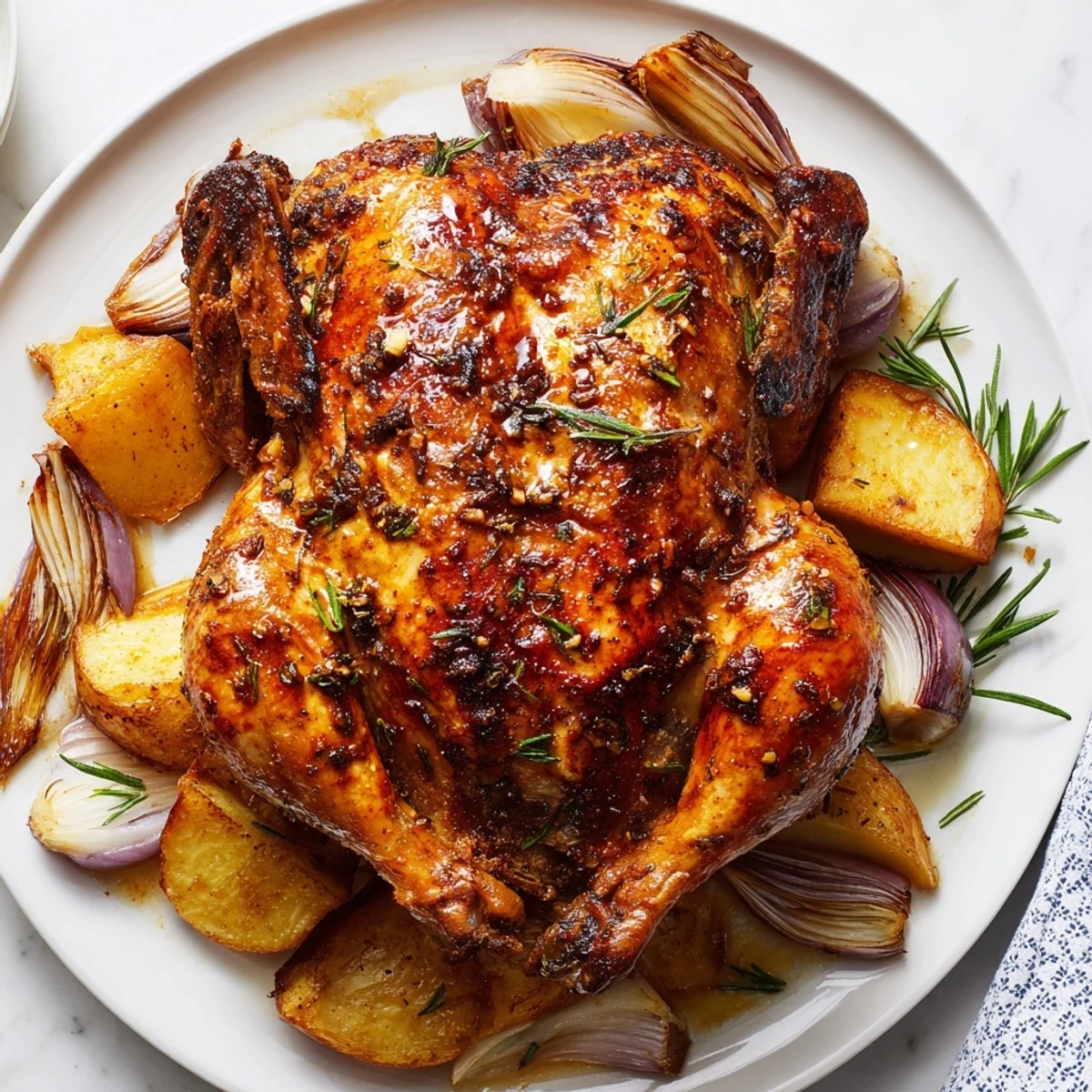
 This dish features a whole chicken seasoned with olive oil, sea salt, pepper, and optional paprika. Aromatic herbs like thyme and rosemary, along with lemon, garlic, and vegetables such as onion, carrots, and celery, create a fragrant and flavorful meal. The chicken is roasted at high heat initially for crispy skin, then lowered to cook through, ensuring juicy meat. Resting before carving locks in moisture. Ideal for a comforting, gluten-free main course.
I still remember the first time I roasted a whole chicken at home—I was nervous, honestly. My grandmother had made it look so effortless, but standing in my kitchen with this golden bird in front of me, I worried I'd ruin it. Twenty minutes in, when that incredible aroma started filling every corner of my apartment, I knew I'd found something special. That chicken taught me that some of the most satisfying meals come from the simplest techniques, and now, years later, a roasted chicken is my go-to when I want to feel like I'm taking care of the people I love.
I'll never forget cooking this for my friend Sarah during a difficult season in her life. She arrived looking worn down, and I'd decided without telling her that she needed real food made with care. When she took that first bite and tasted the herbs, the lemon brightness inside, the perfectly cooked thigh meat—she actually got quiet for a moment. Then she said, "This tastes like someone loves me." That's what this recipe does. It transforms simple ingredients into an act of devotion.
Ingredients
- 1 whole chicken (about 1.5 kg / 3.3 lbs), giblets removed: This is your canvas. Look for chicken that feels heavy for its size and has skin without bruises. A larger bird stays juicier than smaller ones.
- 1 large onion, quartered: Onions soften and release their sweetness into the pan. They're not just flavor—they're your insurance against dry vegetables.
- 2 carrots, cut into large chunks: These catch all the chicken drippings and become these jewel-like caramelized pieces. Cut them big so they don't dry out.
- 2 celery stalks, cut into large chunks: Celery brings a subtle earthiness that rounds out the flavors. It's the quiet hero in this dish.
- 1 lemon, halved: The lemon inside the cavity steams the meat from within, keeping it impossibly juicy while adding brightness you taste in every bite.
- 1 bulb garlic, halved horizontally: When garlic roasts whole like this, it becomes creamy and sweet, nothing like raw garlic. This is the secret ingredient people ask about.
- 3 tbsp olive oil: Good olive oil makes the difference between okay skin and magnificent, crackling skin. Don't skimp here.
- 2 tsp sea salt: Salt seasons the meat and helps create that crispy exterior everyone fights over.
- 1 tsp freshly ground black pepper: Fresh pepper has oils that add depth. Pre-ground just tastes dusty.
- 1 tsp paprika (optional): This gives the skin a deeper color and a whisper of smokiness if you use it.
- 4 sprigs fresh thyme: Thyme has this peppery, almost minty quality. It's worth buying fresh.
- 4 sprigs fresh rosemary: Rosemary is bold and unafraid. It fills your kitchen with that unmistakable herb-roasted-chicken smell.
Instructions
- Get your oven ready and prep the chicken:
- Start with your oven at 220°C (425°F). While it heats, pull your chicken out and let it sit for about ten minutes—it cooks more evenly at room temperature. Pat it completely dry with paper towels, taking your time. Damp skin steams instead of crisps, so this matters. I use several towels and get into all the crevices.
- Season the outside generously:
- Pour your olive oil into a small bowl. Add the salt, pepper, and paprika if using it. Rub this mixture all over the chicken, under the skin if you're feeling brave, all over the wings and legs. Don't be shy—this is where the flavor happens on the outside.
- Stuff the cavity with aromatics:
- This is my favorite part because it feels like tucking your chicken into bed. Put the quartered onion, both lemon halves, the garlic bulb, and half of your thyme and rosemary sprigs inside the cavity. The heat will release all these flavors into the bird as it cooks.
- Arrange your roasting pan:
- Scatter the remaining onion, carrots, and celery in your roasting pan. These aren't just sides—they're vessels catching all those golden pan juices. Place your seasoned chicken on top, breast side up, and tuck the remaining herbs around it like a nest.
- Tie if you'd like (optional but lovely):
- If you have kitchen twine, tie the legs together. This isn't essential, but it helps the chicken cook more evenly and it looks beautiful on the table.
- Start the roast with a blast of heat:
- Put it in that hot 220°C (425°F) oven for exactly 20 minutes. You'll hear it sizzle—that's the skin beginning its transformation. Your kitchen will smell incredible.
- Lower the heat and continue roasting:
- After 20 minutes, reduce the oven to 190°C (375°F) and continue roasting for about an hour. The high initial heat crackles the skin, then the lower temperature cooks the meat through without drying it out. At the 45-minute mark, I like to pour some pan juices over the vegetables to keep them from drying.
- Check for doneness:
- The chicken is done when the juices run clear (not pink) and a meat thermometer in the thickest part of the thigh reads 75°C (165°F). The thigh is the last place to cook, so that's what you check.
- Rest before carving:
- This is crucial and often skipped. Remove the chicken to a cutting board and let it rest for 10–15 minutes. This allows the juices to redistribute. If you cut into it immediately, all those juices run onto the board instead of staying in the meat.
- Serve with gratitude:
- Carve the chicken, arrange it with the roasted vegetables, and drizzle everything with those pan juices. This is food that needs nothing more.
 Pin Recipe
 I made this recipe for my daughter's fifth birthday dinner, and she decided that this was "the best chicken in the whole world." Now, five years later, it's the one dish she requests on her birthday without fail. That's when I realized this recipe isn't just about feeding people—it's about creating traditions, about showing up, about saying "you matter to me" without words.
The Magic of Simplicity
There's something profound about a recipe this straightforward. In our world of complicated cooking techniques and exotic ingredients, a roasted chicken reminds us that excellence doesn't require complexity. The ingredients are honest. The method is straightforward. What makes it special is attention—to drying the skin, to seasoning generously, to respecting the temperature, to letting it rest. This is cooking that teaches you to listen to your food and trust the process. I've found that the recipes that seem simplest often teach you the most.
Wine Pairing and Serving Suggestions
A roasted chicken is beautifully humble and welcomes good company. I love serving this with a dry white wine like Chardonnay or Sauvignon Blanc—the acidity cuts through the richness of the skin and the pan juices. For non-drinkers, a sparkling cider is lovely. On the plate, I arrange the carved chicken with the roasted vegetables, drizzle everything with pan juices, and maybe add a simple green salad on the side for brightness. This is a meal that doesn't need much else, which is exactly why it feels so complete.
Why This Works Every Time
I've made this chicken in a hundred different kitchens—some with perfect ovens, some with temperamental ones. In tiny apartments and in farmhouses, for celebrations and quiet dinners. What amazes me is how consistent it is. The technique is forgiving without being loose. The flavors are bold but not overwhelming. It's the kind of recipe that becomes your signature dish, not because it's fancy, but because it's unforgettable.
- If your oven runs hot, start checking the chicken a few minutes earlier than the time suggests
- Leftover chicken shreds beautifully for salads, sandwiches, or soup the next day
- The pan juices are liquid gold—save every drop and use them for gravy or to freeze for future cooking
 Pin Recipe
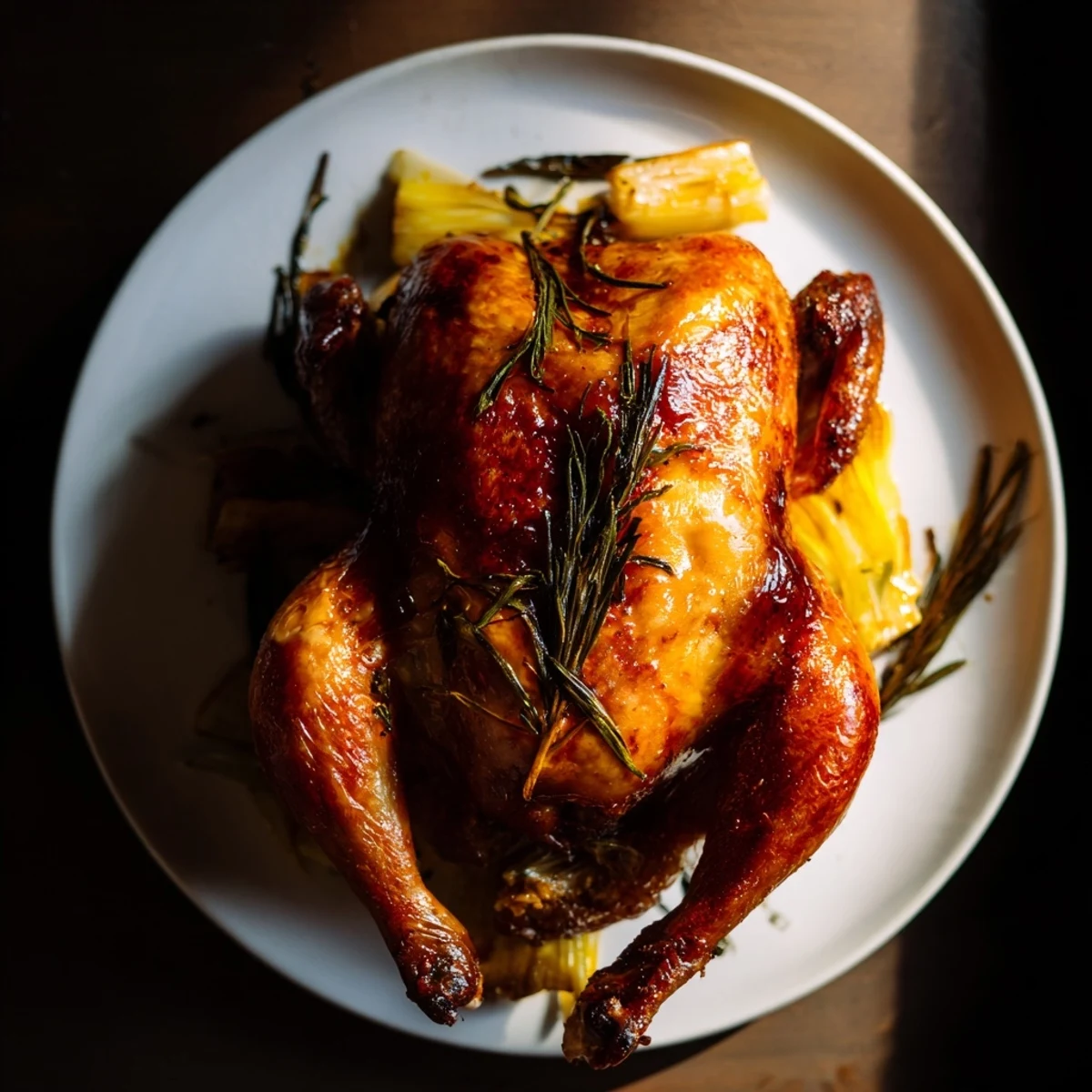
 A roasted chicken is a gift you give yourself and everyone at your table. It's comfort, care, and confidence all on one plate.
Recipe FAQs
- → How do I ensure the skin is crispy?
-
Pat the chicken dry and rub olive oil over the skin. For extra crispiness, refrigerate uncovered before roasting to dry the skin further.
- → What internal temperature indicates doneness?
-
Insert a meat thermometer into the thickest part of the thigh; it should read 75°C (165°F) when fully cooked.
- → Can I use different herbs?
-
Yes, you can substitute thyme and rosemary with sage, parsley, or oregano according to taste preferences.
- → Is it necessary to tie the chicken legs?
-
Tying the legs with kitchen twine is optional but helps ensure even cooking and neater presentation.
- → What side dishes complement this dish?
-
Roasted vegetables, pan juices, or a dry white wine like Chardonnay or Sauvignon Blanc pair well with this dish.
