
 Pin Recipe
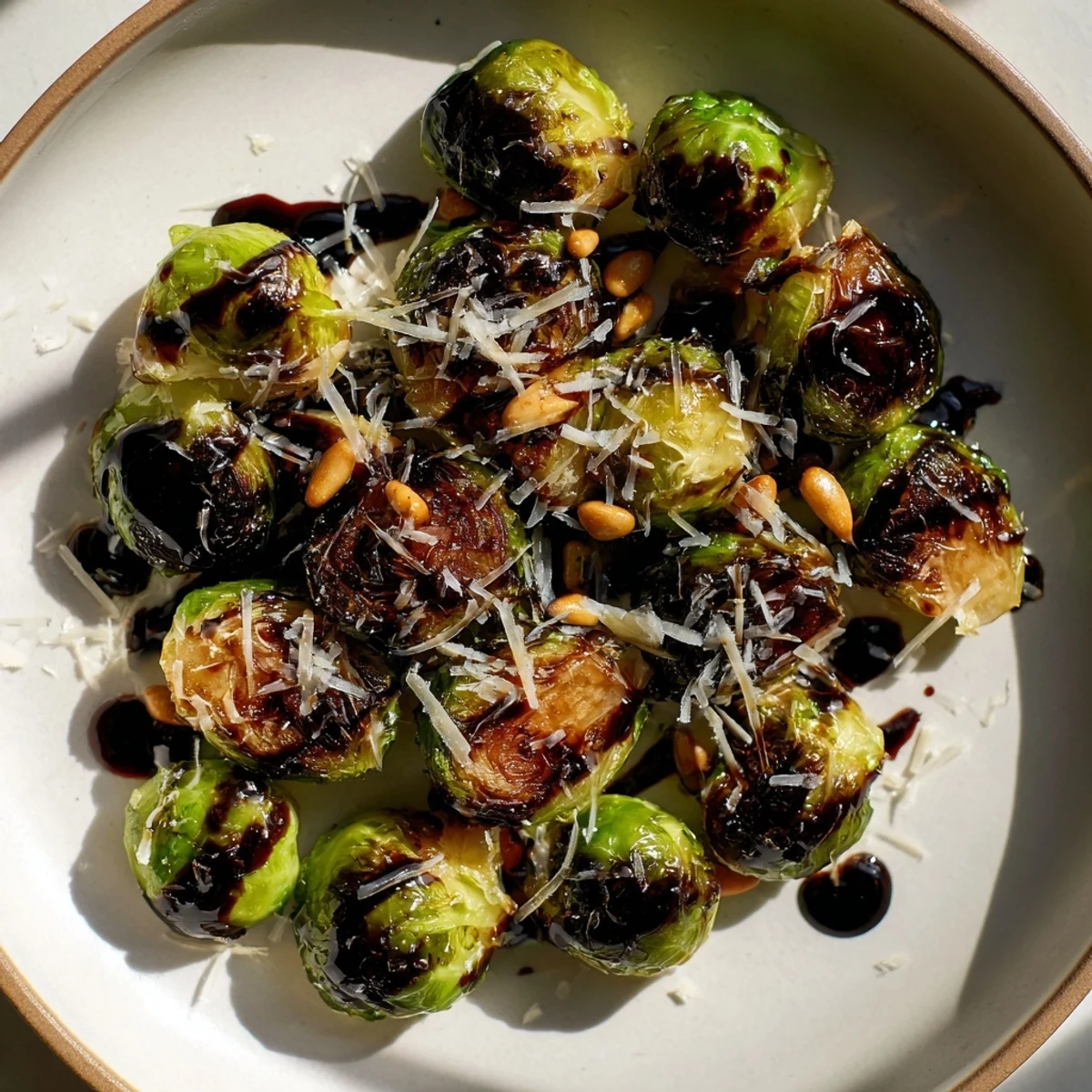
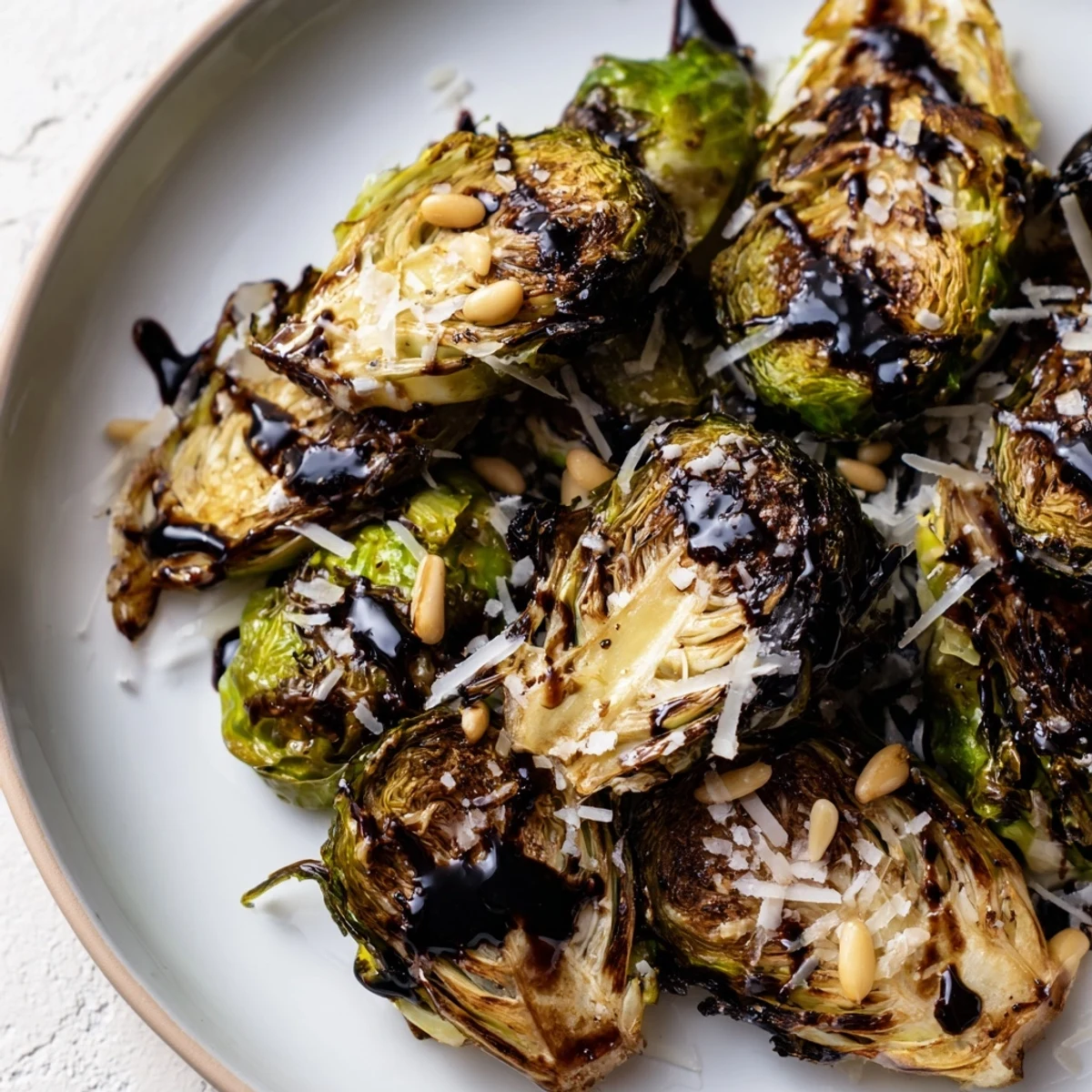
 These Brussels sprouts are trimmed, halved, and coated with olive oil, salt, pepper, and optional garlic powder. Roasted at high heat until golden and crispy, they are finished with a drizzle of tangy balsamic vinegar for brightness. Optional Parmesan cheese and toasted pine nuts add a savory crunch, making this a perfect easy side packed with flavor and texture.
I still remember the first time I truly understood the magic of roasted Brussels sprouts. It was a gray November afternoon, and I was invited to a dinner party where the host—a chef at heart—served these golden, caramelized sprouts as a side dish. One bite and everything changed. The crispy, charred edges gave way to a tender, nutty interior, all brightened by a tangy balsamic glaze that sang on my tongue. I went home that night determined to recreate that moment in my own kitchen, and what I discovered was that this humble vegetable, often dismissed or overcooked, could be absolutely transcendent with just a little heat, time, and love.
The first time I made these for my family, my skeptical teenage brother actually asked for the recipe. That's when I knew I had created something special. Now, these sprouts appear on our holiday table without fail, and they've become so beloved that I sometimes make a double batch just for those who want more.
Ingredients
- 1 lb (450 g) Brussels sprouts, trimmed and halved: This is the star. Choose firm, bright green sprouts free of yellowed or damaged leaves. The halving is crucial—it exposes that flat cut side which, when pressed against the hot pan, develops those gorgeous caramelized edges that make this dish sing.
- 2 tbsp olive oil: Don't skimp here. Good olive oil coats the sprouts evenly and helps them achieve that golden crust. I use a robust extra virgin for its flavor contribution.
- 2 tbsp balsamic vinegar: This is added at the very end, so use one you actually enjoy tasting straight. The acidity cuts through the richness beautifully.
- 1/2 tsp kosher salt: Kosher salt's larger crystals dissolve more gradually, giving you better seasoning control than table salt.
- 1/4 tsp black pepper: Fresh cracked, if you have it. It makes a noticeable difference in the final flavor.
- 1/4 tsp garlic powder (optional): This adds an understated savory depth that makes people ask what you did differently.
- 2 tbsp grated Parmesan cheese (optional): A shower of Parmesan adds a salty, umami dimension that transforms the dish into something restaurant-worthy.
- 1 tbsp toasted pine nuts (optional): These add a subtle, buttery crunch and a touch of elegance. Toast them yourself in a dry pan for about 2 minutes—the difference between stale and fresh is night and day.
Instructions
- Heat your oven properly:
- Set it to 425°F (220°C) and let it preheat fully. This is non-negotiable. A properly heated oven is what gives you that restaurant-quality caramelization. Line a baking sheet with parchment paper—this prevents sticking and makes cleanup feel like a gift to your future self.
- Coat and season:
- In a large bowl, toss your Brussels sprout halves with the olive oil, salt, pepper, and garlic powder if using. Get your hands in there and make sure every piece is glistening with oil. This is the moment where you're setting yourself up for success—even coating means even browning.
- Arrange with purpose:
- Spread the Brussels sprouts in a single layer on your prepared baking sheet, cut side down. This is the secret. That flat side pressed against the hot pan is what creates the caramelization magic. Don't crowd them—they need a little breathing room to crisp up properly.
- Roast until golden:
- Pop them in the oven for 20 to 25 minutes. About halfway through, flip them so the rounded tops get some color too. You're looking for deeply golden, almost mahogany-colored edges. The leaves might look a bit charred in places—that's exactly what you want. That's where the flavor lives.
- The glaze moment:
- Remove the pan from the oven and immediately—and I mean immediately—drizzle the balsamic vinegar over the hot sprouts. The heat will slightly reduce and deepen the vinegar's flavor. Give everything a gentle toss so every piece catches some of that glossy glaze.
- Finish and serve:
- Transfer to a serving platter while they're still warm. If you're using Parmesan and pine nuts, sprinkle them on now so they warm slightly and meld with the sprouts. Serve hot, and watch people's faces light up when they take that first bite.
 Pin Recipe
 Years ago, I served these at a potluck where a vegetable-averse friend grudgingly tried one. He ended up eating nearly the entire bowl and has asked me to make them every gathering since. That's when I realized these Brussels sprouts had become more than just a side dish—they were a bridge between skeptics and believers, a quiet ambassador for the beauty of simple, well-executed food.
The Art of Caramelization
Caramelization is what transforms ordinary vegetables into something memorable. When sugars in the Brussels sprouts heat above a certain temperature in the presence of dry heat, they break down and recombine into hundreds of new flavor compounds. This is why roasting creates depth that steaming simply cannot. The Maillard reaction—that beautiful browning—is where umami is born. Understanding this shifts you from following a recipe to truly cooking.
Variations and Flavor Combinations
Once you master the base technique, this dish becomes a playground for creativity. I've experimented with maple syrup drizzled before roasting for a subtle sweetness, added crispy bacon bits for smoky richness, and even tossed them with everything bagel seasoning for unexpected depth. The foundation is strong enough to support whatever flavor direction calls to you on any given night.
Storage, Reheating, and Make-Ahead Tips
These are best served hot and fresh from the oven, but they're also wonderfully adaptable. Roasted Brussels sprouts keep in the refrigerator for up to three days in an airtight container. To reheat, spread them on a baking sheet and warm at 375°F for about 8 minutes to restore some crispness. They're also delicious at room temperature, making them perfect for meal prep or next-day lunches. Add the balsamic glaze fresh if storing, or the vinegar can make them a bit soft over time.
- Make-ahead tip: Prep and halve your Brussels sprouts the evening before, store in a damp paper towel-lined container, and they'll be ready to toss with oil and roast whenever you need them.
- For holiday meals: Assemble the Brussels sprouts with oil and seasoning up to 2 hours ahead, then roast them 20 minutes before serving so they come to the table at their peak.
- Leftover magic: Cold roasted Brussels sprouts make an exceptional addition to grain bowls, salads, or even as a snack straight from the fridge—they're that good.
 Pin Recipe
 This recipe has taught me that sometimes the most meaningful dishes are the simplest ones. There's quiet elegance in taking a humble vegetable, respecting it with heat and time, and letting it become the best version of itself. That's cooking at its most beautiful.
Recipe FAQs
- → How do I achieve crispy Brussels sprouts?
-
Roast them at 425°F on a parchment-lined sheet and flip halfway to ensure even caramelization and crisp edges.
- → Can I substitute balsamic vinegar?
-
Yes, a splash of red wine vinegar or apple cider vinegar adds acidity but changes the flavor slightly.
- → What optional ingredients enhance this dish?
-
Grated Parmesan cheese and toasted pine nuts add a savory, crunchy contrast when sprinkled after roasting.
- → How to prevent soggy sprouts?
-
Avoid overcrowding the baking sheet to allow air circulation, which helps maintain crispiness.
- → Can I add a sweet touch to the glaze?
-
Yes, adding a small amount of honey to the balsamic vinegar creates a sweeter, balanced glaze.
