
 Pin Recipe
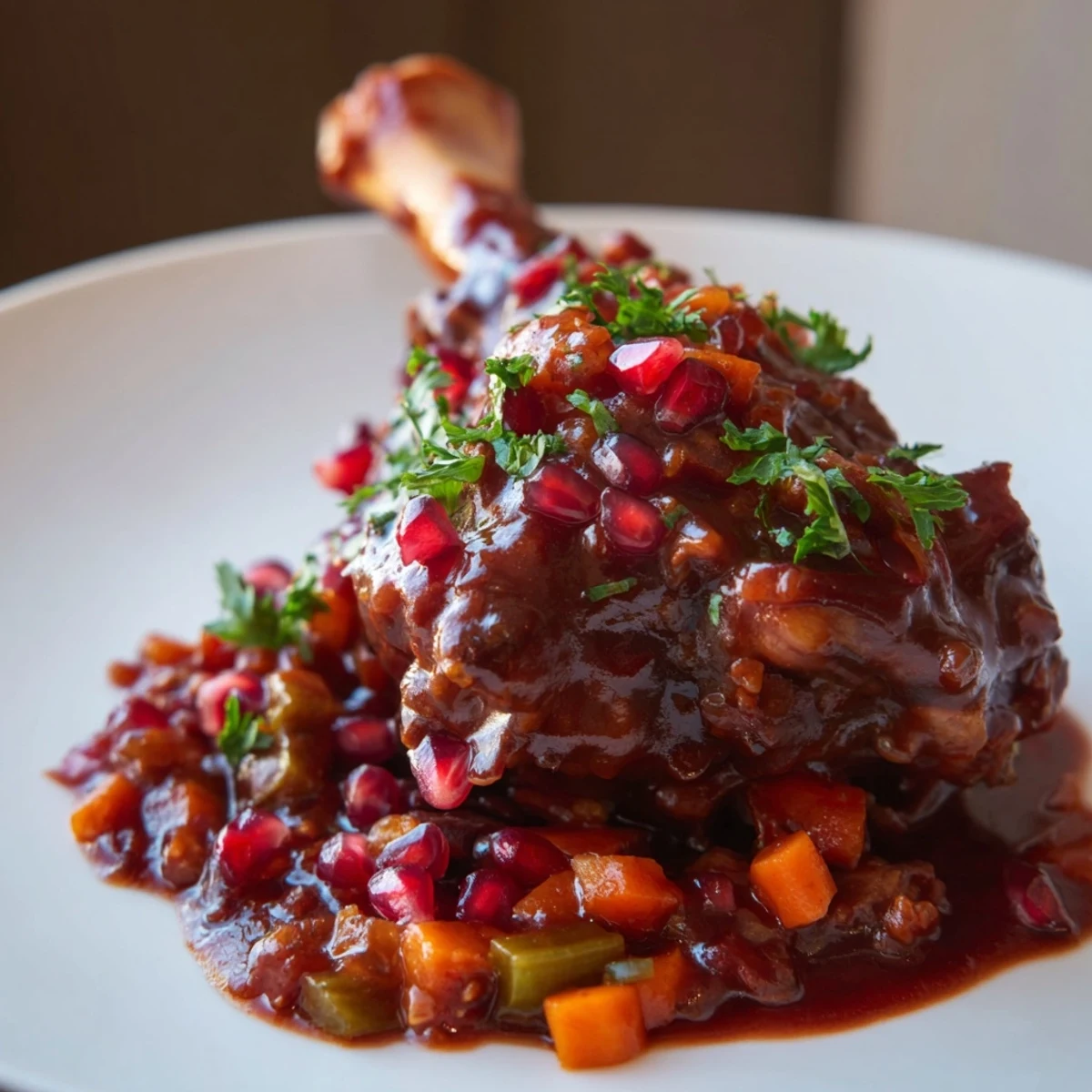
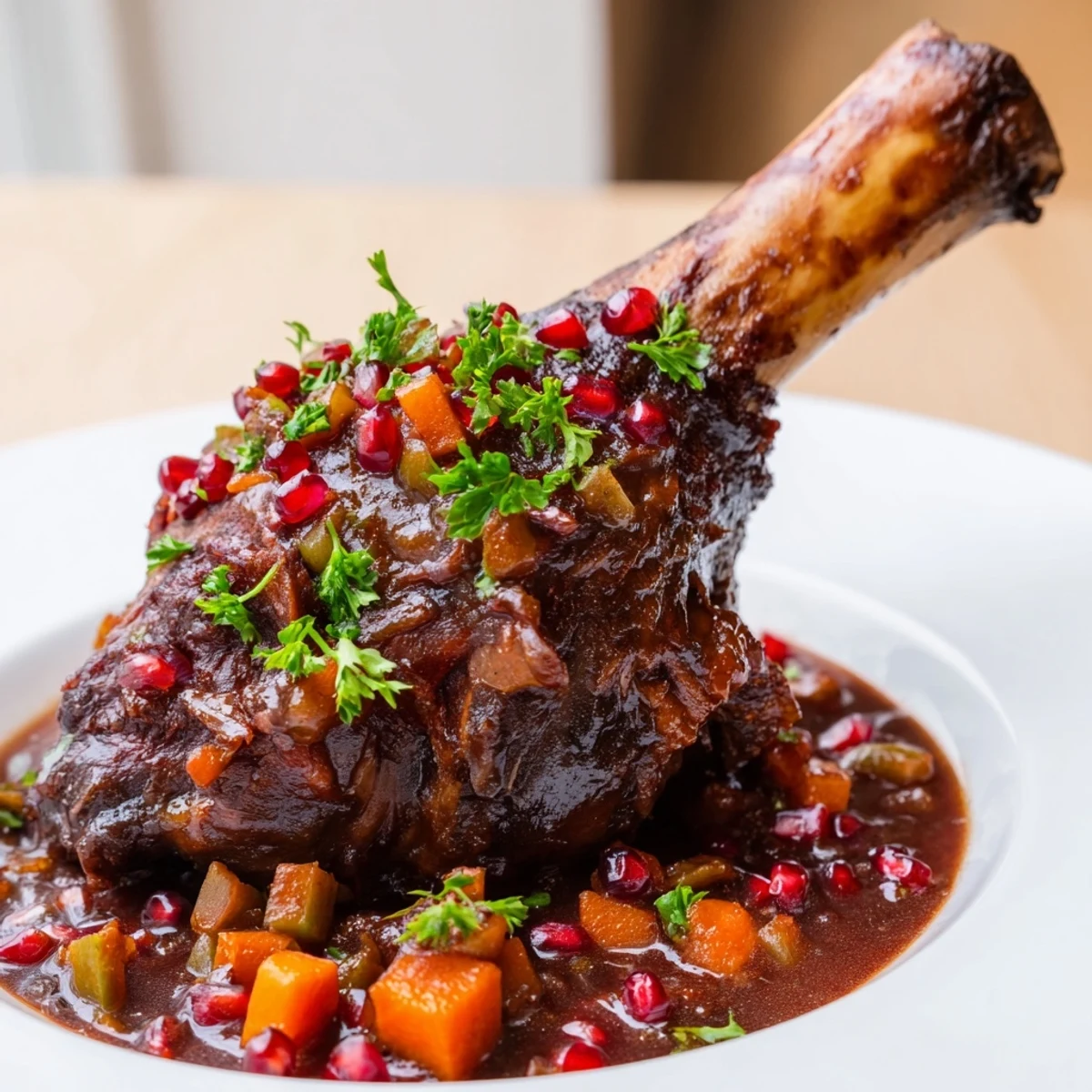
 This dish features tender lamb shanks slow-cooked to perfection in a blend of warm spices and enriched with tangy pomegranate molasses. The shanks are first seared to lock in flavor, then simmered gently to create a rich, aromatic sauce that coats the meat. Finished with fresh pomegranate seeds and parsley, it offers a balance of savory and fruity notes, ideal for special meals. Pair with saffron rice or roasted vegetables to complement the deep, complex flavors.
There's something about the smell of pomegranate molasses hitting hot spices that stops me mid-thought every time. Years ago, a friend brought a bottle back from a market in Istanbul, and I didn't know what to do with it until I found myself with four lamb shanks on a winter afternoon, searching for something that felt both comforting and a little adventurous. This dish emerged from that wandering, and it's been the one I reach for when I want to cook something that tastes like it took all day, even though most of the work is just patience and a hot oven.
I made this for my sister's birthday dinner on a night when everything felt a little uncertain, and somehow the kitchen filled with this warm, spiced smell that made everyone relax the moment they walked in. By the time we sat down, the table felt less like dinner and more like gathering around something real and intentional. That's when I realized this dish wasn't just food—it was an invitation to slow down.
Ingredients
- Lamb shanks (4, about 400–500 g each): These are forgiving cuts that only get better the longer they braise; there's almost no way to overcook them, which is deeply reassuring.
- Onions, carrots, and celery (2 medium onions, 2 carrots, 2 celery stalks): This is your flavor foundation, and chopping them finely helps them dissolve into the sauce.
- Garlic (4 cloves, minced): Don't skip mincing—it needs to blend in during those final fragrant moments.
- Ground cumin, coriander, cinnamon, allspice (2 tsp, 1 tsp, 1 tsp, 1/2 tsp): Toast these in your mind before they hit the pan and you'll cook them with intention instead of habit.
- Smoked paprika (1/2 tsp): This one whispers rather than shouts, but it ties everything together.
- Ground black pepper and salt (1/2 tsp and 1 1/2 tsp): Season as you go; the meat and stock will concentrate flavors as they braise.
- Beef or lamb stock (400 ml): Use the best stock you can find or have made—it's one of the few shortcuts worth taking seriously.
- Pomegranate juice and molasses (200 ml and 3 tbsp): The juice adds brightness early, while the molasses deepens everything at the end; they're not interchangeable.
- Tomato paste (2 tbsp): This adds umami depth without making the dish tomato-forward.
- Olive oil (2 tbsp): Good enough to taste, but not so precious you'll hesitate to use it.
- Pomegranate seeds and fresh parsley (1/2 pomegranate and 2 tbsp chopped): These are your final moment of brightness and texture.
Instructions
- Get your oven ready:
- Preheat to 160°C (320°F) early so it's waiting for you when you need it.
- Prepare the lamb:
- Pat the shanks completely dry with paper towels and season generously with salt and pepper on all sides. Dry meat browns; wet meat steams.
- Sear with purpose:
- Heat olive oil in your Dutch oven over medium-high heat until it shimmers slightly. When you place the lamb in, it should sizzle immediately—this means the pan is ready. Sear each shank for about 2 minutes per side until the surface is deeply browned, working in batches if needed. This takes about 8 minutes total and creates a crust that holds flavor.
- Build your base:
- Remove the lamb and add onions, carrots, and celery to the same pot, stirring often for 5–7 minutes until they soften and the onions turn translucent. They're releasing their sweetness into the hot oil.
- Bloom the spices:
- Add minced garlic, cumin, coriander, cinnamon, allspice, and smoked paprika, stirring constantly for exactly 1 minute. You'll smell when they're ready—that moment when the raw spice smell shifts into something warm and cooked.
- Deepen with tomato:
- Stir in the tomato paste and cook for another minute, letting it coat the vegetables and spices slightly.
- Bring it together:
- Return the lamb shanks to the pot, nestling them among the vegetables. Pour in the pomegranate juice, stock, and pomegranate molasses, stirring gently to combine. Bring the liquid to a simmer on the stovetop—you're looking for small bubbles breaking the surface, not a rolling boil.
- Let the oven work:
- Cover the pot with its lid and transfer to the oven for 2–2.5 hours. Turn the shanks halfway through so they braise evenly. The meat is done when a fork slides through without resistance and it's threatening to fall from the bone.
- Finish with reduction:
- Remove the lid for the final 20 minutes so the sauce concentrates and deepens in color, becoming glossy and slightly thickened.
- Finish and serve:
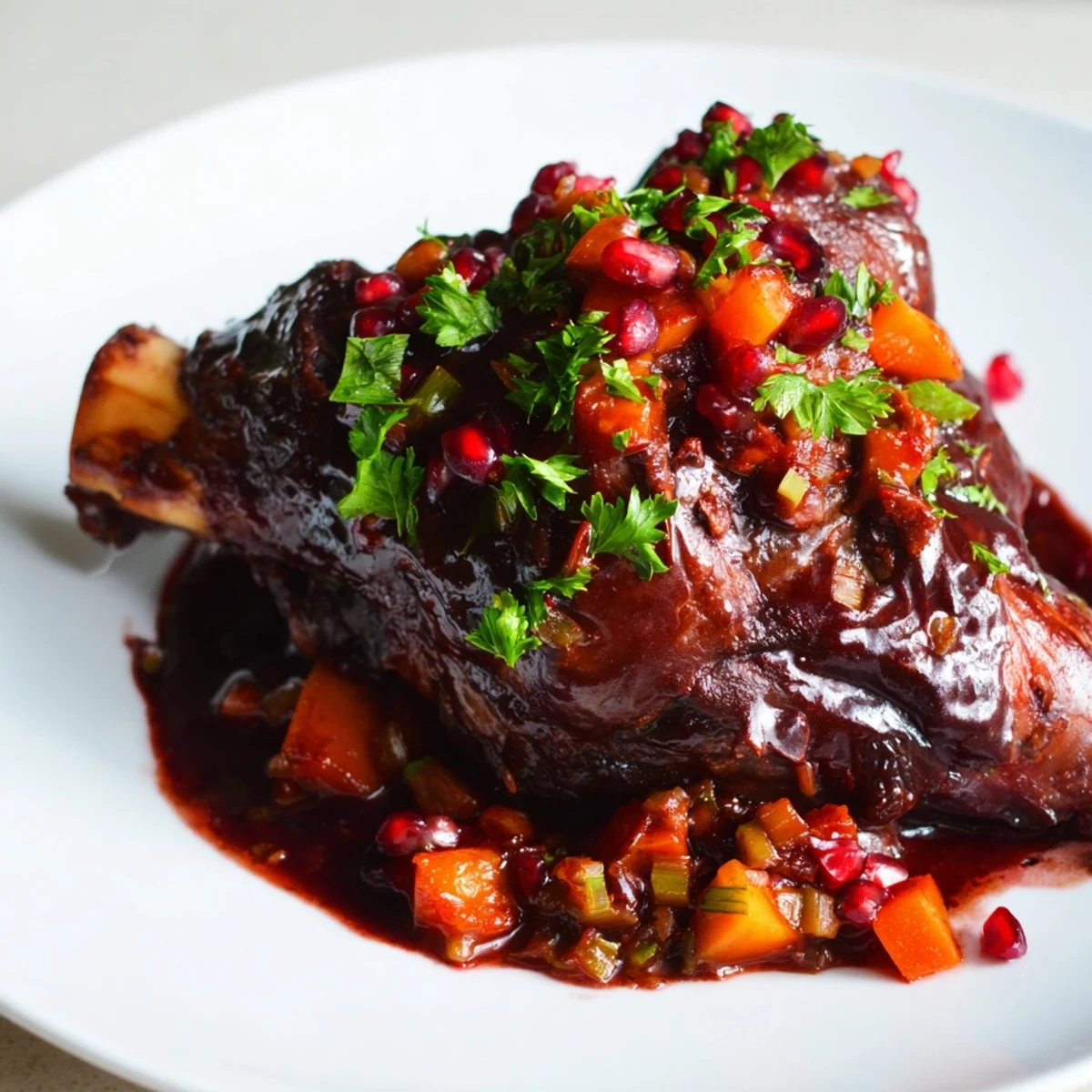
- Spoon the sauce over each shank and scatter pomegranate seeds and fresh parsley across the top. The seeds catch the light and add a final burst of tartness.
 Pin Recipe
 The first time someone asked for the recipe, I realized I'd stopped thinking of it as something I was following and started thinking of it as something I understood. That's when cooking stops being performance and becomes conversation.
The Science of Slow Cooking Lamb
Lamb shanks are mostly connective tissue and muscle that need time and moisture to break down into tenderness. The low oven temperature—160°C instead of a higher heat—means the collagen converts to gelatin slowly and evenly, creating that silky sauce without the meat becoming stringy or dry. The braising liquid surrounds the meat, protecting it from the heat while the flavors marry together into something that tastes intentional rather than rushed.
Pomegranate Molasses: The Secret Ingredient
Pomegranate molasses isn't a sweet condiment—it's reduced pomegranate juice with a tangy, almost wine-like depth. It adds acidity without the sharpness of vinegar, and it complements warm spices in a way that makes people pause mid-bite wondering what they're tasting. If you can't find it, you can make it by simmering pomegranate juice with a pinch of sugar until it reduces by half, but the bottled version is worth seeking out because it's genuinely different from anything you can quickly substitute.
Serving and Pairing
I've served this over saffron rice, couscous, and roasted vegetables, and honestly, all three work because the meat and sauce are complete enough to shine alone. If you're pouring wine, reach for something robust—Shiraz, Cabernet Sauvignon, or even a good Côtes du Rhône. The spices and pomegranate need a wine with enough body to match them.
- For extra aromatic depth, add a cinnamon stick and a bay leaf directly to the braising liquid before it goes in the oven.
- Beef shanks work beautifully if lamb isn't available or is outside your budget.
- This dish tastes even better the next day, so consider making it ahead and reheating it gently on the stovetop.
 Pin Recipe
 Cooking this dish is an act of trust—you're letting time and heat do what hurrying never could. That's worth remembering, especially when life feels rushed.
Recipe FAQs
- → How long should lamb shanks be cooked?
-
Cook lamb shanks for about 2 to 2.5 hours at low heat until the meat becomes tender and easily falls off the bone.
- → Can I use beef shanks instead of lamb?
-
Yes, beef shanks can be substituted and will develop a similarly rich flavor when braised with the spices and pomegranate molasses.
- → What sides pair well with this dish?
-
This dish pairs beautifully with saffron rice, couscous, or roasted vegetables to balance the rich, spicy flavors.
- → How to achieve a thicker sauce?
-
Remove the lid during the last 20 minutes of cooking to allow the sauce to reduce and thicken naturally.
- → What spices are used for flavoring?
-
This dish uses ground cumin, coriander, cinnamon, allspice, smoked paprika, and black pepper to build a warm, aromatic profile.
