
 Pin Recipe
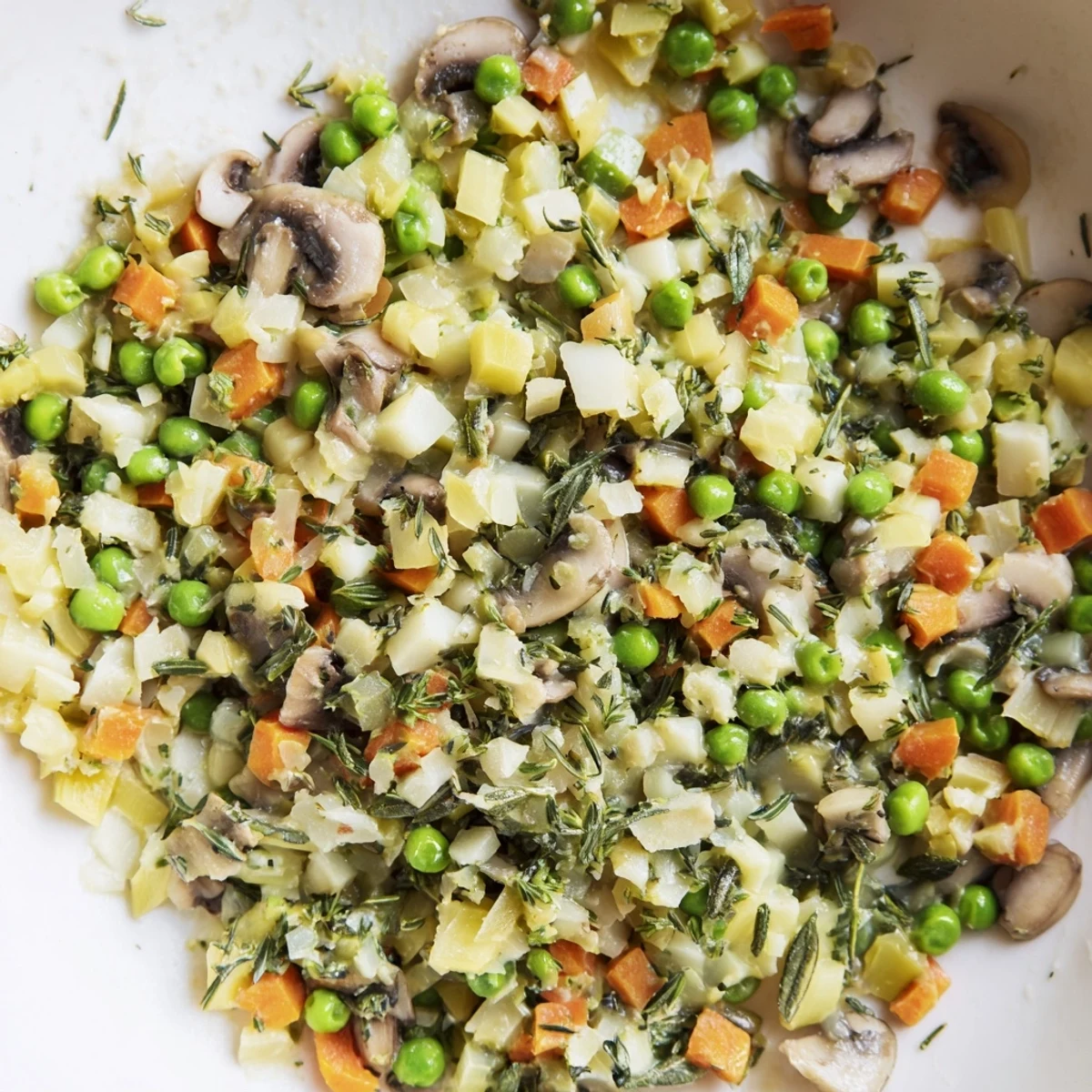
 This filling combines sautéed onions, garlic, carrots, celery, mushrooms, peas, and spinach with fresh thyme, rosemary, and ground pepper. Flour and vegetable broth create a thickened base, enriched with a splash of cream. Optional cheese and parsley add extra richness and flavor. Perfect for filling pies, pastries, or turnovers, it offers a hearty, aromatic blend that brings warmth and comfort to baked dishes. Suitable for vegetarian diets, with simple swaps available for vegan or gluten-free versions.
There's something magical about the smell of caramelizing onions mixed with fresh thyme that fills a kitchen on a quiet afternoon. I discovered this filling years ago when I was trying to rescue a dinner party after my original plan fell through, and I ended up layering these tender vegetables and herbs into a pie crust instead. What started as improvisation became the recipe I reach for whenever I need something warm, substantial, and genuinely comforting. Now it's become my go-to for lazy Sundays and unexpected guests alike.
I made this for my partner's family the first time they visited our new place, and honestly I was nervous about getting it right. But as the filling simmered and the whole apartment smelled like a French country kitchen, I realized it didn't matter if the crust was slightly imperfect or the cheese melted unevenly. What mattered was that everyone went quiet for a moment when they took their first bite, and then asked for seconds.
Ingredients
- Olive oil: Use good quality here since it's your base flavor, and you'll taste it in every bite.
- Yellow onion: Dicing it small lets it nearly disappear into the filling while adding sweetness and depth that makes people ask what's in it.
- Garlic: Two cloves is just enough to whisper its presence without shouting.
- Carrots and celery: These are your flavor foundation, and their natural sweetness balances the earthiness of the mushrooms.
- Cremini mushrooms: They hold their texture better than button mushrooms and add an umami richness that feels more substantial than you'd expect.
- Frozen peas: Fresh peas are wonderful if you have them, but frozen ones are honestly more reliable and taste just as good when you thaw them gently.
- Baby spinach: It wilts down to nothing visually but adds iron and a subtle earthiness that ties everything together.
- Fresh thyme and rosemary: These herbs are what separate this from tasting like ordinary vegetable stew, so don't skip them even if you have to use dried.
- All-purpose flour: It acts as a thickener and helps the filling hold together without making it gluey.
- Vegetable broth: Low sodium is best so you can control the salt level and layer your seasoning properly.
- Heavy cream: This is where the luxury sneaks in, turning vegetables into something that feels indulgent and velvety.
- Cheese and parsley: Optional but honestly they're the finishing touch that makes people think you're more of a cook than you probably are.
Instructions
- Start with the aromatics:
- Heat your oil over medium heat and listen for it to shimmer slightly before adding the onion and garlic. You'll know it's ready when the onion becomes translucent and the garlic loses that sharp raw edge, usually about 3 minutes.
- Build your vegetable base:
- Add the carrots, celery, and mushrooms and let them soften for about 8 minutes, stirring occasionally so they cook evenly. This is where patience pays off—rushing this step means less flavor development.
- Toast your herbs:
- Stir in the thyme, rosemary, salt, and pepper, then sprinkle the flour over everything and mix for a full minute. This toasting step seems small but it makes the herbs taste deeper and more intentional.
- Create your sauce:
- Slowly pour in the vegetable broth while stirring to prevent lumps, then let it simmer for about 5 minutes until the mixture thickens and coats the back of a spoon. You'll feel it go from watery to cohesive, and that's your signal you're on track.
- Finish with greenery and creaminess:
- Add the peas and spinach and cook until the spinach surrenders into the filling, about 2 to 3 minutes. Then reduce the heat to low and stir in the cream gently, letting it warm through without boiling.
- Final taste and texture:
- Fold in cheese and parsley if you're using them, taste as you go, and adjust the seasoning until it feels balanced. You want it flavorful enough to taste good on its own, knowing it will mellow slightly once it's baked in a pastry.
 Pin Recipe
 This filling became the thing I made for a friend who was going through a rough time, and I remember how she smiled a little when she tasted it, like something inside her softened. Food doesn't fix everything, but sometimes it says I'm thinking of you in a way that words alone can't.
When to Use This Filling
Beyond the obvious pie applications, this filling deserves to live in more places than you might think. Spoon it into puff pastry squares for elegant appetizers, pile it into empanadas for portable comfort, or layer it between sheets of phyllo for something that feels fancy but tastes like home. I've even heated it gently and served it over toast on mornings when I wanted something savory instead of sweet, and nobody questioned it.
Making It Your Own
The beauty of this filling is that it's forgiving enough to handle your preferences and whatever vegetables are sitting in your crisper drawer. You can swap carrots for parsnips, add corn or diced potatoes, or throw in bell peppers without disrupting the balance. If you're feeding someone who eats meat, brown some chicken or turkey and fold it in at the end, or brown some sausage and drain the fat before adding it to the base.
Storage and Make-Ahead Tips
This filling is actually better when made a day ahead because the flavors have time to get to know each other and meld into something more complex. Store it in an airtight container in the refrigerator for up to 3 days, or freeze it for up to 2 months and thaw it gently on the stovetop whenever you need it. You can also assemble your pies or pastries ahead of time and freeze them unbaked, then pop them straight into the oven without thawing.
- Always cool the filling completely before storing it so condensation doesn't make it watery and dilute the flavors.
- If you freeze it and notice it's separated, just stir it gently over low heat and it'll come back together beautifully.
- Reheat gently on the stovetop rather than the microwave, which can make it heat unevenly and dry out the vegetables.
 Pin Recipe
 This filling has become the recipe I make when I want to feel grounded and present in my kitchen, and it never fails to remind me why cooking for people matters. Whether it ends up in a pie or on a plate, it carries with it that quiet satisfaction of turning simple vegetables into something that nourishes more than just the body.
Recipe FAQs
- → What vegetables are used in this filling?
-
It features onions, garlic, carrots, celery, mushrooms, peas, and spinach for a balanced, hearty texture.
- → How is the filling thickened?
-
All-purpose flour is stirred in and cooked briefly before adding vegetable broth, then simmered until thickened.
- → Can this filling be made vegan?
-
Yes, by substituting the heavy cream and cheese with plant-based alternatives, it suits vegan preferences.
- → What herbs enhance the flavor?
-
Fresh thyme and rosemary impart aromatic notes that complement the vegetables beautifully.
- → How long can the filling be stored?
-
It can be prepared ahead and refrigerated for up to three days without compromising quality.
- → Are there any allergen considerations?
-
Contains dairy and gluten unless plant-based and gluten-free flour substitutions are used.
