
 Pin Recipe
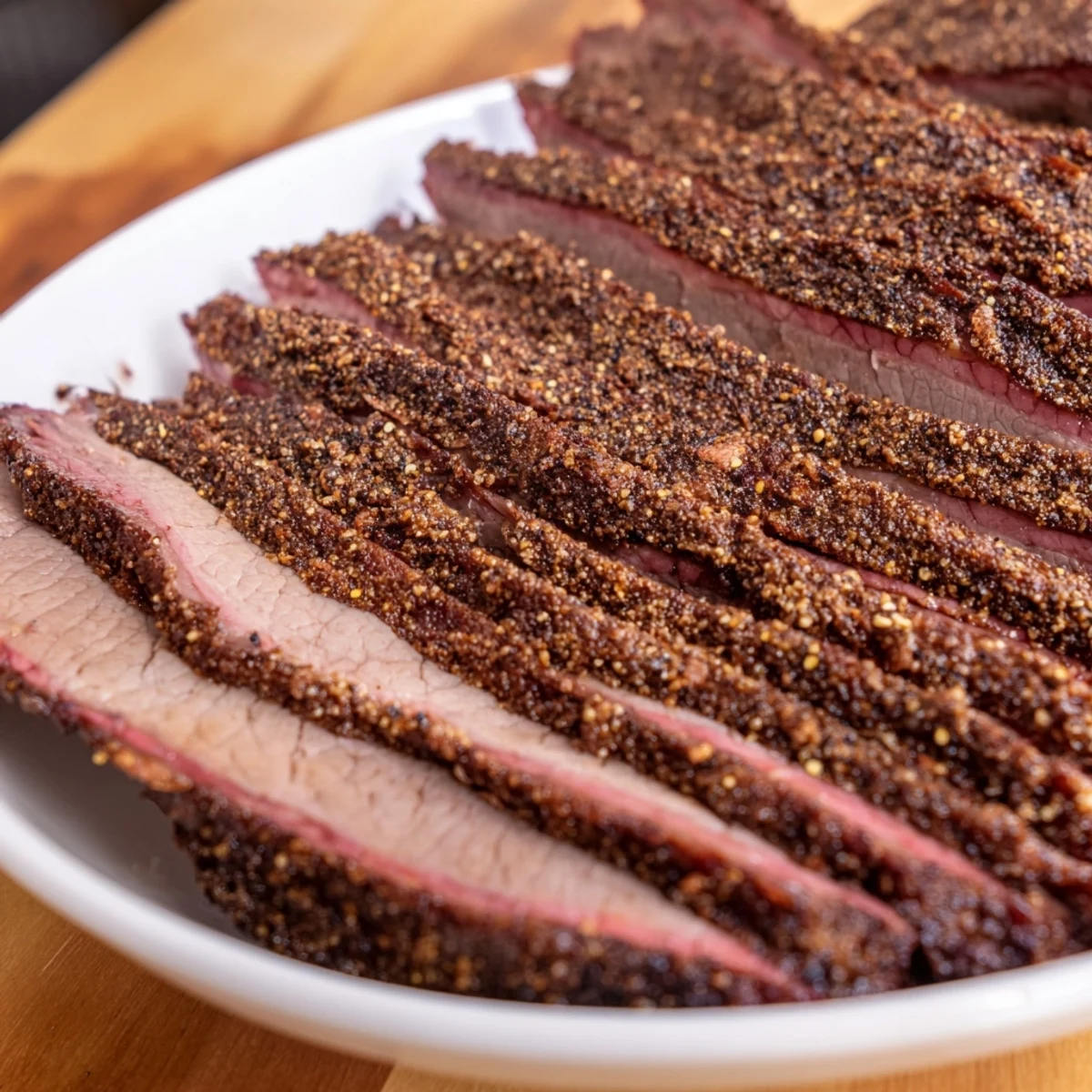
 This smoked beef brisket offers tender, juicy meat with a rich smoky flavor amplified by a perfectly seasoned bark. Using a blend of kosher salt, black pepper, paprika, garlic, and onion powders, the brisket is generously rubbed and smoked low and slow over hardwoods like oak or hickory. Spritzing with apple cider vinegar and water keeps the meat moist and helps develop a delectable crust. After hours of patient smoking and resting, the brisket is sliced against the grain, ready to serve alongside classic barbecue sides for a hearty, satisfying experience.
I'll never forget the first time I smoked a brisket—it was a summer afternoon when my dad decided we'd try something ambitious for a neighborhood gathering. We loaded this massive hunk of beef into an old offset smoker, and I spent the entire day tending to it, learning the rhythm of maintaining temperature, the patience required to let wood smoke work its magic. By evening, when I pulled that brisket from the smoker with its deep mahogany bark and tender pink smoke ring, something clicked. This wasn't just cooking; it was a meditation. Now, every time I smoke a brisket, I'm transported back to that learning moment, and I get to share that same sense of accomplishment with everyone gathered around the table.
I remember pulling this brisket off the smoker for my cousin's wedding reception—we had about eighty people gathered in the backyard, and the moment that bark broke under everyone's forks, I saw faces light up in a way that reminded me why we cook for people we love. That's what this recipe does: it creates moments.
Ingredients
- Beef brisket (5–6 kg / 11–13 lbs), untrimmed or lightly trimmed: This is the foundation—the whole packer cut with both the flat and point muscles. Don't be tempted to trim aggressively; that fat cap protects the meat during the long smoke and keeps everything moist.
- Kosher salt (3 tbsp): The backbone of your rub, it seasons deeply and helps form that coveted bark. I always use kosher over table salt because the larger crystals distribute more evenly.
- Freshly ground black pepper (3 tbsp): Grind this yourself if you can—pre-ground loses its bite. You want that peppery char to shine through after hours of smoking.
- Paprika, smoked or sweet (2 tbsp): This adds color and a gentle earthiness. Smoked paprika gives you a head start on that smoky flavor, but sweet works beautifully too.
- Garlic powder (1 tbsp): Don't skip this—it melds with the smoke and becomes almost sweet by the end of cooking.
- Onion powder (1 tbsp): Works invisibly with the garlic to add umami depth that makes people ask what's in your rub.
- Cayenne pepper (1 tsp, optional): Only if you like a whisper of heat that builds subtly as you eat through the bark.
- Apple cider vinegar (1 cup) and water (1 cup): This is your spritz—keep it in a spray bottle nearby. The acidity keeps the exterior moist and encourages bark development while adding a brightness that cuts through the richness.
Instructions
- Trim with intention:
- Start by laying your brisket on the cutting board and carefully remove the thick fat cap, leaving about a quarter-inch layer underneath. This thin fat shield is your friend during the long smoke—it melts slowly, basting the meat from above while protecting it from drying out. I learned this the hard way after overtrimming once and ending up with meat that was beautiful on the outside but a bit too dry inside.
- Build your rub:
- Pour all your spice rub ingredients into a bowl and use your fingers to mix them thoroughly, making sure there are no clumps of garlic or onion powder hiding in corners. I like to smell it at this stage—if it doesn't make your mouth water a little, add another pinch of salt and pepper.
- Coat generously:
- Place the brisket on your work surface and start patting the rub all over—top, bottom, and all the sides. Don't be timid. Use your hands and really work it into every crevice. Once it's coated, let it sit at room temperature while you get your smoker ready. This usually takes about thirty minutes and allows the salt to begin penetrating the meat.
- Prepare your smoker:
- Fill your firebox or pellet hopper and get it smoking steadily at 110–120°C (225–250°F). Use hardwoods like oak, hickory, or mesquite—these burn clean and impart that flavor you're after. Get your grates cleaned and oiled while you're waiting, and fill your spray bottle with the apple cider vinegar and water mixture.
- Start the smoke:
- Place the brisket fat-side up on the grates, positioning it away from direct heat if your smoker allows it. Insert your meat thermometer into the thickest part of the flat, being careful not to touch bone. Close the lid and settle in. This is going to be a journey.
- Maintain and spritz:
- Every two hours, lightly spritz the surface of the brisket with your vinegar-water mixture. Don't soak it—just a light misting. Watch your thermometer. The brisket will climb to about 70°C (160°F) in the first five to seven hours, and you should see a dark, crusty bark forming. This is beautiful. This is what you're working toward.
- Wrap at the right moment:
- Once your brisket hits that 70°C (160°F) mark and you can see a serious bark development, it's time to wrap. Tear off a long sheet of butcher paper (or use heavy-duty foil if that's what you have), wrap the brisket tightly, and return it to the smoker. This is called the Texas Crutch, and it speeds up the cooking while keeping all that moisture trapped inside.
- Push to the finish:
- From here, it's a straight shot to internal temperature of 93–96°C (200–205°F), which usually takes another four to seven hours depending on your smoker and the size of your brisket. Don't rush it. When a meat thermometer slides through the meat like butter, you're done.
- Rest like you mean it:
- This is crucial and where many people falter. Remove the wrapped brisket from the smoker and place it in a cooler or insulated container for at least one hour—two is better. The heat continues to gently cook the interior while the muscle fibers relax. This is what makes it tender enough to cut with just a fork.
- Slice and serve:
- Once rested, unwrap your brisket and let it sit for a few minutes to stabilize. Using a sharp carving knife, slice against the grain—look at the meat and cut perpendicular to those muscle fibers. You'll see the difference immediately: each slice should be tender and juicy, not stringy.
 Pin Recipe
 There was this one autumn when my brother brought his family over, and we had six kids running around while this brisket smoked for twelve hours. By dinner time, everyone was gathered at the table, and watching those kids' faces when they bit into meat so tender it practically melted reminded me that this recipe is really about creating a table where people want to be.
The Art of Bark and Smoke Ring
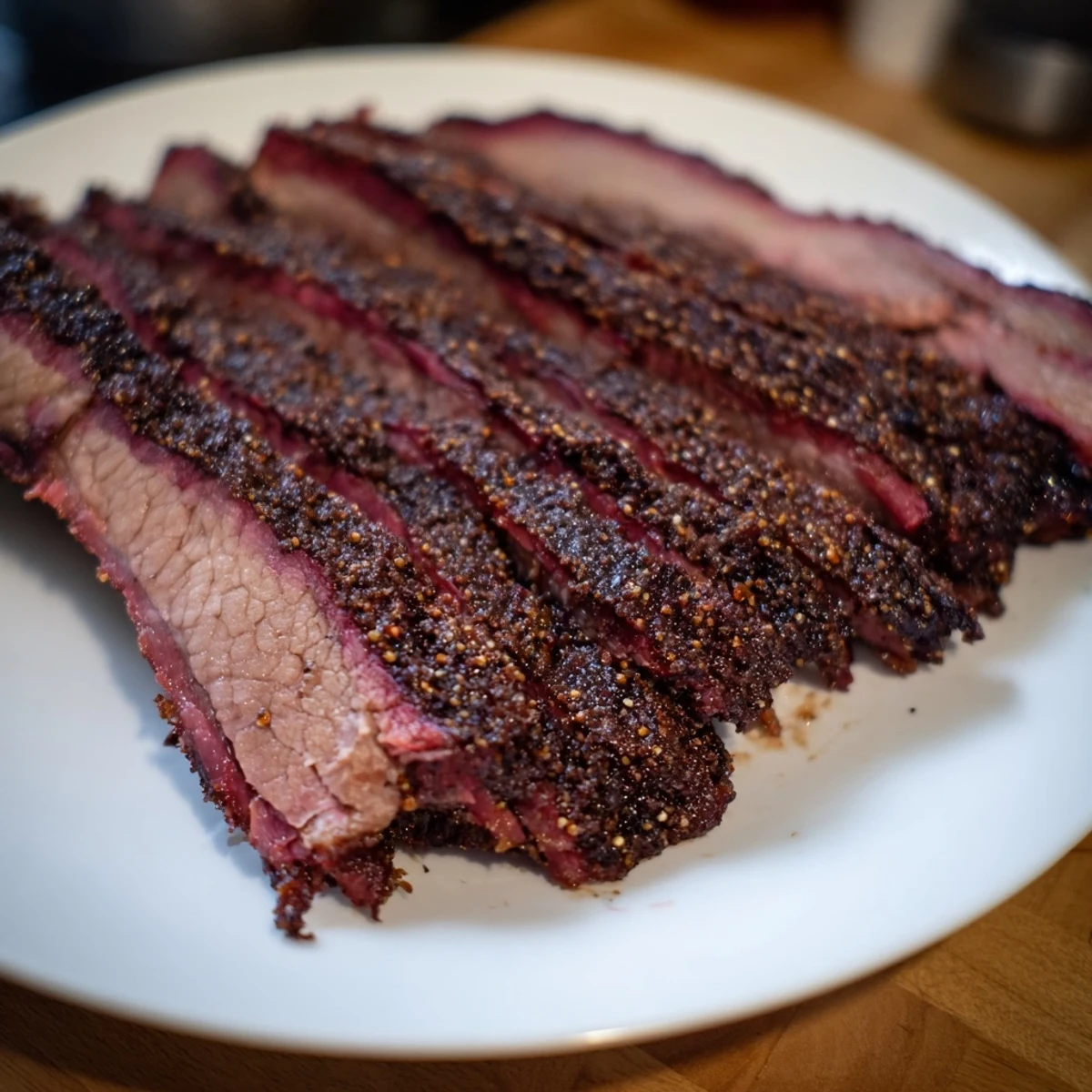
The bark is that dark, crispy exterior that forms from the spice rub caramelizing and the smoke depositing flavor. It's not burned—it's exactly what you want. The smoke ring, that pink layer just inside the bark, happens when smoke molecules bond with the meat's proteins. Don't obsess over getting a thick smoke ring; it's beautiful when it appears, but the flavor is what matters. I've had briskets with minimal smoke rings that tasted incredible because the cooking was done right. Focus on maintaining steady temperature and regular spritzing, and the bark will take care of itself.
Choosing Your Wood
Oak is my go-to because it's versatile and mild enough not to overpower. Hickory gives you more assertive smokiness—wonderful if you love that classic BBQ flavor. Mesquite is intense and beautiful for beef, but start with less if you've never used it before. I learned this after one particularly smoky brisket that taught me respect for mesquite. The best approach is to ask your local BBQ community what grows near them; smoke preferences are regional, and there's wisdom in tradition.
Serving and Sides
This brisket is the star, so serve it simply and let it shine. I always have a crisp coleslaw alongside—something creamy cuts through the richness beautifully. Cornbread is essential; pickles are non-negotiable for their sharp contrast. Pair with a bold red wine if you're feeling fancy, or crack open a hoppy IPA if you're keeping it casual. Leftovers make extraordinary sandwiches the next day, and I've been known to shred leftover brisket into tacos with caramelized onions and cilantro.
- Slice against the grain every single time, no exceptions
- Let sliced brisket rest on a warm platter for five minutes before serving so it stays tender and moist
- If your brisket cools before guests arrive, you can gently rewarm it wrapped in foil at low heat, though serving it at room temperature is often more forgiving than reheating
 Pin Recipe
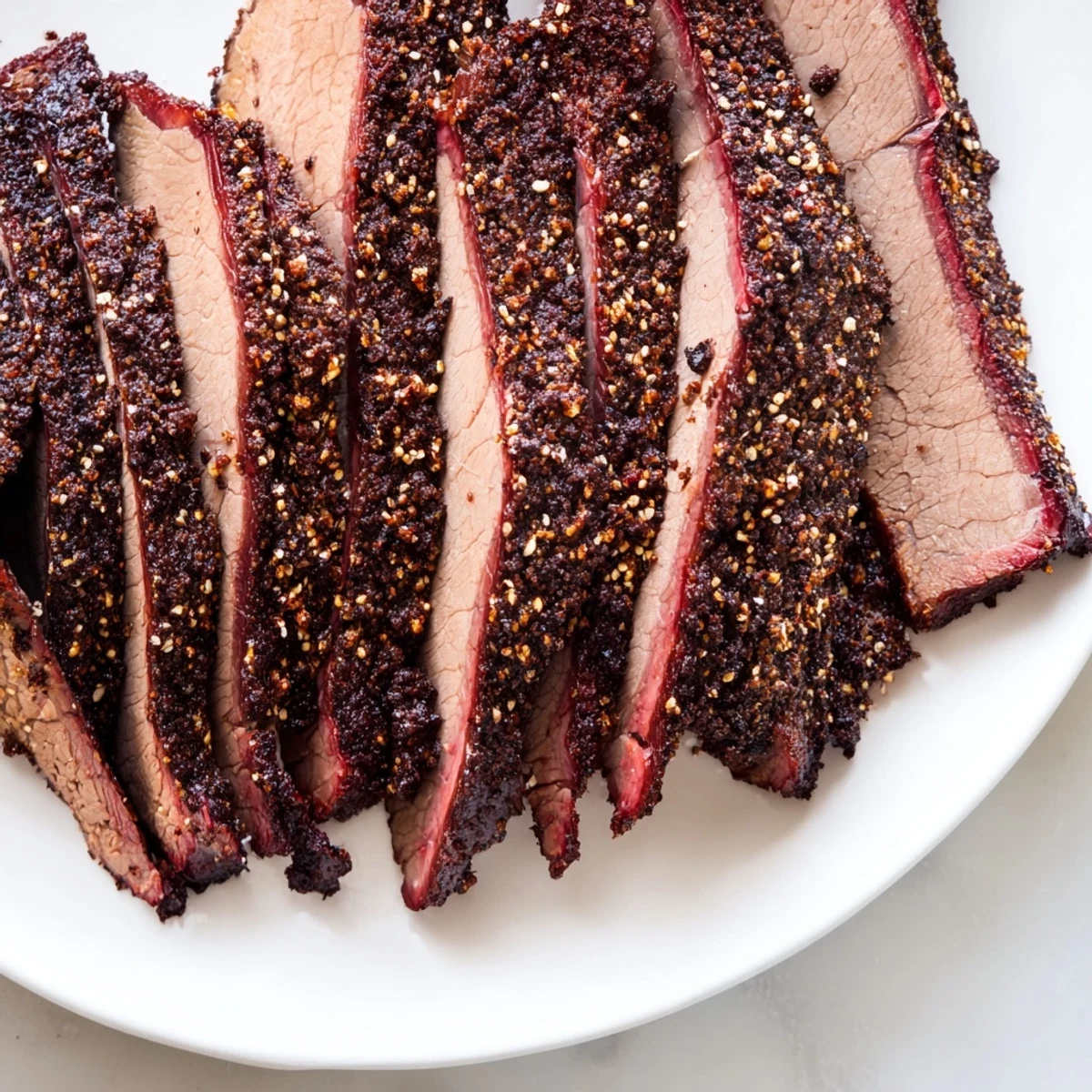
 There's something profound about smoking a brisket—you're working with time and fire and natural elements in a way that feels older than recipes. When you pull that finished brisket from the smoker and see it sliced with that rosy interior and dark bark, you'll understand why people gather around this dish.
Recipe FAQs
- → What type of wood is best for smoking beef brisket?
-
Hardwoods such as oak, hickory, or mesquite are ideal for imparting rich, smoky flavors to beef brisket during the long smoking process.
- → How do I maintain moisture while smoking brisket?
-
Spritzing the brisket every couple of hours with a mixture of apple cider vinegar and water helps keep the meat moist and enhances bark development.
- → Why wrap the brisket during cooking?
-
Wrapping the brisket in butcher paper or foil after bark formation locks in moisture and speeds up cooking while preserving tenderness.
- → What is the ideal internal temperature for smoked brisket?
-
Cooking until the internal temperature reaches about 93–96°C (200–205°F) ensures the brisket is tender and ready to slice.
- → How long should the brisket rest before slicing?
-
Allow the smoked brisket to rest wrapped for at least one hour to let juices redistribute, resulting in juicier slices.
