
 Pin Recipe
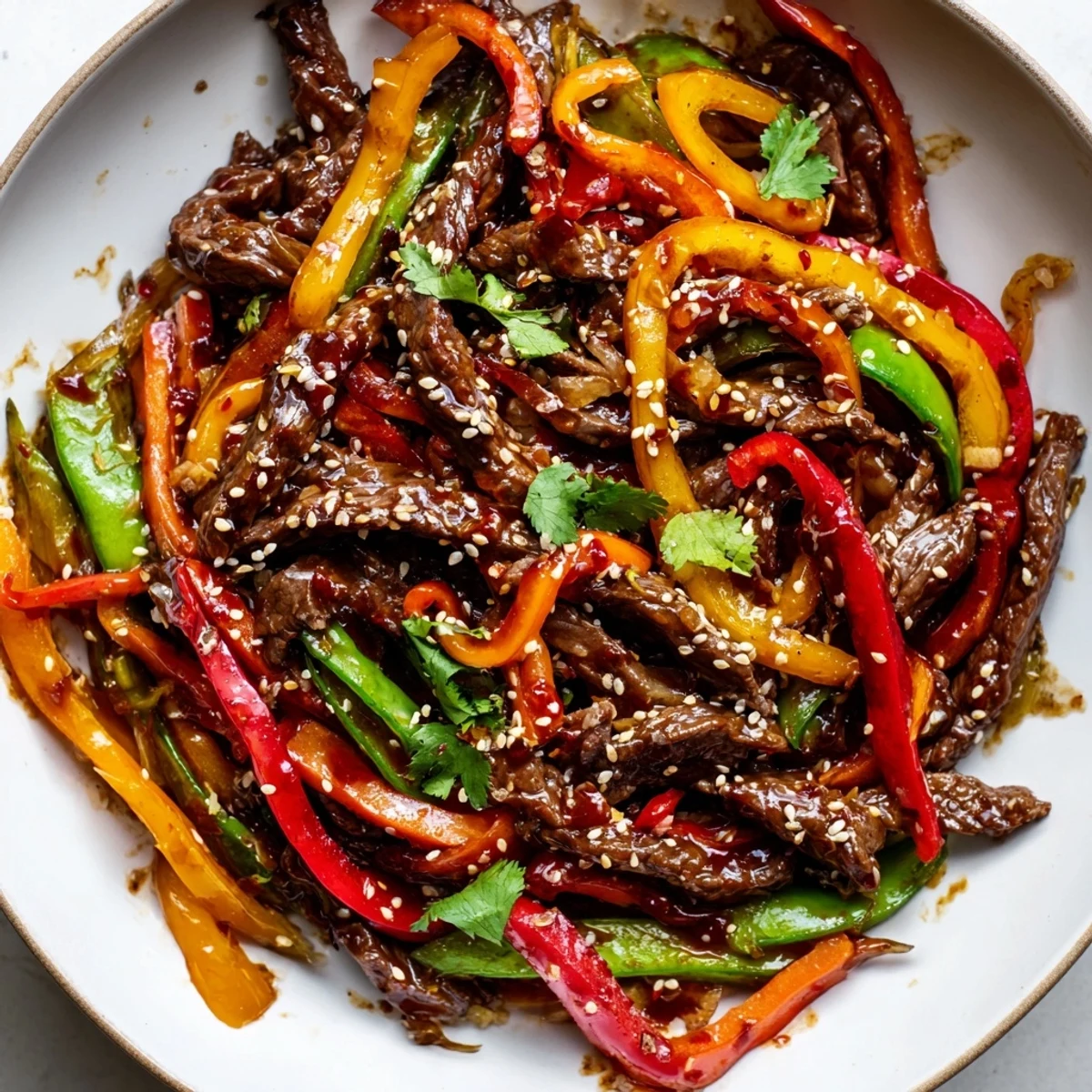
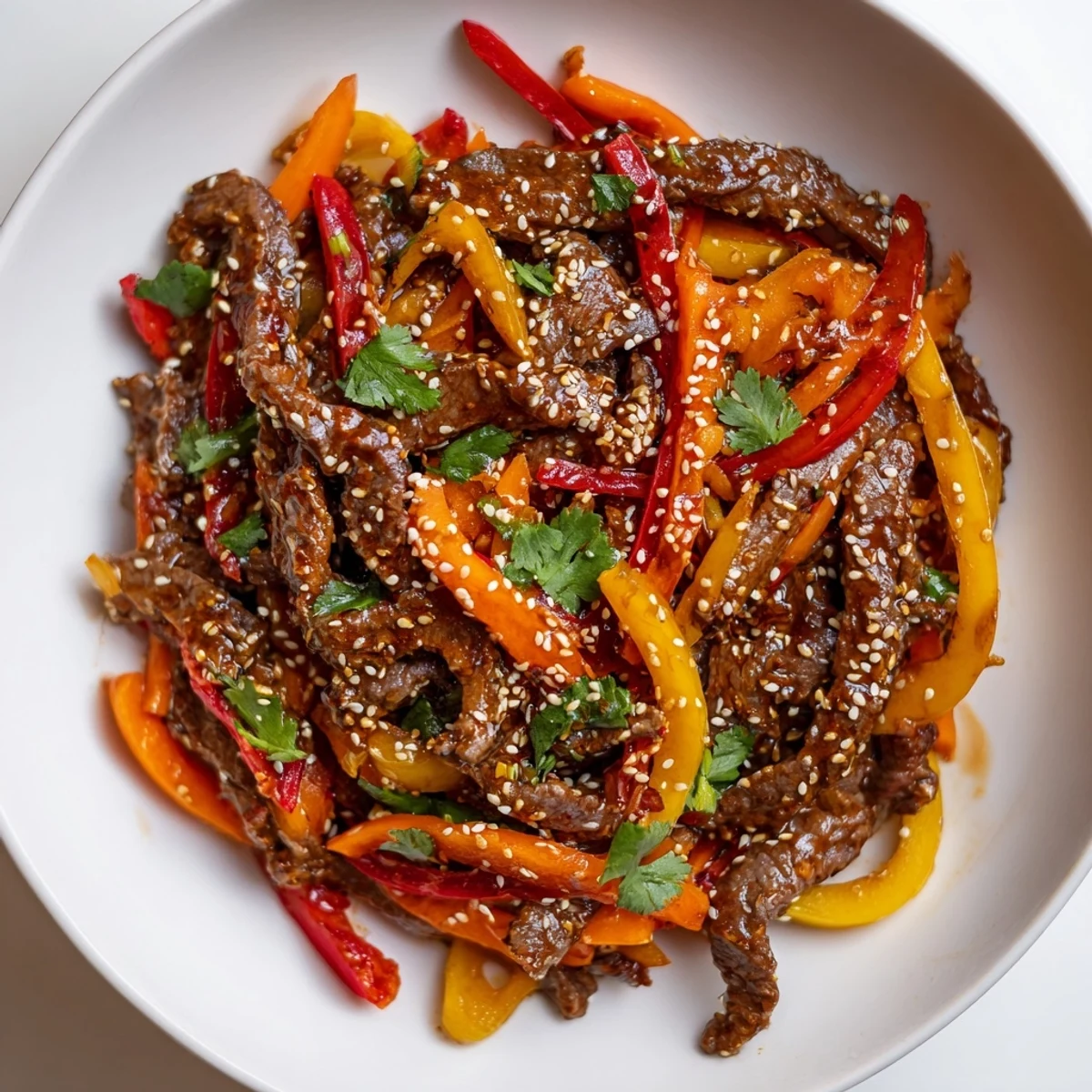
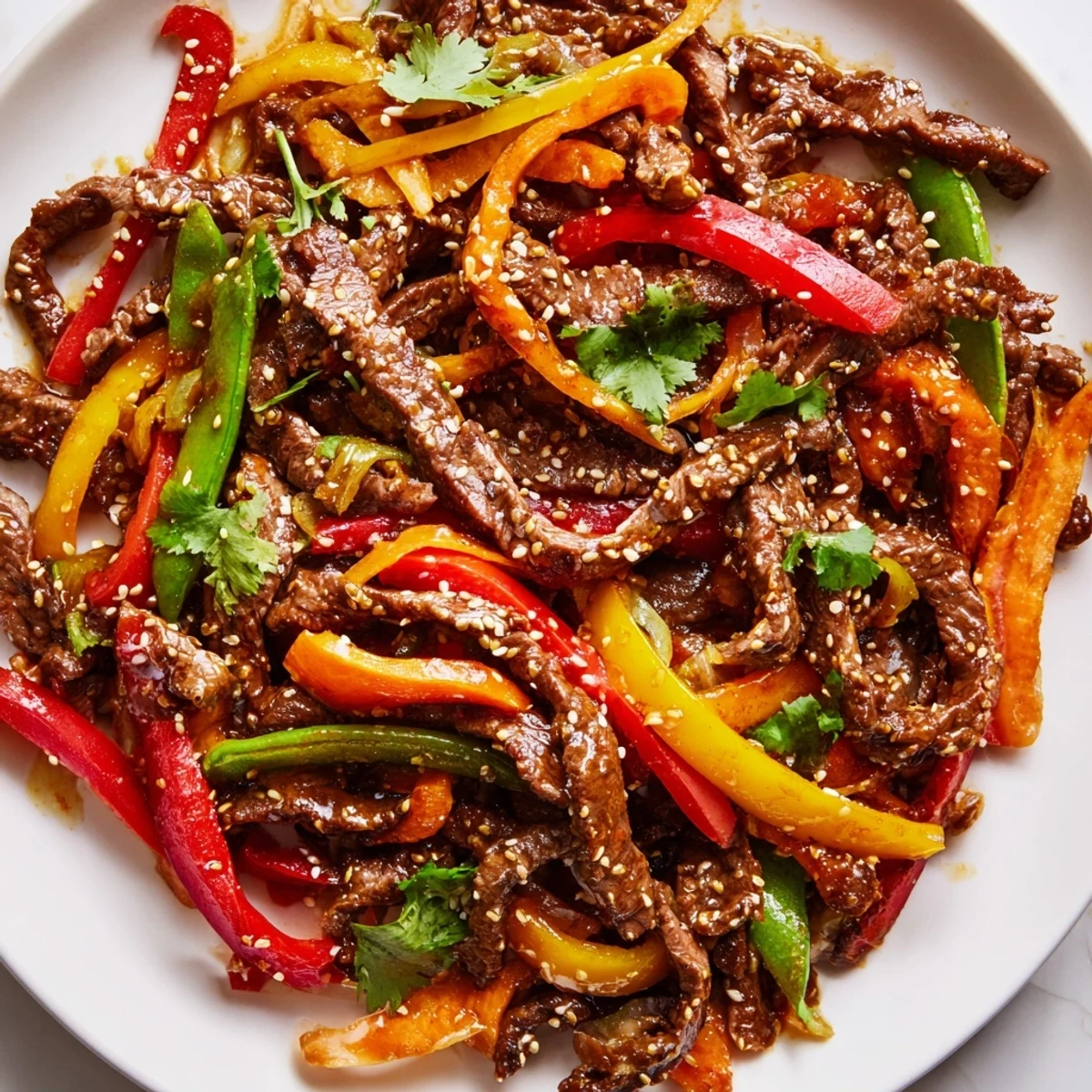
 This vibrant dish combines tender beef slices with crisp bell peppers, snow peas, and carrot, all coated in a fiery, savory sauce made from soy, hoisin, and chili garlic. Quick marination and stir-frying deliver a delightful balance of spice and freshness. Garnished with toasted sesame and fresh cilantro, it’s perfect served with steamed rice or noodles for a flavorful, satisfying meal any night of the week.
There's something about the sizzle of beef hitting a screaming hot wok that makes everything else disappear. I learned this recipe on a Tuesday night when my neighbor brought over a bottle of sriracha and mentioned she could taste the difference between rushed stir fry and intentional stir fry. By the end of that evening, I understood what she meant—it wasn't just about speed, it was about respecting each ingredient's moment in the pan.
I made this for my sister the night before she moved abroad, and we sat at my kitchen counter eating straight from the wok, passing the bowl back and forth while the food was still steaming. She said it tasted like home, which made me realize that's what you're really cooking when you put care into something this quick and alive.
Ingredients
- Flank steak or sirloin, thinly sliced: Buy the beef from somewhere that will slice it for you, or pop it in the freezer for 20 minutes and slice it yourself against the grain—this one detail is what keeps it tender instead of chewy.
- Soy sauce (for marinade): This draws moisture out of the beef gently, and the cornstarch locks in that moisture, creating a texture that's almost velvety.
- Cornstarch: The secret to restaurant-quality beef that doesn't stick and releases beautifully from the pan.
- Sesame oil: Just a teaspoon is enough to add that nutty warmth that makes people ask what makes it taste so good.
- Red and yellow bell peppers: The colors matter here—they cook at the same speed and stay bright, which is both beautiful and practical.
- Carrot, julienned: Cut thin so it cooks in the same two to three minutes as everything else; thick cuts will leave you with half-raw carrot.
- Snow peas: These are non-negotiable for texture; they're one of the few vegetables that stay crisp even after the sauce is added.
- Spring onions: Add some at the end for a fresh bite that cuts through the richness of the sauce.
- Garlic and ginger: Bloom these first in the hot oil—that thirty seconds of fragrance is doing the real work of building flavor.
- Soy sauce, oyster sauce, and hoisin (for sauce): Together these create depth; oyster sauce adds umami, hoisin adds subtle sweetness and body.
- Rice vinegar: This keeps everything balanced so the sauce doesn't taste one-dimensional.
- Sriracha or chili garlic sauce: Start with what the recipe says, taste it, and add more if you want it hotter—this is your heat, your rules.
- Vegetable oil: High heat cooking needs oil that can handle it without smoking, so don't use olive oil here.
- Sesame seeds and cilantro: These are finishing touches that wake up the whole dish and make it feel intentional.
Instructions
- Prepare your beef with intention:
- Slice the beef against the grain and combine it with soy sauce, cornstarch, and sesame oil in a bowl. This isn't just marinating—you're building a protective coating that keeps the beef from overcooking. Let it sit for ten minutes while you prepare everything else.
- Mix your sauce in advance:
- Whisk together soy sauce, oyster sauce, hoisin, rice vinegar, sriracha, sugar, and water in a small bowl. Having this ready means you won't be fumbling while the wok is screaming hot and everything is mid-cook.
- Get your wok screaming hot:
- Heat vegetable oil in your largest wok or skillet over high heat until it shimmers and the oil moves like liquid mercury. When a drop of water sizzles immediately on contact, you're ready.
- Sear the beef like it matters:
- Add the marinated beef in a single layer and let it sit undisturbed for one to two minutes so it browns properly and releases easily. This fond on the pan is flavor you don't want to waste.
- Build the aromatics:
- Remove the beef, add garlic and ginger to the hot wok, and stir constantly for thirty seconds until your kitchen smells like you're cooking something worth remembering. Don't walk away—this can burn in a heartbeat.
- Cook the vegetables with control:
- Add bell peppers, carrot, and snow peas and stir-fry for two to three minutes, tossing constantly. You want them tender but still with a slight resistance when you bite down—that's when you know they're perfect.
- Bring everything back together:
- Return the beef to the wok, pour in the sauce, and toss everything for one to two minutes until the sauce coats the beef and vegetables and turns glossy. The sauce will thicken slightly as it heats, which is how you know it's done.
- Finish with freshness:
- Stir in sliced spring onions off the heat so they stay fresh and sharp. Garnish with sesame seeds and cilantro and serve immediately with steamed rice or noodles.
 Pin Recipe
 I made this once for someone I was trying to impress, and halfway through the cooking, I realized the real magic wasn't in the recipe at all—it was in knowing when to trust the process and when to adjust it. That's when cooking stops being a checklist and starts being a conversation.
Why High Heat Matters Here
Stir frying isn't about being gentle or patient; it's about confidence and heat. A cold or half-warm wok will steam your beef instead of searing it, and steamed beef tastes like sadness. The high heat also seals in flavors quickly, which is why this entire dish takes only twelve minutes to cook but tastes like you've been working on it all day.
The Sauce-to-Food Ratio Trick
The sauce should coat everything without pooling at the bottom of the wok, and the best way to check this is to tilt the pan slightly and watch how the sauce moves. If it clings to the beef and vegetables, you've nailed it. If it's soupy, let it reduce for another thirty seconds over heat. I learned this by accident when I added too much water and had to improvise, and now it's one of my most useful kitchen instincts.
Customizing the Heat and Flavor Balance
This recipe is a foundation, not a prison. If you like it spicier, add fresh sliced chilies or more sriracha. If you prefer it milder, reduce the sriracha and increase the hoisin slightly for a sweeter, less aggressive heat. You can also swap the beef for chicken thighs or firm tofu, and the sauce will work beautifully with either one.
- For a gluten-free version, use tamari instead of soy sauce and check that your hoisin and oyster sauce are certified gluten-free.
- Prep everything before you start cooking so you're not chopping garlic while the wok is waiting for vegetables.
- Serve immediately over jasmine or basmati rice, or with egg noodles if you want something richer.
 Pin Recipe
 Make this when you want to feel like you're cooking something impressive without spending hours in the kitchen. It's the kind of meal that reminds you why cooking matters.
Recipe FAQs
- → What cut of beef works best for this stir fry?
-
Flank steak or sirloin thinly sliced against the grain gives the best tender texture and cooks quickly.
- → Can I adjust the spice level in this dish?
-
Yes, add more sriracha or fresh sliced chili to increase heat, or reduce it for milder flavor.
- → What vegetables provide the best crunch?
-
Bell peppers, snow peas, and julienned carrots offer a perfect mix of crispness and sweetness.
- → How long should the beef marinate before cooking?
-
Marinate for at least 10 minutes to allow flavors to develop without losing tenderness.
- → What can I use as gluten-free alternatives?
-
Use tamari instead of soy sauce and seek gluten-free hoisin and oyster sauces to accommodate dietary needs.
