
 Pin Recipe
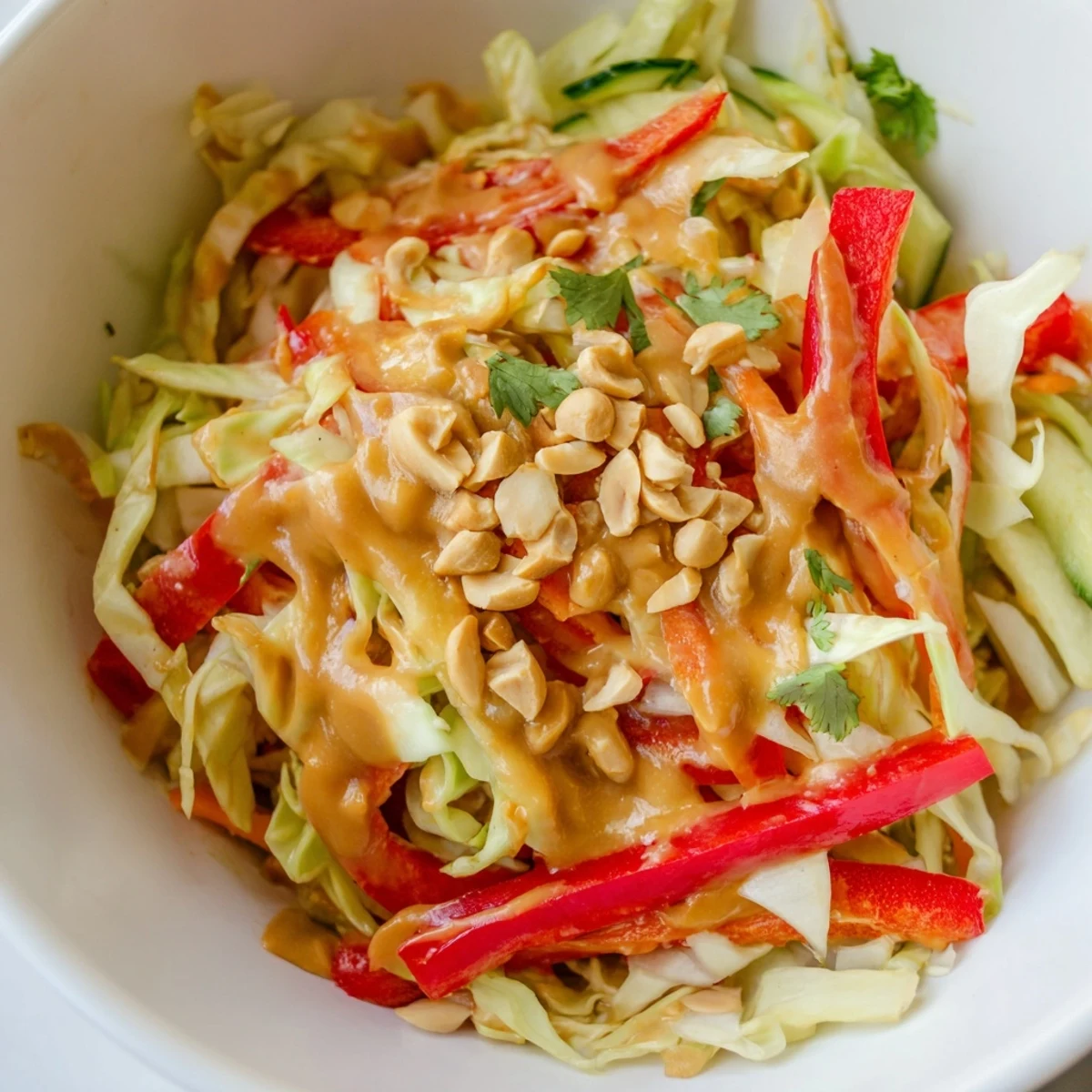
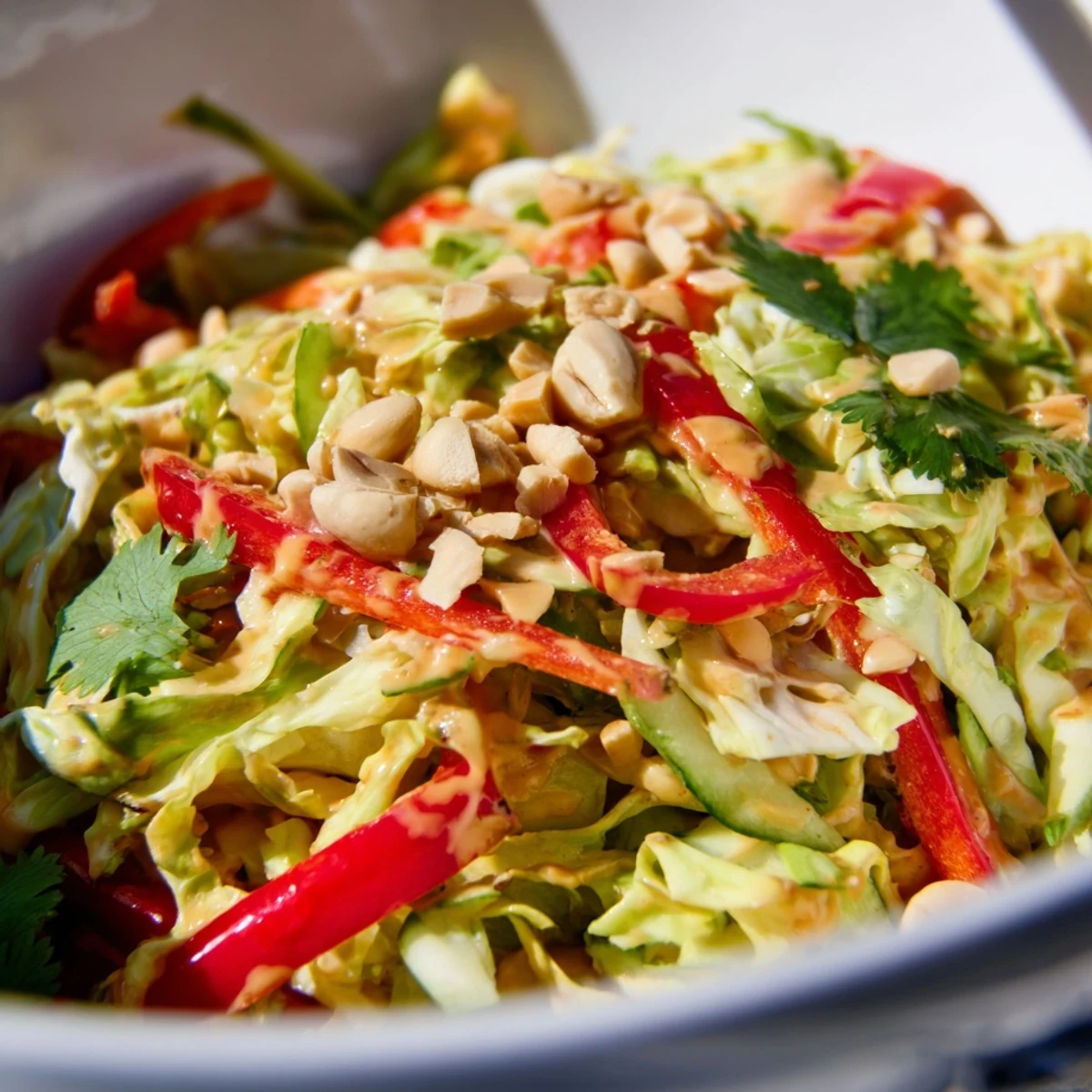
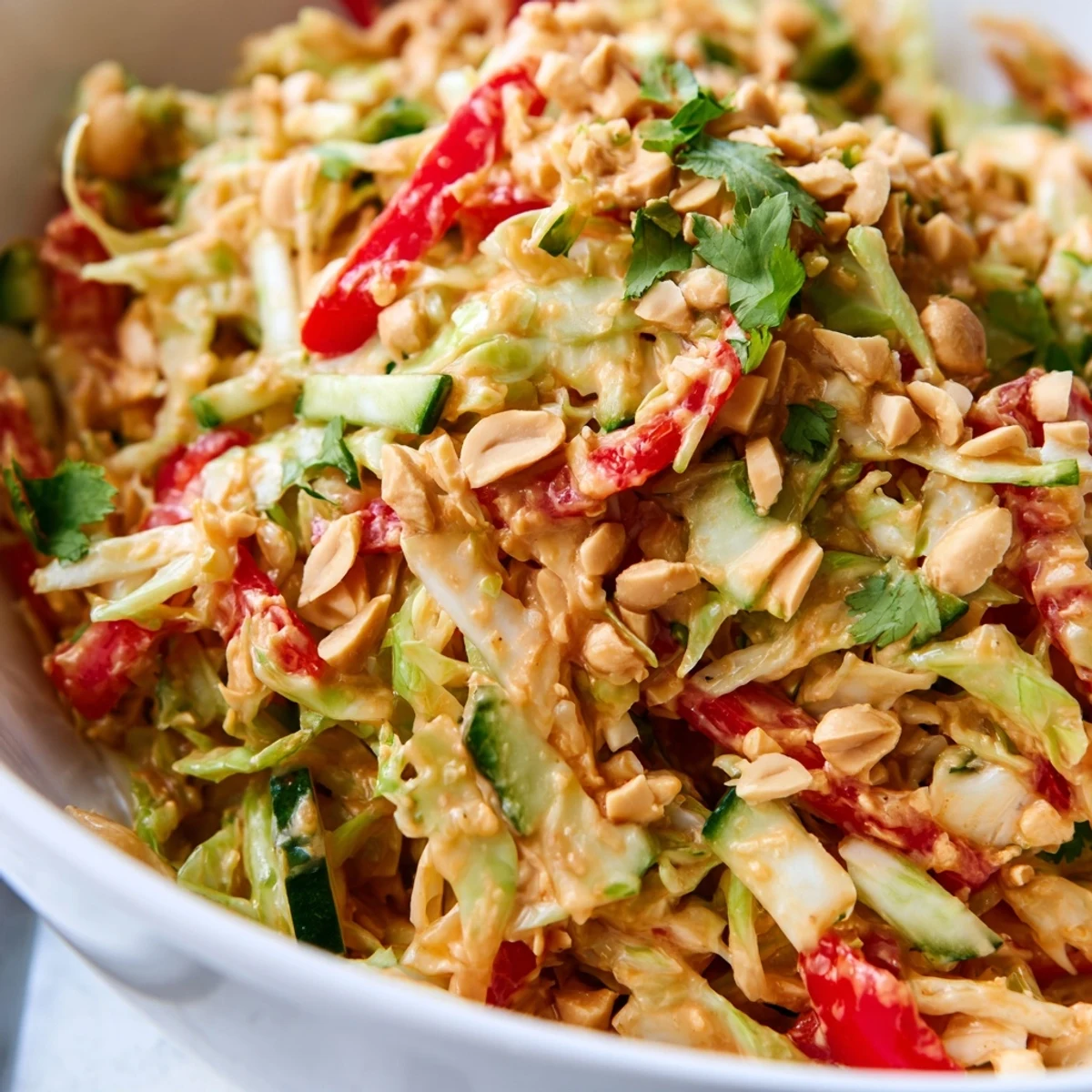
 This vibrant Thai-inspired salad combines crisp vegetables like shredded cabbage, carrots, bell pepper, and cucumber with a rich, creamy peanut dressing. The sauce blends peanut butter with lime, soy sauce, honey, and garlic for that perfect balance of savory, sweet, and tangy flavors.
Ready in just 15 minutes with no cooking required, this dish makes an excellent light lunch or refreshing side. The vegetables provide satisfying crunch while the peanut sauce delivers protein and healthy fats. Top with roasted peanuts and fresh cilantro for authentic texture and aroma.
The first time I made this salad, I was trying to replicate a dish I'd fallen in love with at a tiny Thai spot downtown. The sauce was the mystery I had to solve, and after three attempts that were either too thick or too sour, I finally understood the magic of warm water.
Last summer, I brought this to a potluck where the host was recovering from dental surgery. She texted me later that night saying it was the first thing in days that actually tasted good and felt easy to eat. Sometimes food is just medicine for the soul.
Ingredients
- 2 cups shredded green cabbage: The crunch is essential here, so use a sharp knife or mandoline for thin, even shreds
- 1 cup shredded carrots: These add sweetness and color, and I like to shred them slightly finer than the cabbage
- 1 red bell pepper, thinly sliced: Choose one that feels heavy and has smooth, unblemished skin
- 1 cucumber, julienned: English cucumbers work beautifully since they have fewer seeds and thinner skin
- 2 green onions, thinly sliced: Include some of the green tops for a milder onion flavor
- 1/2 cup fresh cilantro leaves: Tear the larger leaves by hand rather than chopping to avoid bruising
- 1/4 cup roasted peanuts, roughly chopped: Buy them already roasted and salted to save time
- 1/4 cup creamy peanut butter: Natural peanut butter gives a more complex flavor, but regular works fine too
- 2 tbsp soy sauce: This is the salt source, so adjust based on whether your peanuts are salted
- 2 tbsp lime juice: Fresh is critical here, and I often roll the lime on the counter before cutting to maximize juice
- 1 tbsp honey or maple syrup: Start with less if you prefer a more tangy sauce
- 1 tbsp rice vinegar: This adds brightness that cuts through the rich peanut butter
- 1 tsp toasted sesame oil: A little goes a long way, so measure carefully
- 1 garlic clove, minced: Grate it on a microplane for a smoother texture in the sauce
- 1-2 tbsp warm water: The secret ingredient that transforms the sauce from paste to silky dressing
- 1/2 tsp chili flakes or sriracha: Add this gradually if you are sensitive to heat
Instructions
- Prep your vegetables:
- Use a large cutting board and keep your knife sharp for the cleanest cuts, then place everything in your biggest salad bowl
- Make the sauce base:
- Whisk the peanut butter, soy sauce, lime juice, honey, rice vinegar, sesame oil, garlic, and chili flakes until combined
- Perfect the consistency:
- Add warm water one tablespoon at a time, whisking after each addition, until the sauce flows like warm honey
- Bring it together:
- Drizzle about three quarters of the sauce over the vegetables and toss gently with clean hands or salad tongs
- Finish with flair:
- Scatter the chopped peanuts and fresh cilantro over the top and add more sauce if needed at the table
 Pin Recipe
 This has become my go-to dinner on nights when cooking feels like too much. Something about the combination of cool crisp vegetables and that rich savory sauce makes everything feel a little better.
Make It A Meal
Grilled chicken thighs marinated in soy sauce and lime juice add protein without overwhelming the delicate flavors. For a vegan version, I love adding crispy baked tofu cubes that have been pressed and seasoned with garlic powder.
Vegetable Swaps
Shredded Brussels sprouts work surprisingly well as a cabbage substitute and add a slightly nutty flavor. In the spring, I swap in thinly sliced sugar snap peas and shaved asparagus for something lighter.
Sauce Variations
Once you master the basic sauce, try stirring in a tablespoon of coconut milk for extra richness or a teaspoon of fresh ginger for warmth. The sauce also doubles as an incredible dip for spring rolls or satay skewers.
- Make extra sauce and store it in a jar for quick weekday lunches
- Season the sauce to taste before adding it to the vegetables
- Let the dressed salad sit for five minutes before serving to let flavors meld
 Pin Recipe
 This salad reminds me that the simplest food, made with care and fresh ingredients, is often what we remember most fondly.
Recipe FAQs
- → How long does this keep in the refrigerator?
-
The dressed salad is best enjoyed immediately as the vegetables will soften over time. However, you can store prepared vegetables and sauce separately for up to 3 days. Toss together just before serving for optimal freshness and crunch.
- → Can I make the peanut sauce ahead of time?
-
Absolutely. The peanut sauce can be made up to 5 days in advance and stored in an airtight container in the refrigerator. It may thicken when cold, so simply whisk in a small amount of warm water before serving to reach the desired consistency.
- → What vegetables work best in this salad?
-
The traditional combination includes cabbage, carrots, bell pepper, and cucumber for their crunch and ability to hold the sauce well. You can also add shredded purple cabbage, snap peas, bean sprouts, or mung bean noodles for variety. The key is using vegetables that maintain their crisp texture.
- → How can I make this spicier?
-
Increase the chili flakes to 1 teaspoon or add more sriracha to the peanut sauce. You can also add fresh minced Thai chilies to the salad or drizzle with extra chili oil before serving. Adjust gradually to suit your spice preference.
- → Is this suitable for meal prep?
-
Yes, this works wonderfully for meal prep. Keep the chopped vegetables in one container and the sauce in another. When ready to eat, simply toss together and garnish with fresh peanuts and cilantro. The vegetables will stay crisp for several days when stored properly.
- → What protein additions work well?
-
Grilled chicken, baked tofu, or sautéed shrimp all complement the flavors beautifully. You can also add edamame, roasted chickpeas, or sliced hard-boiled eggs for vegetarian protein options. Add the protein when assembling rather than storing it with the dressed vegetables.
