
 Pin Recipe
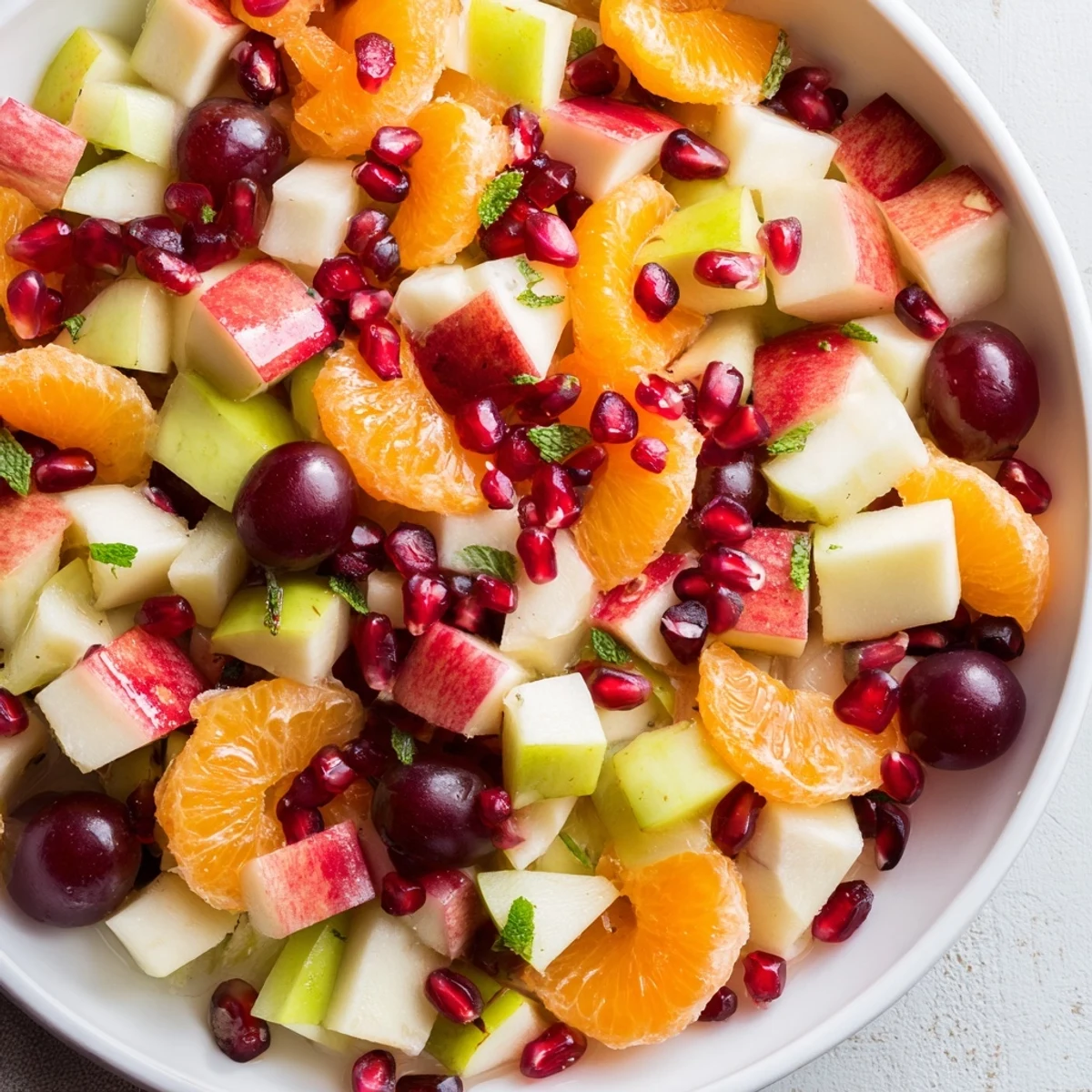
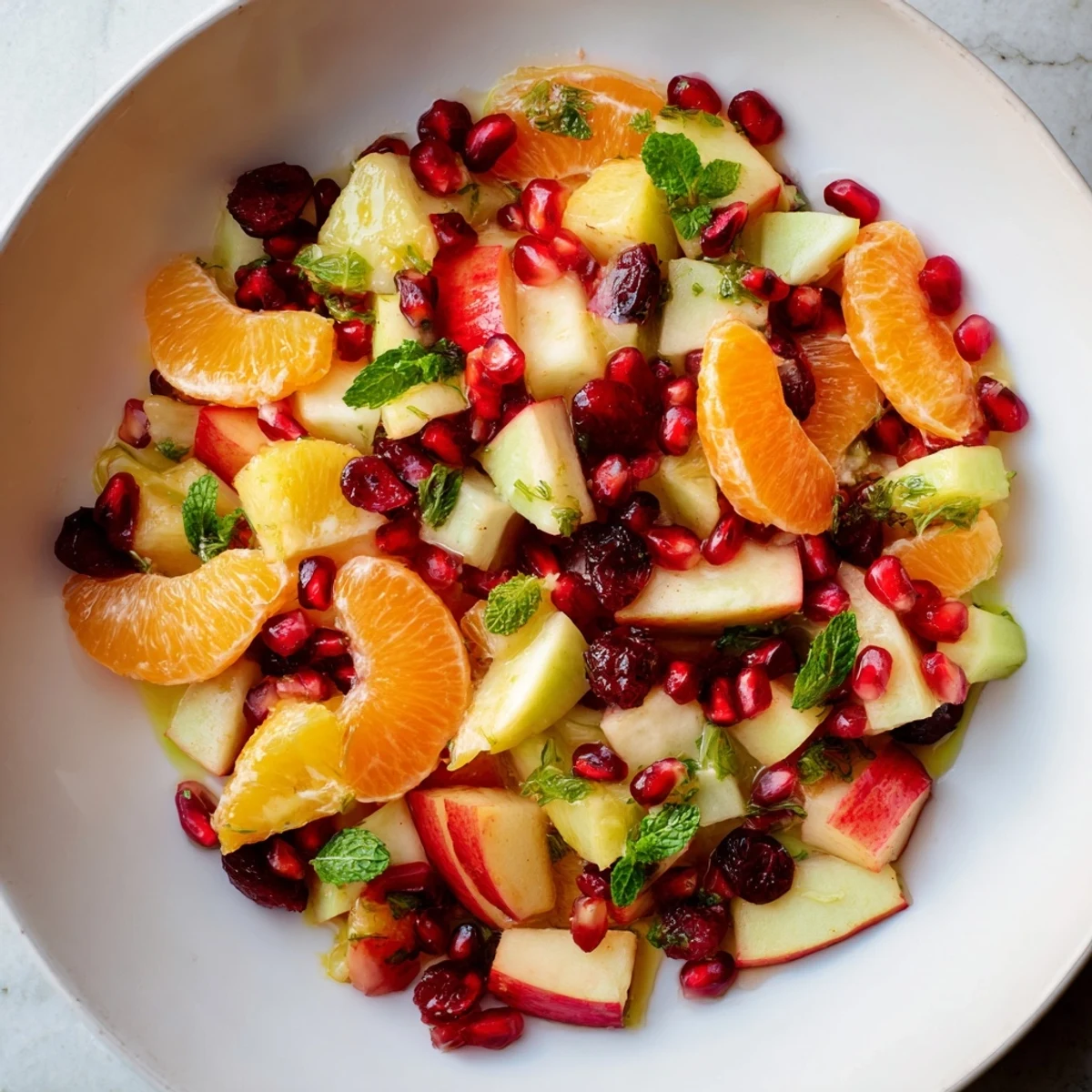
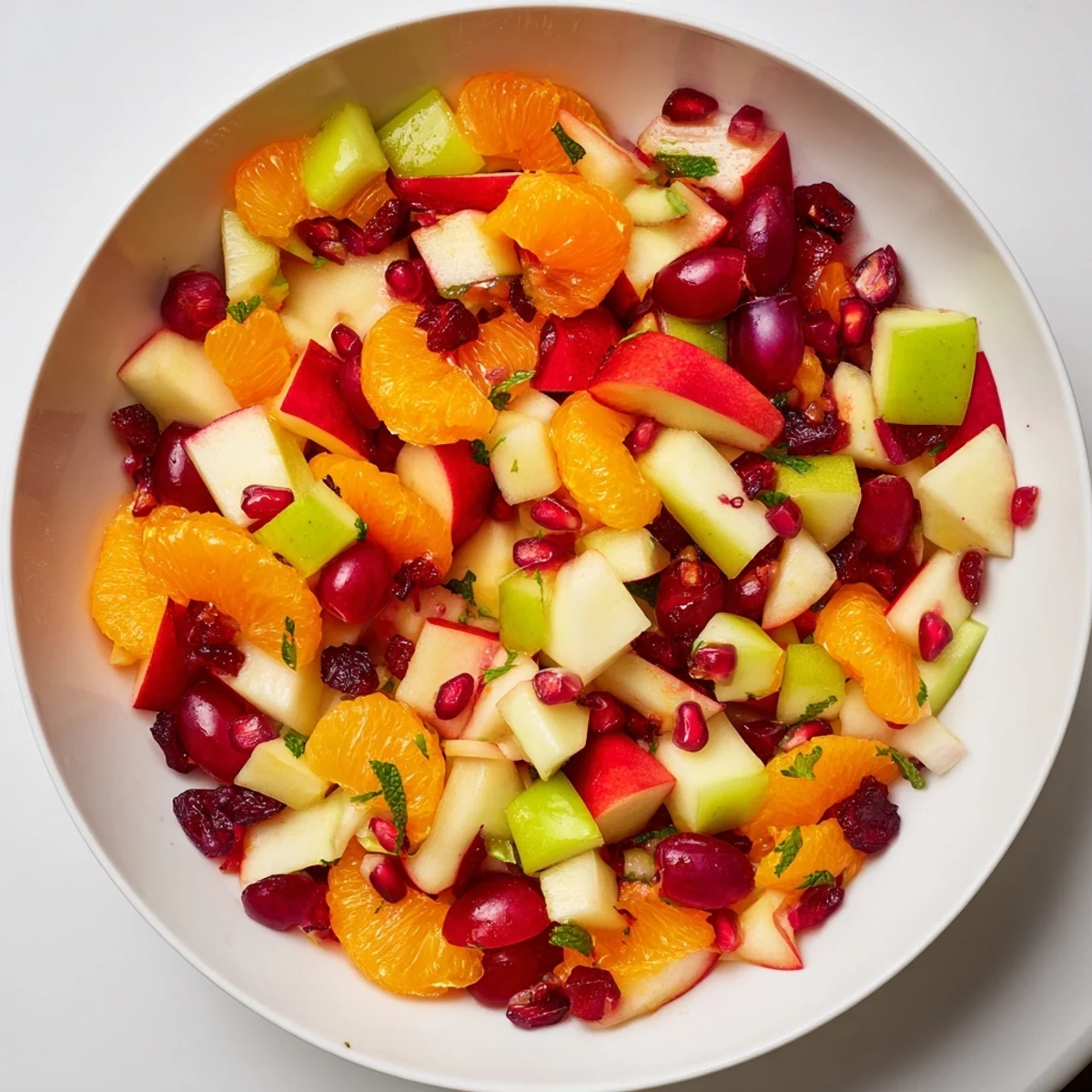
 This winter fruit salad blends juicy oranges, crisp apples, ripe pear, pomegranate seeds, grapes, and dried cranberries. A sweet-tangy honey lime dressing highlights the natural flavors, while optional fresh mint adds a bright herbaceous note. Ready in just 15 minutes, this salad offers a refreshing, gluten-free, vegetarian dish perfect for cold days. Variations like adding toasted nuts or substituting maple syrup increase texture and dietary options. Serve chilled to let flavors meld beautifully.
I first discovered the magic of a winter fruit salad on a grey January afternoon when my sister arrived with a bag of pomegranates she'd been hoarding. She tossed them into a bowl with whatever citrus we had lying around, drizzled some honey and lime over the whole thing, and suddenly the kitchen felt warm again. That simple act of combining winter's jewel-toned fruits with a bright, zesty dressing became my antidote to the season's heaviness. Now, whenever the days feel too short and the weather too cold, I reach for this salad.
I made this for a dinner party last February when I was convinced nothing could save the evening—the roads were icy, half my guests cancelled, and I had no time for anything complicated. But then I remembered this salad, and something shifted. As my remaining guests walked through the door, shaking off the cold, I placed this bowl of jeweled fruit in the center of the table. The pomegranate seeds caught the light. The colors alone warmed the room. By the end of the meal, people were asking for seconds of the salad, not the main course.
Ingredients
- Oranges: Two segments' worth of brightness—the juice and flesh anchor the entire salad, so choose ones that feel heavy for their size. Fresh is non-negotiable here.
- Apples: I learned the hard way to cut these last and toss immediately, otherwise they turn a sad brown. Crisp varieties like Granny Smith or Honeycrisp hold their shape beautifully.
- Pear: That one large pear is your secret weapon for creaminess. It melts slightly into the dressing and becomes almost luxurious.
- Pomegranate seeds: These are the jewels. Yes, they take time to extract, but the burst of tart-sweet flavor and that gorgeous crimson color are absolutely worth it.
- Red grapes: Halving them lets the dressing coat them evenly. They add a yielding sweetness that rounds everything out.
- Dried cranberries: A small handful keeps the salad from feeling too heavy, adding a subtle tang that plays beautifully with the lime.
- Honey: Three tablespoons is the right amount to sweeten without drowning. Raw honey has a warmer, more complex flavor if you have it.
- Fresh lime juice: Never skip this for bottled. One fresh lime gives you that essential brightness that makes people pause and ask what you did.
- Lime zest: This is the detail that separates ordinary from memorable. Those little oils in the zest are concentrated flavor.
- Fresh mint: A handful of chopped leaves scattered over top is optional only in the way that dessert is optional—technically yes, practically no.
Instructions
- Gather your fruit and set up your station:
- Wash everything and lay it out on your cutting board. There's something settling about this moment—it's where the salad actually begins, not at the mixing bowl.
- Prepare the fruit gently:
- Peel your oranges and separate into segments, letting any juice fall into the large bowl. Core and dice your apples into roughly 3/4-inch pieces—not too small or they'll disappear, not too large or they'll feel like work to eat. Do the same with your pear. For the pomegranate, cut it in half, hold it cut-side down over a bowl of water, and tap the back with a spoon until the seeds fall out. The water prevents them from bouncing everywhere. Halve your grapes. Measure out your dried cranberries.
- Combine the fruit:
- Gently toss everything together in that large bowl. This isn't aggressive mixing—treat the fruit like you're introducing friends who you think will get along. You want them mingling, not bruised.
- Make the dressing that changes everything:
- In a small bowl, whisk the honey, lime juice, and lime zest together. You'll feel the zest's oils release—that's when you know it's right. The mixture should be smooth and amber-colored, with visible flecks of lime throughout.
- Bring it together:
- Pour the dressing over the fruit and toss again, this time with intention. Every piece should glisten. The dressing will start mingling with the fruit juices, creating a light syrup that's somehow both sweet and bright.
- Add the final touch:
- Scatter the chopped mint over top if you're using it. This is where fresh herbs do their magic—they wake everything up.
- The hardest part—waiting:
- You can serve this immediately, and it's lovely. But if you have even 15 minutes, let it sit in the refrigerator. The flavors meld, the fruit softens slightly, and the whole thing becomes somehow greater than the sum of its parts.
 Pin Recipe
 There was a morning last winter when my daughter made this salad entirely on her own—she was maybe eight, determined to make something colorful. When her father came downstairs and saw what she'd created, he got quiet for a moment. It wasn't just the beauty of it; it was watching her understand that good food brings people together, that even something simple can be meaningful. That's what this salad is to me now.
Why Winter Fruit Salads Matter
Winter is a season when fresh fruit can feel like a luxury, and that's exactly why this salad exists. It takes the fruits winter gives us—citrus, pomegranates, stored apples and pears—and reminds us that abundance isn't seasonal, it's about how you see what's already there. A good winter fruit salad is an act of gentle defiance against the grey days. It says: look, there is color here. There is brightness. There is something worth celebrating.
Variations and Substitutions
The beauty of this salad is its flexibility. Maple syrup or agave work beautifully in place of honey if you're cooking for vegans—the flavor shifts slightly, becomes more earthy, but the principle remains the same. If pomegranates aren't available or feel too expensive, extra red grapes or even fresh cranberries (if you can find them) fill that role. Persimmons, kiwis, or blood oranges all belong here in winter. Even toasted walnuts or pecans scattered on top add a textural depth that transforms this from side dish to something more substantial. The dressing is your anchor—everything else can adapt to what your kitchen has to offer.
- Try adding a pinch of fresh ginger to the dressing for warmth and complexity
- A few pomegranate molasses mixed into the dressing adds a deeper, more sophisticated tang
- Toasted nuts should be added just before serving so they stay crisp and don't absorb the dressing
Make It Your Own
The moment I stopped following the recipe exactly and started making this salad based on what was in my crisper drawer, it became something I actually wanted to make week after week. That's when a recipe transforms from instructions into a framework for creativity. This salad is sturdy enough to handle your adjustments and generous enough to welcome them. Make it when you're tired of the same winter meals. Make it when you want to eat your vegetables but forget you're doing it. Make it because someone you care about could use a little brightness today.
 Pin Recipe
 This salad taught me that sometimes the most nourishing meals are the simplest ones, the ones that ask only for good fruit, good timing, and the willingness to let something bright break through the winter. It's become my go-to gift to bring when I'm invited to someone's home during cold months—proof that abundance and brightness are always possible.
