
 Pin Recipe
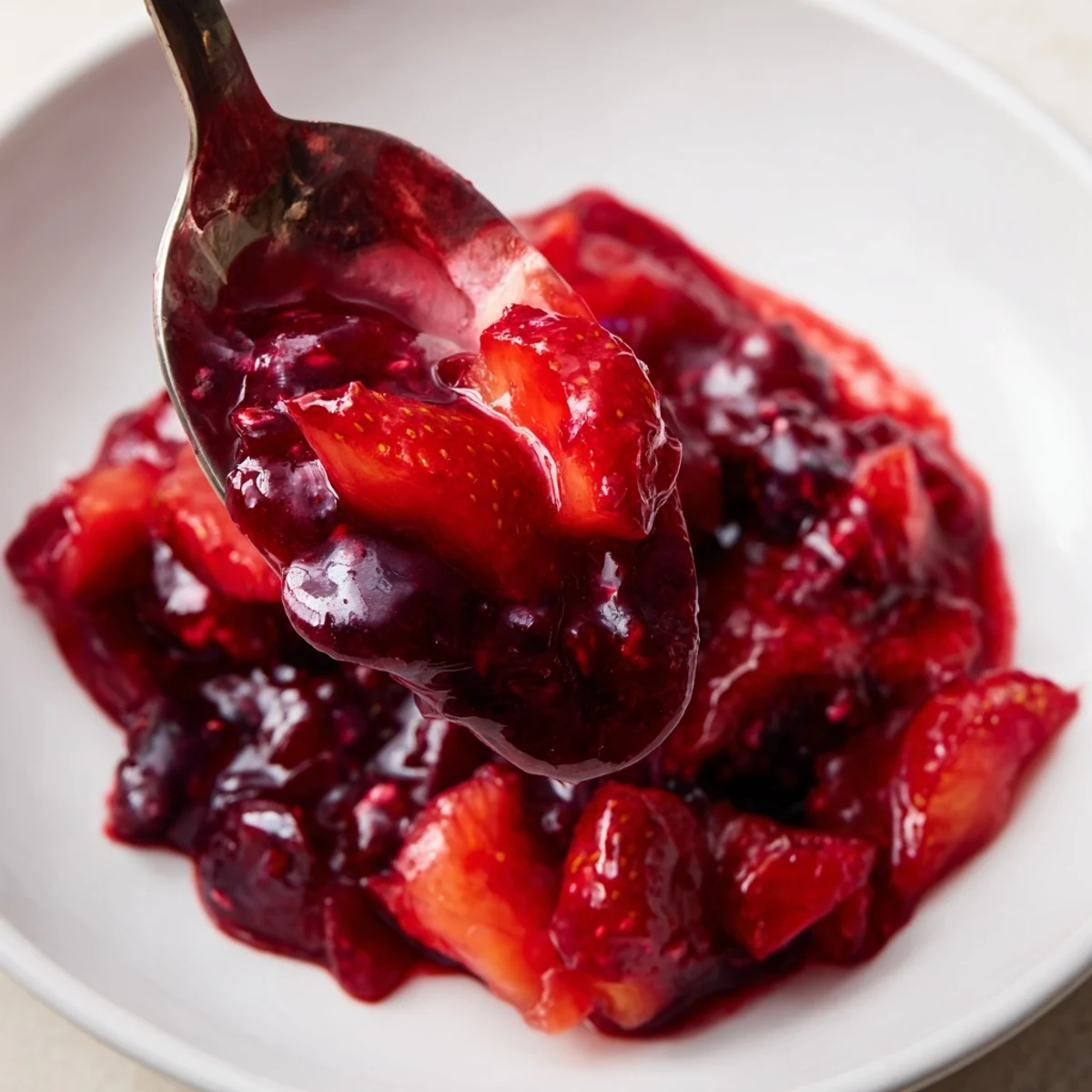
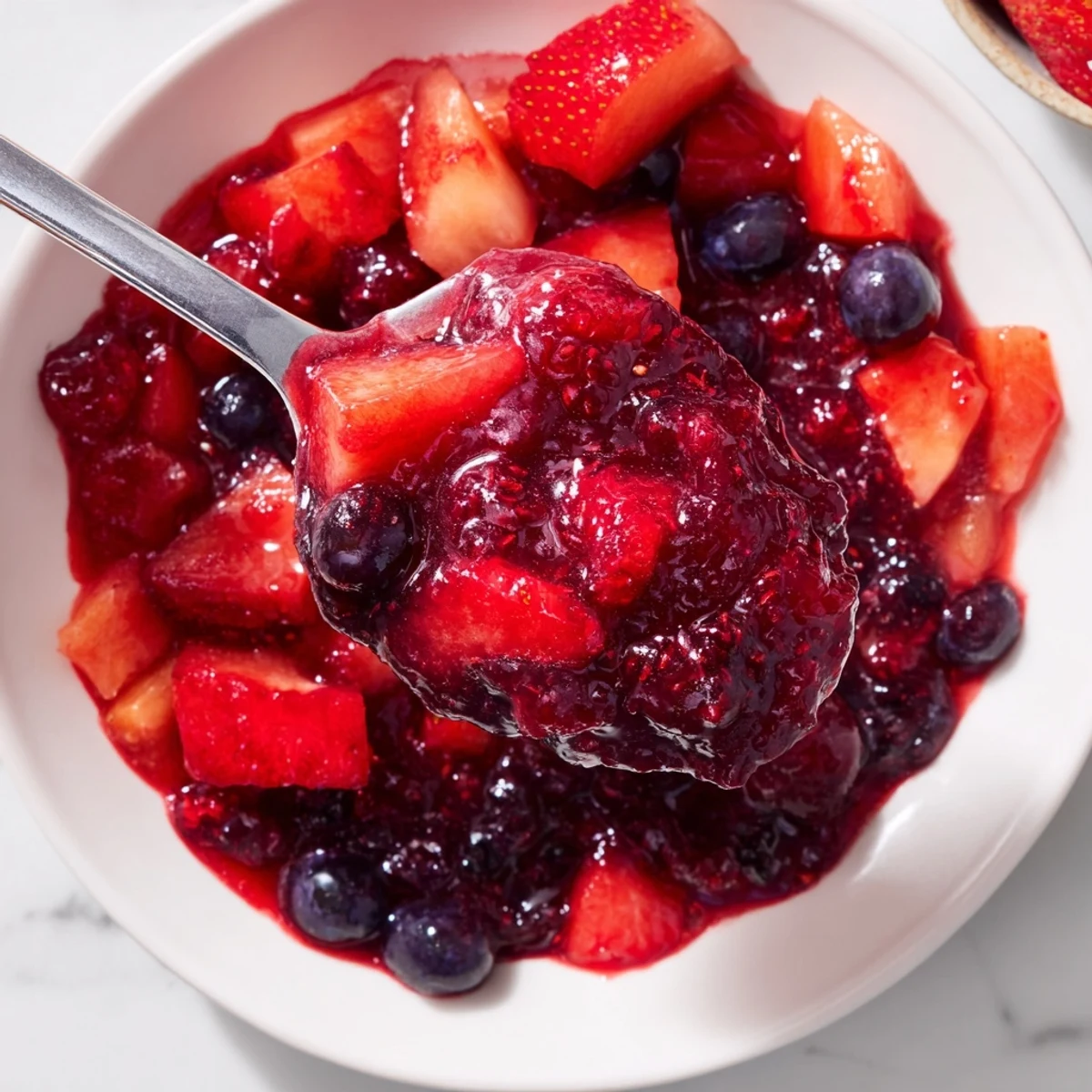
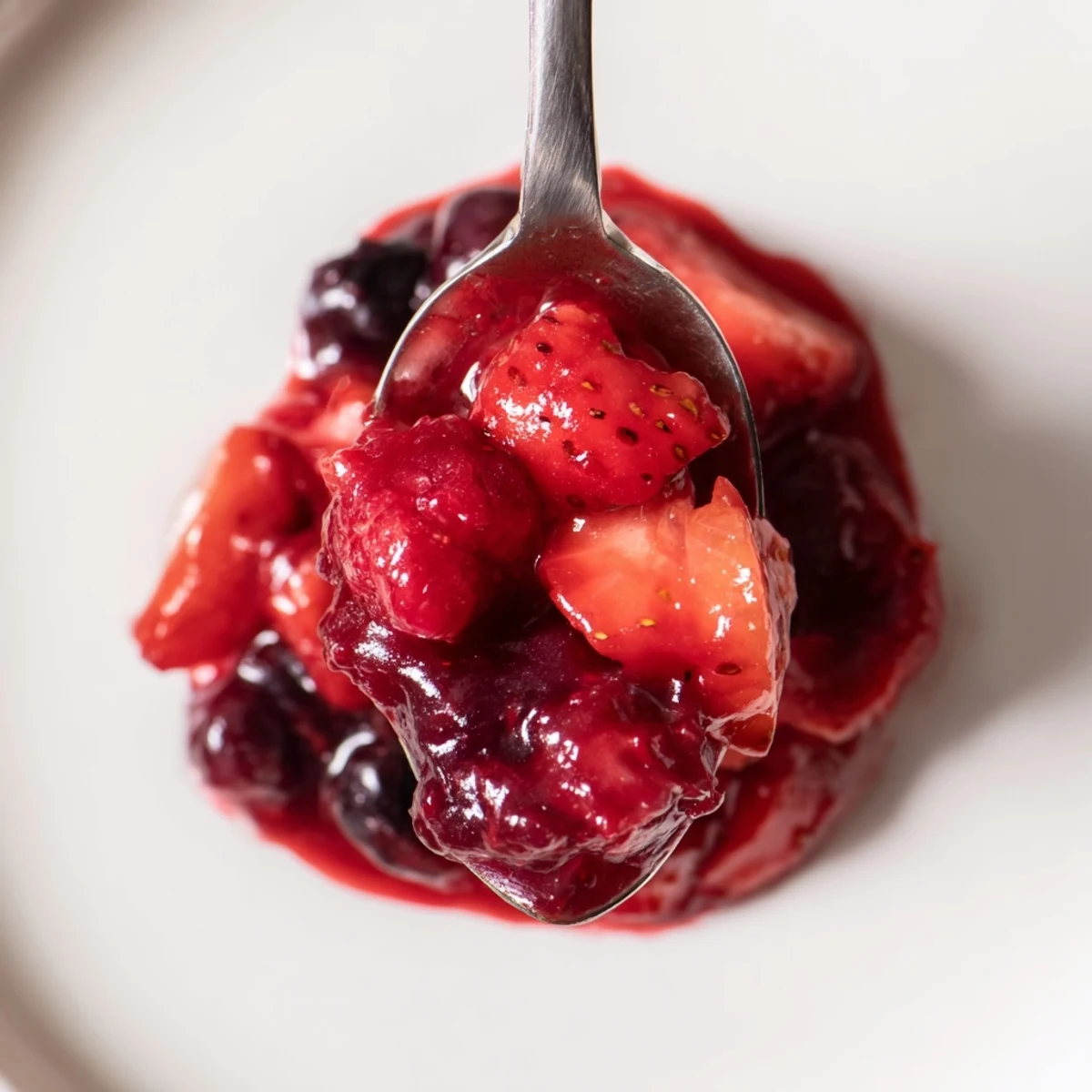
 This vibrant homemade fruit spread blends mixed fresh fruits with lemon juice and granulated sugar, simmered to reach a perfect thick consistency. Optional vanilla adds a warm note. Ideal for spreading on toast, swirling into yogurt, or layering in desserts. Preparation is simple and quick, requiring basic kitchen tools and about 50 minutes of total time. Adjust sweetness or try different fruit pairings for unique flavors.
Follow careful simmering and testing techniques to achieve the desired texture without overcooking. Store in sterilized jars for freshness and enjoy a naturally sweet, gluten-free, and vegan-friendly condiment that complements a variety of dishes.
There's something almost magical about the moment fruit transforms into jam—when you realize you've captured summer itself in a jar. I discovered this years ago on a rainy afternoon when my friend arrived with a colander overflowing with berries from her garden, insisting we do something with them before they spoiled. We ended up in my kitchen, the air thick with steam and the smell of fruit breaking down into something entirely new, and I haven't looked back since.
The first batch I made was for my grandmother's birthday breakfast, and when she tasted it on warm scones with cream, she got that quiet look people get when something hits them just right. She asked me to make it again the next week, and then the week after that, and somehow a rainy-day experiment became a ritual between us.
Ingredients
- Mixed fresh fruit (1 kg): Strawberries, raspberries, blueberries, peaches, or any single variety work beautifully—just make sure it's ripe enough to smell sweet, because that's when the flavor will shine in your finished jam.
- Granulated sugar (500 g): This isn't just sweetness; it's the magic that helps your jam set and brings out the fruit's natural complexity.
- Fresh lemon juice (2 tbsp): The secret weapon that cuts through richness and makes every flavor sing—never skip this or use bottled.
- Vanilla bean or extract (optional): Just a whisper of vanilla deepens everything without announcing itself.
Instructions
- Prepare your fruit with intention:
- Wash everything well, then hull and pit as needed. Chop pieces to roughly the same size so they cook evenly—you're aiming for chunks small enough to spread but large enough to remind you what fruit this actually was.
- Combine fruit and acid in your largest saucepan:
- Add the lemon juice, then decide how you like your jam textured. Mash gently with a potato masher if you want it chunky and rustic, or puree it smoother if that's your preference. There's no wrong choice here.
- Add sugar and let it rest:
- Stir everything together and walk away for 10 minutes—this pause lets the fruit release its juices naturally, which becomes your cooking liquid.
- Bring the mixture to a rolling boil:
- Set the heat to medium and stir frequently as it climbs toward boiling, breaking up any clumps on the bottom. Once it's truly boiling, you'll see the surface dancing and the color deepen.
- Simmer and watch for the set:
- Lower the heat so it bubbles gently, not violently. Stir occasionally and skim away any foam that rises to the surface. This takes 25 to 35 minutes, but the exact time depends on how much water your fruit released and how hot your stove actually runs.
- Test for doneness the old-fashioned way:
- Drop a spoonful onto a cold plate and let it cool for a minute, then push it with your finger. If it wrinkles and holds its shape, you're done; if it slides apart, keep cooking and test again in a few minutes.
- Stir in vanilla at the very end:
- If you're using it, add vanilla just before you pour, so its delicate flavor doesn't cook away.
- Pour into warm sterilized jars:
- Leave a quarter inch of headspace at the top, then seal immediately while the jam is still hot. The seal will pop as it cools, which is exactly what you want.
 Pin Recipe
 I remember the evening my sister came home from college and found homemade jam in the refrigerator, and she actually sat down and ate it straight from the jar with a spoon like a person who'd been waiting their whole life for something that tasted like home. It was one of those moments when you realize food is really just an excuse for love.
Choosing Your Fruit
The best jam starts with fruit that's ripe but still firm—overripe fruit will cook down into mush, while underripe fruit won't have enough natural pectin to set properly. Mixed fruit combinations create complexity; strawberry and rhubarb is tart and bright, while raspberry and peach is sophisticated and deep. Single-fruit jams are beautiful too if that's what you have in abundance.
Storage and Serving
If you seal your jars while the jam is hot, they'll keep at room temperature for months—the refrigerator is fine too, but not necessary if you've done the sealing right. Once opened, treat it like any other jam and keep it in the fridge. Serve it warm on buttered toast, layered into yogurt for breakfast, swirled through cake batter, or even with sharp cheese and crackers for something unexpected.
Variations and Flavor Play
There's real joy in treating jam-making as a form of gentle experimentation—you can infuse it with herbs like basil or rosemary by adding a sprig during cooking, or use honey for half the sugar to change the flavor profile entirely. For a lower-sugar version, use 350 g of sugar and stir in low-sugar pectin according to package directions, though the flavor will be brighter and less syrupy.
- Try a pinch of black pepper or cardamom for depth that surprises people.
- Add a splash of liqueur or wine in the final minute of cooking for a sophisticated edge.
- Remember that flavors concentrate as jam cools, so resist over-seasoning while it's hot.
 Pin Recipe
 Homemade jam is proof that the simplest ingredients, given time and attention, become something worth remembering. Every jar you make is a small act of care—for yourself, for someone you're feeding, for the season you're preserving.
Recipe FAQs
- → How do I know when the spread is ready?
-
Test by placing a spoonful on a cold plate; it should wrinkle when pushed, indicating proper thickness.
- → Can I use different fruits for this spread?
-
Yes, mixing fruits like strawberry and rhubarb or raspberry and peach creates unique flavor combinations.
- → What is the purpose of lemon juice in the mixture?
-
Lemon juice adds acidity, balancing sweetness and helping to set the texture during cooking.
- → Is it necessary to use vanilla?
-
Vanilla is optional but adds a warm, aromatic note when stirred in near the end of cooking.
- → How should I store the finished spread?
-
Pour into sterilized jars, seal immediately, cool to room temperature, then refrigerate or process for longer storage.
- → Can I reduce sugar without affecting texture?
-
Yes, lowering sugar to 350g and adding low-sugar pectin helps maintain thickness with less sweetness.
