
 Pin Recipe
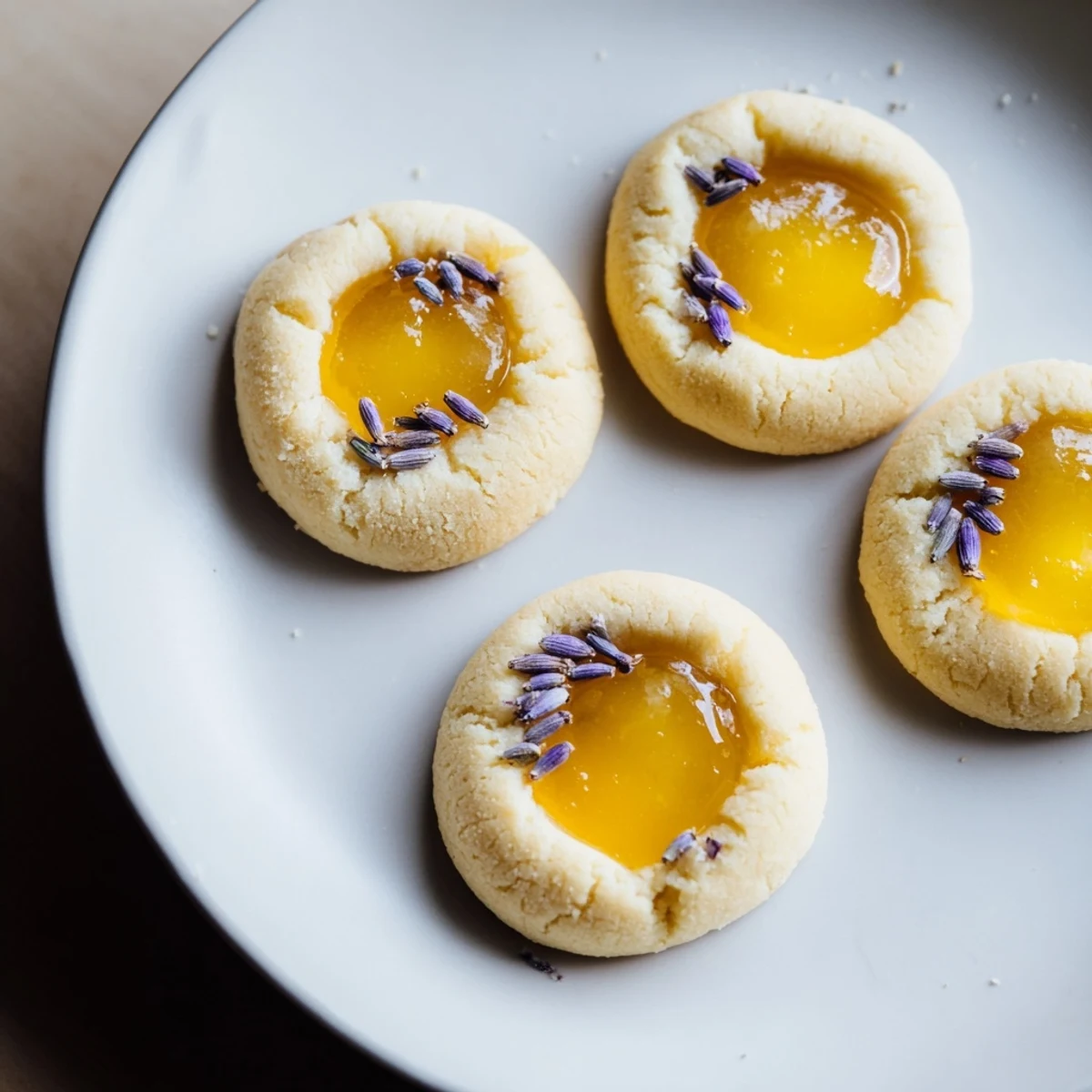
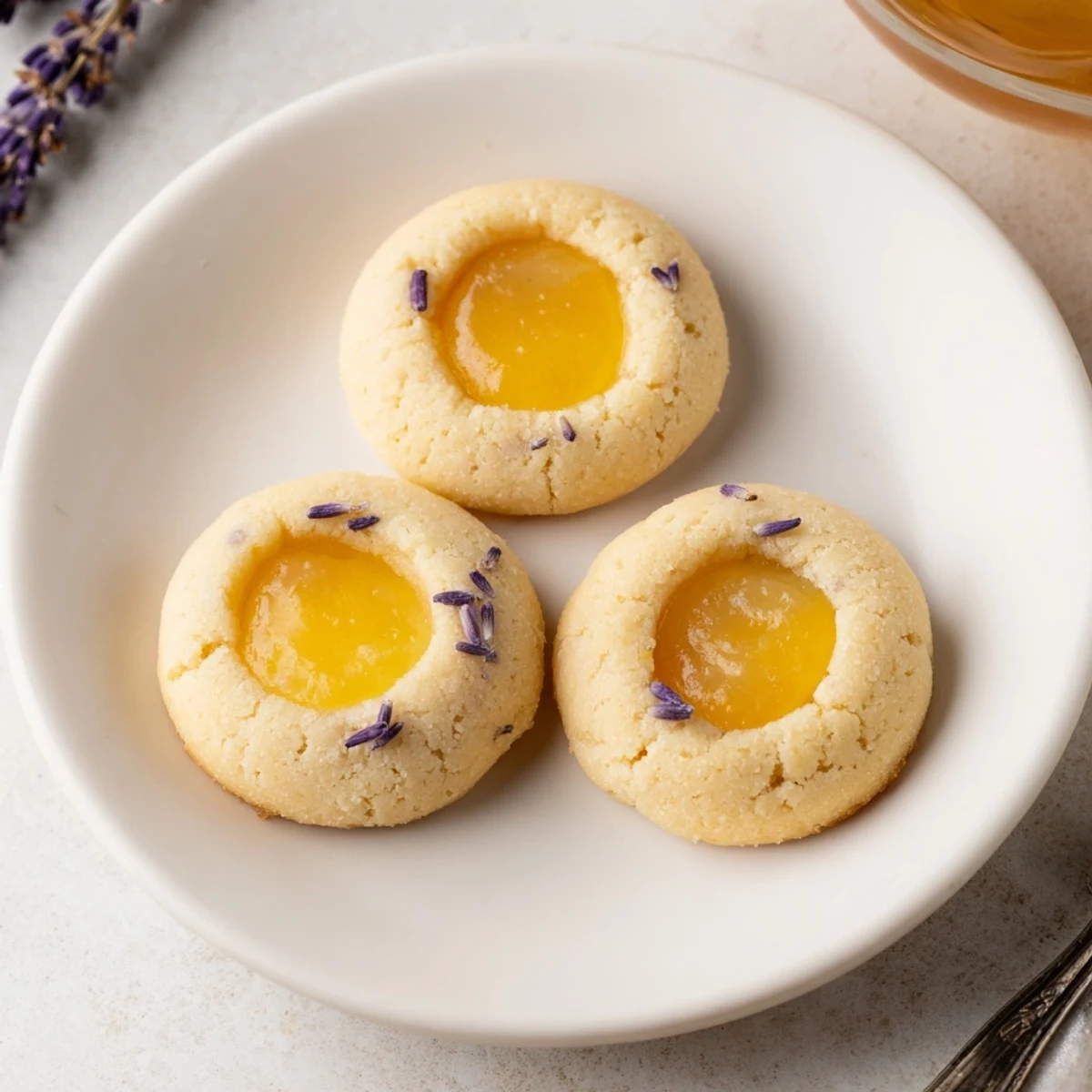
 These delicate thumbprint cookies combine the brightness of fresh lemon with the subtle floral notes of lavender. The buttery dough is infused with lemon zest, juice, and chopped culinary lavender, then filled with sweet-tart lemon curd for a beautiful contrast of flavors.
These treats are perfect for afternoon tea, spring gatherings, or whenever you want something elegant yet approachable. The cookie base is tender and melt-in-your-mouth, while the lemon curd adds a luscious, fruity element that balances the lavender's aromatic qualities.
The first time I baked these, my entire apartment smelled like a French bakery meets a lemon grove. I was experimenting with culinary lavender I had picked up at a specialty market, not entirely sure how it would translate into a cookie. When I pulled them from the oven, that gentle floral perfume mixed with bright citrus made me pause right there in my kitchen.
I made a batch for my mothers birthday last spring, and she spent the entire afternoon calling them little suns in her mouth. We sat on her back porch with tea, watching the garden bloom, and she made me promise to write down the recipe before I forgot what Id thrown together. Now theyre the cookie she requests for every special occasion, no matter how small.
Ingredients
- All purpose flour: The structure for these delicate cookies, dont pack it down when measuring or theyll turn dense instead of tender
- Baking powder: Just enough lift to give the cookies a slightly puffed edge while keeping centers soft
- Salt: A crucial pinch that balances the sweetness and wakes up the lavender flavor
- Unsalted butter: Use truly room temperature butter, it should give slightly when pressed but not feel greasy or melty
- Granulated sugar: Cream this thoroughly with the butter, those air pockets are what make the cookie texture melt in your mouth
- Egg yolk: The extra yolk creates richness and helps the cookies hold their shape while staying tender
- Lemon zest: Grate this directly into your sugar before creaming, the oils will infuse throughout the entire dough
- Fresh lemon juice: Adds brightness that cuts through the butter and makes the floral notes sing
- Vanilla extract: Pure extract is worth it here, it rounds out all the flavors and adds warmth
- Dried culinary lavender: Chop this finely with a knife so you get little bursts of flavor rather than big crunchy bits, and definitely use culinary grade not craft lavender
- Lemon curd: Homemade is wonderful but a good quality store bought version works perfectly, just make sure its thick enough to hold its shape
Instructions
- Preheat your oven:
- Get it to 350°F and line two baking sheets with parchment paper, having everything ready before you start baking makes the whole process feel calm
- Whisk the dry ingredients:
- Combine flour, baking powder, and salt in a medium bowl, set this aside while you work on the butter mixture
- Cream the butter and sugar:
- Beat them together for a full 2 to 3 minutes until the mixture looks pale and fluffy, this step is worth every second
- Add the flavorings:
- Mix in the egg yolk, lemon zest, lemon juice, and vanilla until everything is fully combined and the mixture looks smooth and glossy
- Incorporate the flour:
- Gradually add the dry ingredients, mixing just until you no longer see streaks of flour, overworking here makes tough cookies
- Fold in the lavender:
- Gently fold the chopped lavender by hand until its evenly distributed, take a moment to appreciate how beautiful speckled dough looks
- Shape the cookies:
- Scoop rounded tablespoons of dough and roll them into balls, place them 2 inches apart on your prepared baking sheets
- Make the thumbprints:
- Press your thumb gently into the center of each ball, or use the back of a teaspoon for a more uniform shape, creating a nice little well for the filling
- First bake:
- Bake for 10 minutes, then remove and quickly press the centers down again if theyve puffed up too much
- Fill the centers:
- Spoon about half a teaspoon of lemon curd into each indentation, being careful not to overfill or it will spill during the second bake
- Finish baking:
- Return to the oven for 2 more minutes until edges are barely golden, theyll continue cooking on the hot pan
- Cool completely:
- Let them rest on the baking sheet for 5 minutes, then transfer to a wire rack, the lemon curd needs to set before serving
 Pin Recipe
 Last summer, my neighbor asked what smelled so wonderful and I ended up bringing over a plate still warm from the oven. We sat on her front steps in the golden evening light, eating cookies and talking about how sometimes the simplest recipes end up meaning the most. She still asks about them whenever we both happen to be outside watering flowers.
Making These Your Own
The beauty of this dough base is how wonderfully it adapts to different flavor combinations while maintaining that perfect tender crumb. I have experimented with substituting the lemon for orange and the lavender for fresh thyme, which creates something entirely different yet equally charming. Consider using different fruit curds in the center, or even chocolate ganache for those who prefer something richer.
The Lavender Factor
Not all lavender is created equal, and I learned this the hard way after using lavender meant for sachets that turned my first batch unbearably perfumed. Culinary lavender is grown specifically for eating and has a much more subtle, pleasant flavor that complements rather than overpowers. If you are unsure about floral flavors, start with half the amount and work your way up as your palate adjusts.
Storage and Sharing
These cookies are best within the first two days, when the edges are still slightly crisp and the centers remain creamy. Layer them between parchment paper in an airtight container, and avoid stacking them directly on top of each other or the lemon curd will stick to the bottom of the next cookie. They freeze beautifully unbaked, simply shape and indent them, freeze on a baking sheet, then transfer to a freezer bag and bake from frozen adding a minute or two to the baking time.
- Package a few in a small box with a tea bag for an instant thoughtful gift
- The dough balls can be frozen for up to three months for fresh baked cookies anytime
- If transporting these, let them cool completely and handle them gently as the lemon curd centers can become soft in warm weather
 Pin Recipe
 I hope these cookies find their way into your kitchen and become part of your own collection of small moments worth savoring. There is something deeply satisfying about creating something so lovely from such simple ingredients.
Recipe FAQs
- → Can I make these cookies ahead of time?
-
Yes, you can prepare the dough and refrigerate it for up to 2 days before baking. Store baked cookies in an airtight container for up to 3 days, though they're best enjoyed within the first day or two.
- → What if I don't have culinary lavender?
-
You can substitute with lavender extract (use sparingly) or omit it entirely for classic lemon thumbprint cookies. Alternatively, try other floral elements like rose water or orange blossom water.
- → Can I use homemade lemon curd?
-
Absolutely! Homemade lemon curd works beautifully and often has a fresher, brighter flavor. Just ensure it has cooled completely before filling the cookies.
- → Why do I need to reinforce the thumbprint after baking?
-
The initial baking causes the dough to puff slightly, which can make the indentations shallower. Gently pressing them again ensures there's enough space to hold the lemon curd filling properly.
- → Can I freeze these cookies?
-
Freeze unfilled dough balls for up to 3 months. Bake from frozen, adding 1-2 minutes to the baking time. Once filled, cookies don't freeze well as the curd texture can change.
