
 Pin Recipe
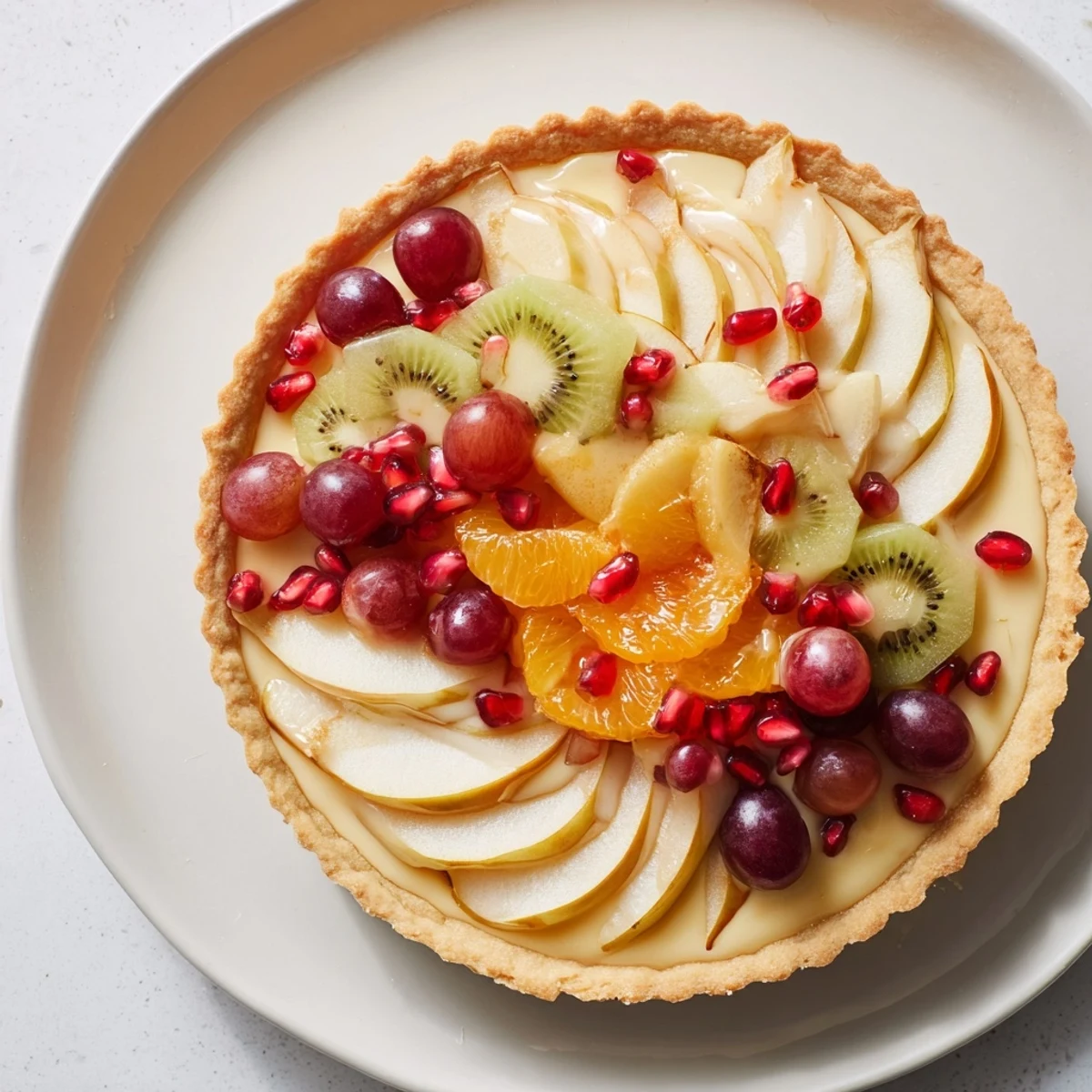
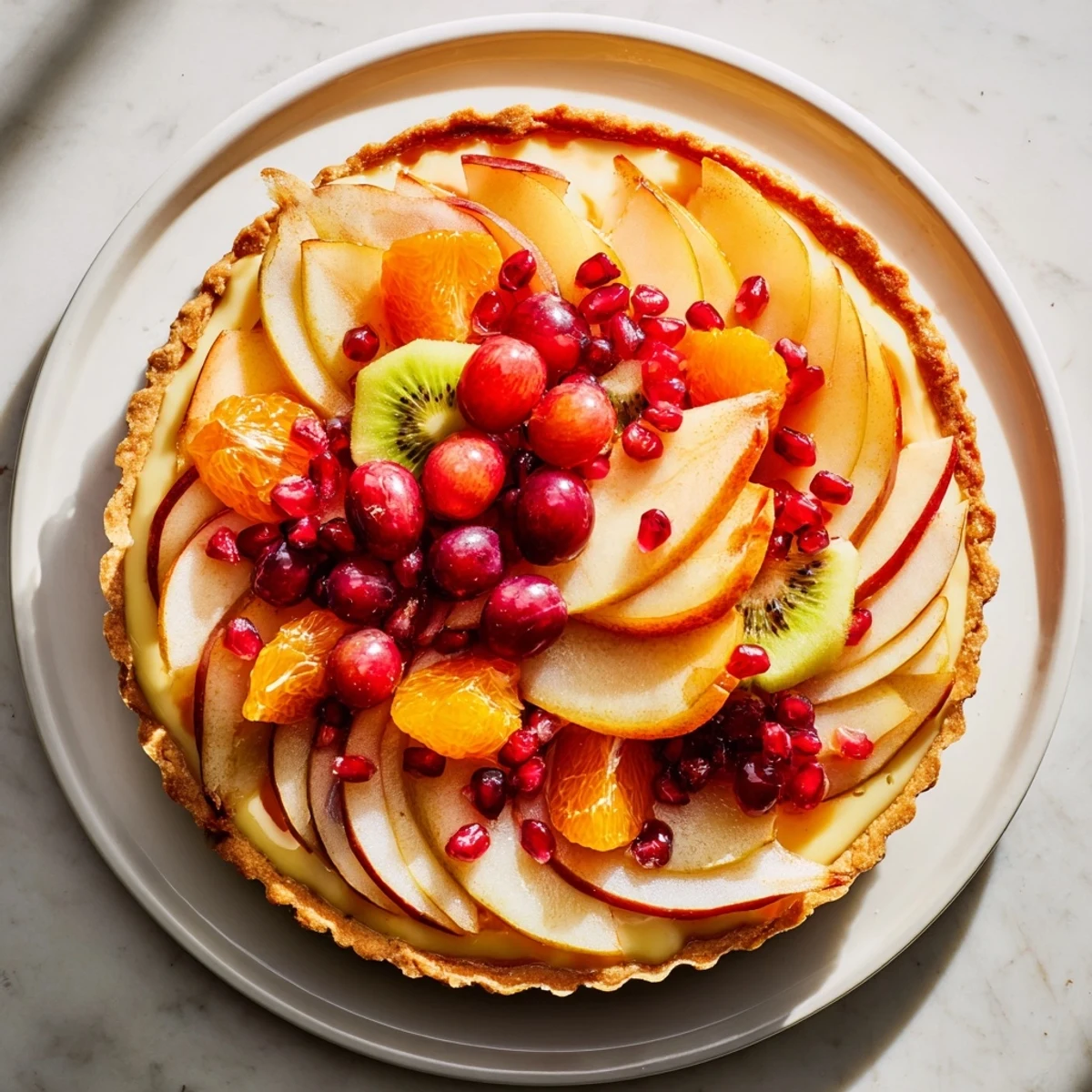
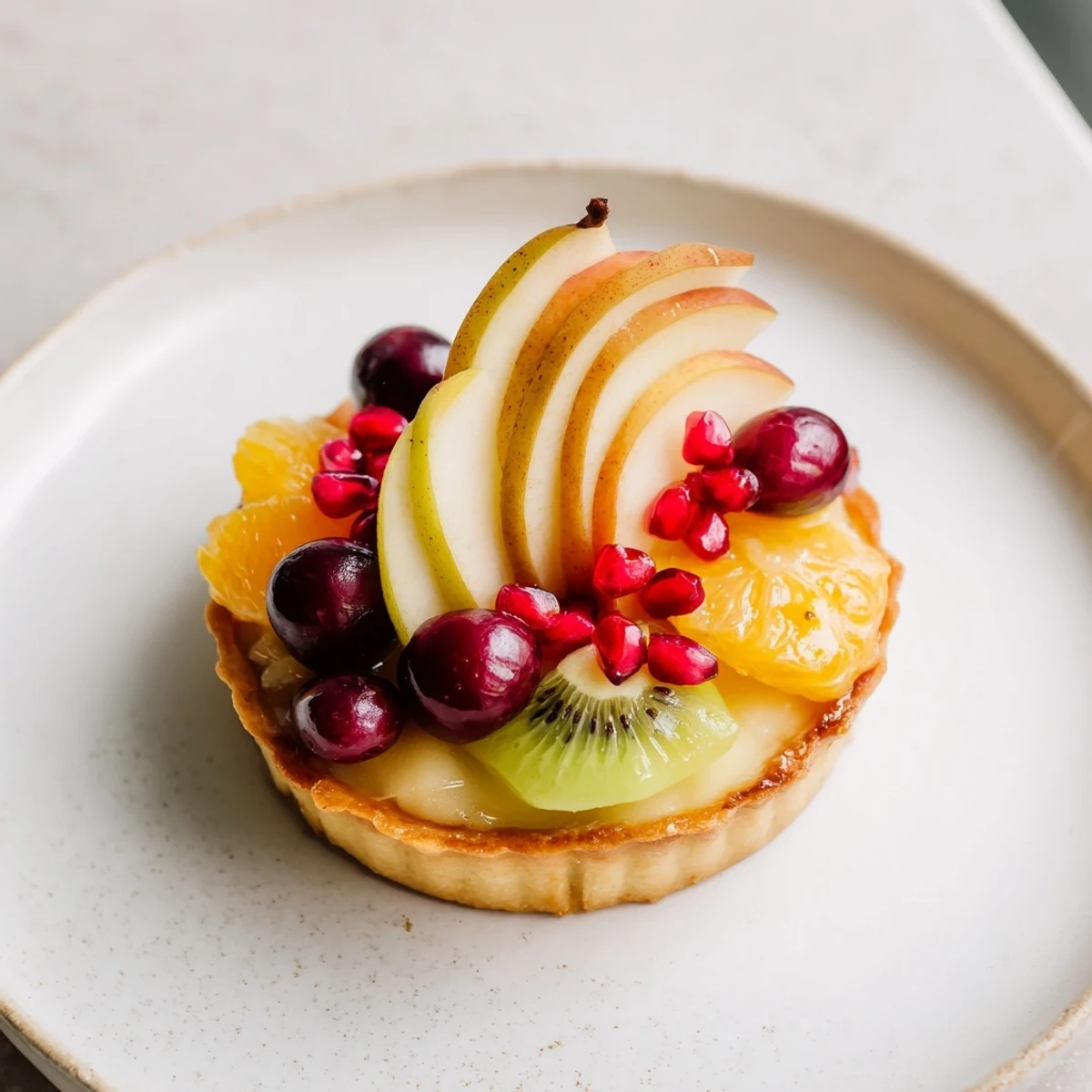
 This tart combines a crisp, buttery pastry shell with rich, velvety custard, crowned by an assortment of fresh winter fruits like pear, apple, grapes, pomegranate, kiwi, and orange. The fruit is glazed with a glossy apricot layer that enhances the natural sweetness and shine. Chilling the tart allows flavors to meld, making it a delightful treat to brighten chilly days with a balance of tartness, creaminess, and freshness. Ideal for medium skill levels, this dessert showcases seasonal produce with a smooth texture and crisp base.
I stumbled onto this tart one gray February afternoon when I had too many pears going soft and a craving for something that didn't taste like storage. The kitchen smelled like butter and vanilla before I even realized I was making dessert. Now it's the thing I bake when winter feels too long.
My neighbor brought her kids over the first time I made this and they fought over who got the slice with the most pomegranate seeds. I hadn't even thought about it being pretty until I saw them leaning over the pan, quiet for once. That's when I realized this wasn't just another tart.
Ingredients
- All-purpose flour: The backbone of the crust, and you want it cold so the butter stays in chunks until it hits the oven.
- Unsalted butter: Cold and cubed is non-negotiable or you'll end up with greasy dough instead of flaky pastry.
- Granulated sugar: Just enough to keep the crust from tasting flat without making it cookie-sweet.
- Egg yolk: Adds richness and helps the dough hold together without getting tough.
- Cold water: Use it sparingly, dough should be shaggy but willing to press into a disk.
- Whole milk: The base of the pastry cream, and whole milk is worth it for the silky texture.
- Cornstarch: This is what thickens the cream fast and keeps it smooth without scrambling the eggs.
- Vanilla extract: A teaspoon is plenty, it should whisper not shout.
- Pear and apple: Slice them thin so they lay flat and don't topple when you cut the tart.
- Pomegranate arils: They add little bursts of tart juice that wake up every bite.
- Apricot jam: Warmed with a splash of water, it becomes the glaze that makes everything shine.
Instructions
- Mix the dough:
- Rub the cold butter into the flour with your fingertips until it looks like wet sand with a few pea-sized bits still visible. Add the yolk and water, then press it together without kneading or it'll get tough.
- Chill and roll:
- Thirty minutes in the fridge makes the dough easy to roll without sticking. Flour your counter lightly and roll from the center out, turning the dough a quarter turn every few passes.
- Blind bake the shell:
- Press the dough into your tart pan, prick the bottom all over, then line it with parchment and fill with dried beans or rice. This keeps it flat and crisp instead of puffed and soggy.
- Cook the pastry cream:
- Whisk the hot milk into the yolk mixture slowly so the eggs don't curdle, then cook it over medium heat while stirring nonstop until it thickens enough to coat the back of a spoon. It happens fast, usually around three minutes, so don't walk away.
- Assemble and glaze:
- Spread the cooled cream into the cooled shell, then arrange your fruit however feels right. Brush the warm apricot glaze over everything gently so the fruit glistens without getting soupy.
 Pin Recipe
 I made this for a dinner party once and forgot to chill it long enough, so the cream was still a little warm when I served it. No one cared. They ate it anyway and one friend asked for the recipe before she even finished her slice.
Choosing Your Fruit
Winter fruit doesn't have the drama of summer berries but it has its own quiet beauty. Pears and apples hold their shape, citrus adds sharp brightness, and pomegranate gives you those little jewel-like pops of color. I've used persimmons when I could find them and they were perfect, almost honey-sweet against the vanilla cream.
Making It Ahead
You can bake the shell and make the pastry cream the day before, then assemble everything the morning you need it. The fruit stays brighter that way and the cream doesn't weep. Just keep them covered separately in the fridge and don't glaze until right before serving or it gets sticky.
Serving and Storing
This tart is best the day you make it but it will keep in the fridge for two days if you cover it loosely. The crust softens a bit but the flavors get friendlier. A dollop of barely sweetened whipped cream on the side makes it feel like more of an occasion.
- Let it sit at room temperature for fifteen minutes before slicing so the cream isn't too firm.
- Use a sharp knife and wipe it between cuts for clean edges.
- Leftover slices make an excellent quiet breakfast with coffee.
 Pin Recipe
 This is the kind of dessert that makes winter feel less like waiting and more like its own season worth paying attention to. I hope it does the same for you.
Recipe FAQs
- → How do I achieve a crisp pastry shell?
-
Use cold butter and minimal water when mixing the dough to ensure flakiness. Chill the dough before rolling and bake with weights to prevent puffing for a crisp texture.
- → What is the best way to prepare the custard filling?
-
Whisk egg yolks, sugar, and cornstarch smoothly before gradually adding hot milk. Cook gently while stirring until thickened for a creamy, lump-free custard.
- → Can I substitute the winter fruits with others?
-
Yes, persimmons, citrus, or other seasonal fruits can be used. Choose firm fruits that hold shape well when sliced for a beautiful presentation.
- → How do I make the fruit glaze shiny and appealing?
-
Warm apricot jam with a little water until smooth, strain if desired, and gently brush over the arranged fruit to add a glossy finish.
- → Why is chilling the tart important before serving?
-
Chilling sets the custard firmly and allows the flavors of the fruit and glaze to meld, resulting in a balanced, refreshing dessert.
