
 Pin Recipe
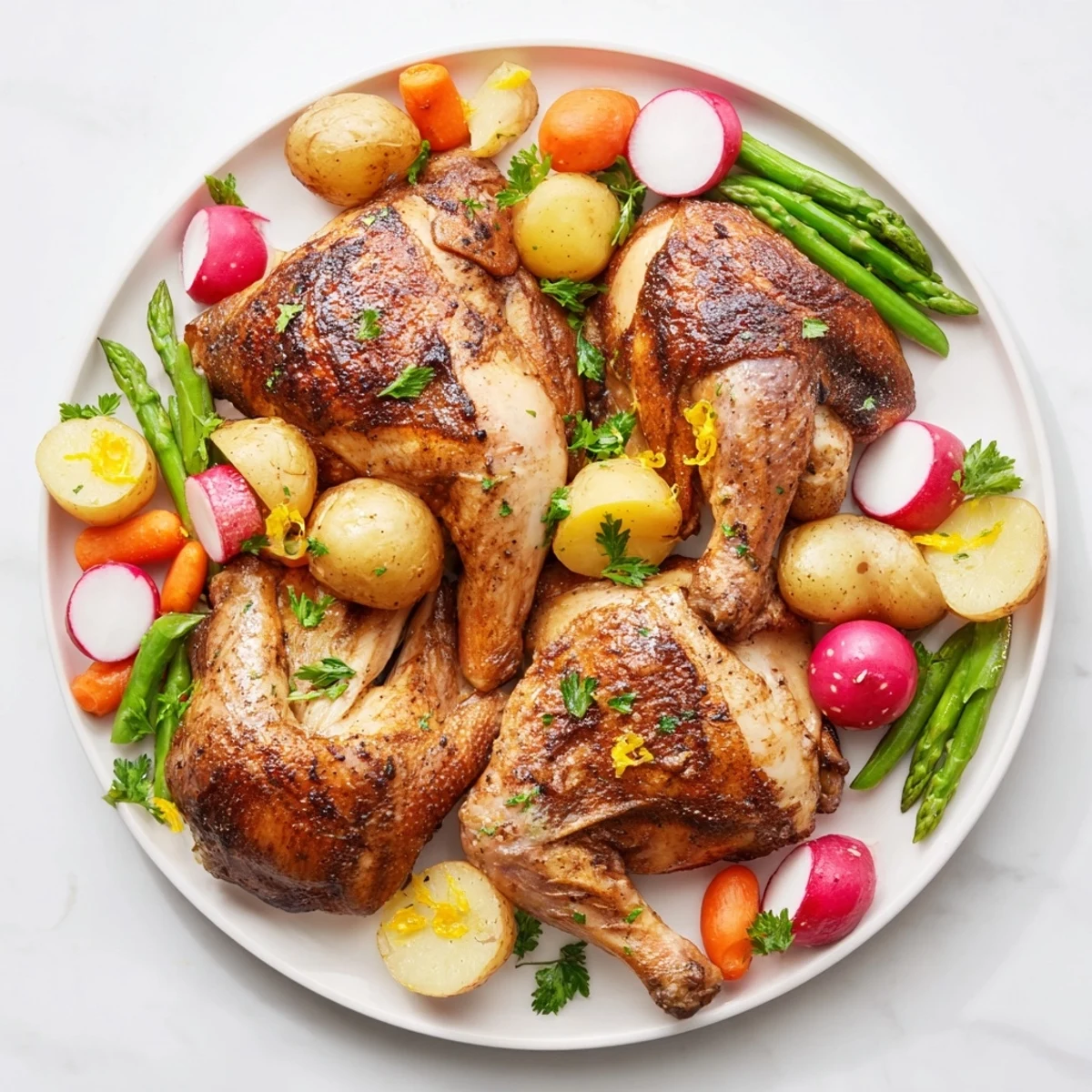
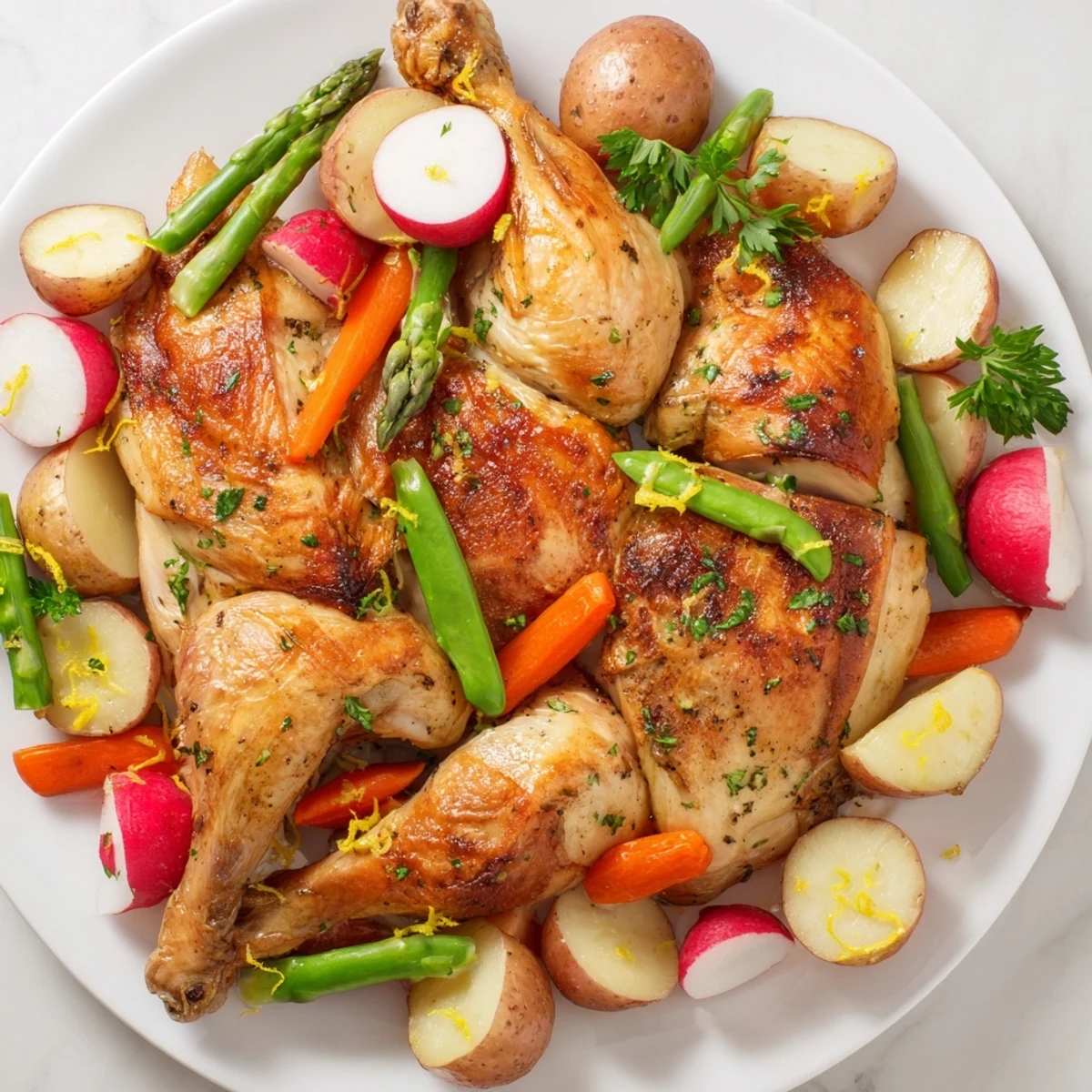
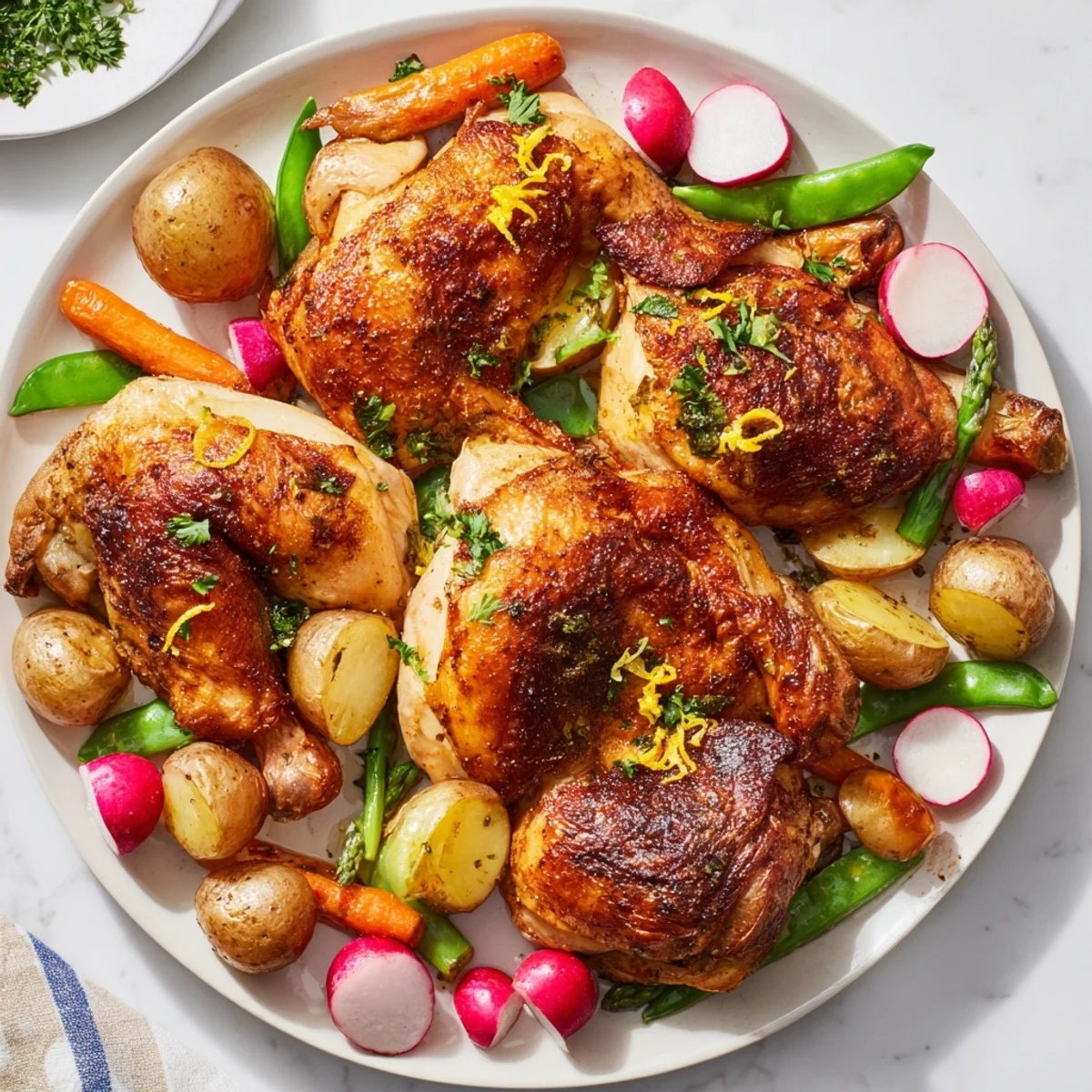
 This dish features a whole chicken rubbed with olive oil, salt, and pepper, stuffed with lemon, garlic, rosemary, and thyme. The chicken is roasted alongside baby potatoes, carrots, radishes, snap peas, and asparagus, resulting in a balanced and aromatic meal. The roast is finished with fresh parsley and lemon zest, offering bright, fresh flavors that complement the tender chicken and seasonal vegetables. Ideal for a gluten-free main course with moderate preparation time.
The first time I made this roasted chicken, I had forgotten to buy fresh herbs until the very last minute. A neighbor's overgrown garden saved me, and those wild, untamed sprigs ended up creating the most fragrant bird I'd ever pulled from my oven. Now I always keep extra rosemary and thyme on hand, just in case inspiration strikes or memory fails.
I served this to my family during our first spring gathering after a long gray winter, and the way the radishes turned sweet and nutty in the oven caught everyone by surprise. Even my vegetable skeptical nephew reached for seconds of those pink gems, asking what made them taste so good. Sometimes the simplest preparations create the most memorable meals.
Ingredients
- 1 whole chicken: A 3.5 to 4 pound bird feeds four people beautifully and fits perfectly in most roasting pans
- 2 tbsp olive oil: This helps the skin crisp up while keeping the meat incredibly moist underneath
- 2 tsp kosher salt: Don't skimp here as proper seasoning is the difference between memorable and forgettable roasted chicken
- 1 tsp freshly ground black pepper: Freshly cracked gives you aromatic warmth that preground simply cannot match
- 1 lemon: The citrus brightens everything from inside the cavity and cuts through the richness
- 4 garlic cloves: Smash them gently to release their oils and they'll mellow into sweet nuggets as they roast
- 3 sprigs fresh rosemary: Piney and assertive, rosemary holds up beautifully to high heat cooking
- 4 sprigs fresh thyme: Earthy and delicate, thyme complements the stronger rosemary without overpowering
- 1 lb baby potatoes: Halved so they roast through and become creamy inside with crispy exteriors
- 1 bunch small carrots: Spring carrots are naturally sweet and roast up tender yet with pleasant structure
- 1 bunch radishes: Roasting completely transforms their peppery bite into something mild and almost sweet
- 1 cup sugar snap peas: Add these late so they keep their bright crunch and vivid green color
- 1 cup asparagus: Cut into pieces for easy serving and quick cooking alongside the peas
- 2 tbsp fresh parsley: Sprinkled at the end for a fresh herbal finish that brightens the whole plate
- Zest of 1 lemon: The final spark that makes all the roasted flavors sing together
Instructions
- Preheat your oven to 425°F (220°C)
- This high temperature creates the gorgeous golden brown skin everyone fights over at the table
- Prep the chicken
- Pat it completely dry with paper towels as any moisture will prevent that crispy skin we all want, then rub it all over with olive oil, salt, and pepper
- Stuff the cavity
- Cram the lemon halves, smashed garlic cloves, rosemary, and thyme inside the chicken where they'll infuse the meat from within
- Position your chicken
- Place the bird breast side up in a large roasting pan or oven proof skillet, giving it plenty of room to breathe
- Toss the hard vegetables
- In a bowl, coat potatoes, carrots, and radishes with olive oil, salt, and pepper, then scatter them around the chicken like a colorful vegetable nest
- Begin the roast
- Cook for 50 minutes, basting the chicken once or twice with those precious pan juices that are already forming
- Add tender vegetables
- After 50 minutes, tuck snap peas and asparagus around the bird and return everything to the oven for 20 more minutes
- Check doneness
- The chicken is ready when its juices run clear and a thermometer inserted into the thickest part of the thigh reaches exactly 165°F (74°C)
- Rest before carving
- Let the chicken rest for 10 minutes so those juices redistribute throughout the meat instead of running onto your cutting board
- Finish and serve
- Arrange the carved chicken on a platter surrounded by all those gorgeous roasted vegetables, then shower everything with parsley and lemon zest
 Pin Recipe
 This recipe became my go-to for dinner parties because it looks impressive but requires almost no hands on time. I can chat with guests while it roasts, then pull out a gorgeous centerpiece that makes everyone feel celebrated. Food has this way of turning ordinary evenings into memories we talk about for years afterward.
Getting That Crispy Skin
For extra crispy skin, leave the chicken uncovered in the refrigerator for 1 to 2 hours before roasting. This air drying step is what restaurants do to achieve that irresistible crackle when you bite into it. Just pat it dry again before seasoning and roasting.
Seasonal Swaps
Spring vegetables are wonderful here, but don't hesitate to substitute according to what looks best at your market. Baby turnips, fennel, or pearl onions would all roast beautifully alongside the chicken and might become your new favorite combination.
Wine Pairing and Serving Suggestions
This roasted chicken pairs beautifully with a dry white wine such as Sauvignon Blanc, which complements both the herbs and the sweetness of the roasted vegetables.
- A simple green salad with vinaigrette balances the richness of the roasted chicken
- Crusty bread is perfect for sopping up those precious pan juices at the table
- Cook the vegetables in batches if your roasting pan is crowded so everything browns properly
 Pin Recipe
 There's something deeply satisfying about a perfectly roasted chicken, the kind of meal that makes your kitchen feel warm and welcoming even before anyone sits down to eat. Enjoy every bite.
Recipe FAQs
- → What temperature should the oven be set for roasting?
-
Preheat your oven to 425°F (220°C) for optimal roasting results.
- → How can I ensure the chicken skin is crispy?
-
Leave the chicken uncovered in the refrigerator for 1–2 hours before roasting to help the skin crisp up.
- → Which vegetables are best for roasting alongside the chicken?
-
Baby potatoes, carrots, radishes, sugar snap peas, and asparagus complement the chicken beautifully.
- → How do I know when the chicken is fully cooked?
-
The chicken is done when its juices run clear and a thermometer inserted into the thickest part reads 165°F (74°C).
- → Can I substitute the spring vegetables with others?
-
Yes, seasonal substitutes like baby turnips, fennel, or pearl onions work well with this dish.
- → What herbs are used to flavor the chicken?
-
Fresh rosemary, thyme, garlic, and lemon provide a fragrant and savory flavor profile.
