
 Pin Recipe
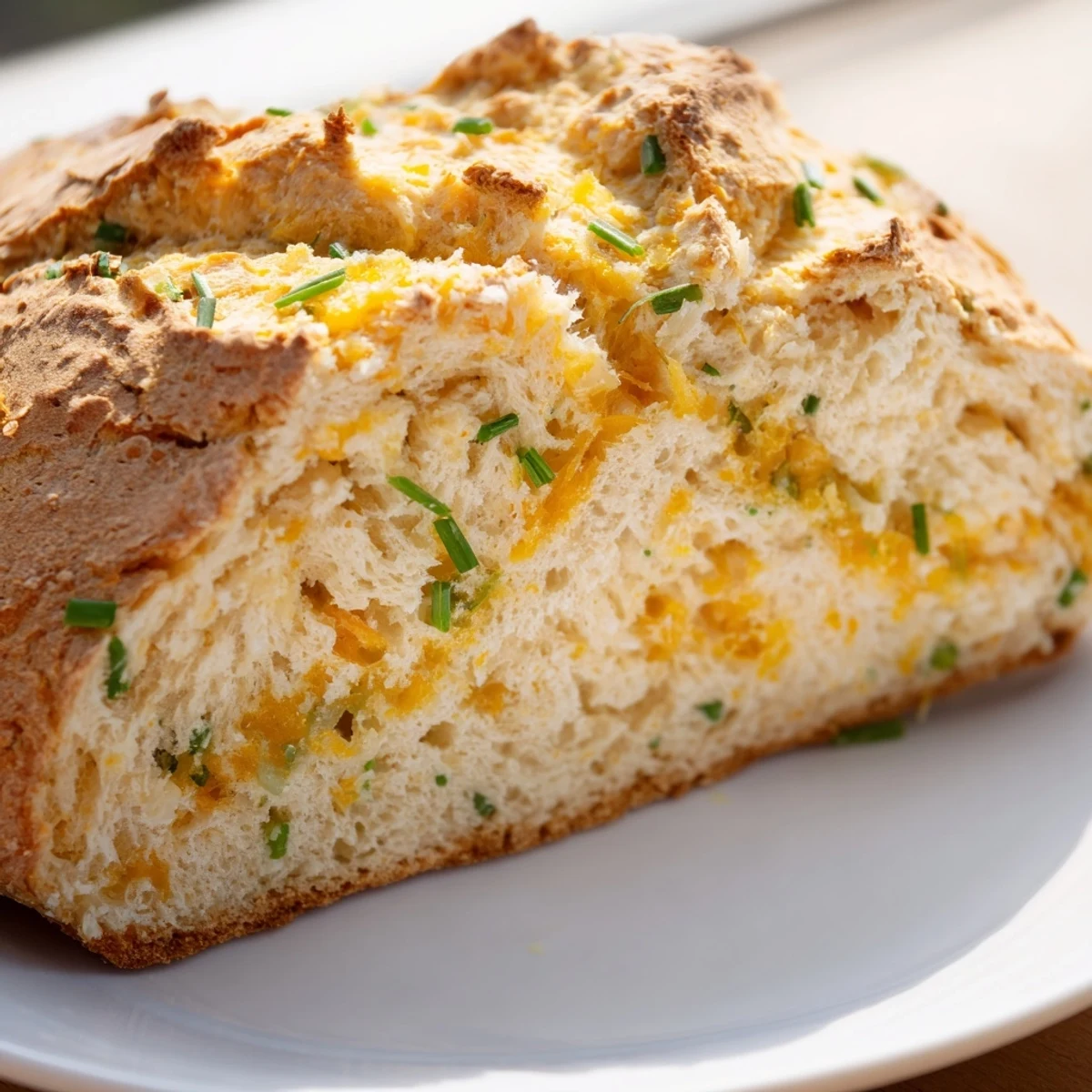
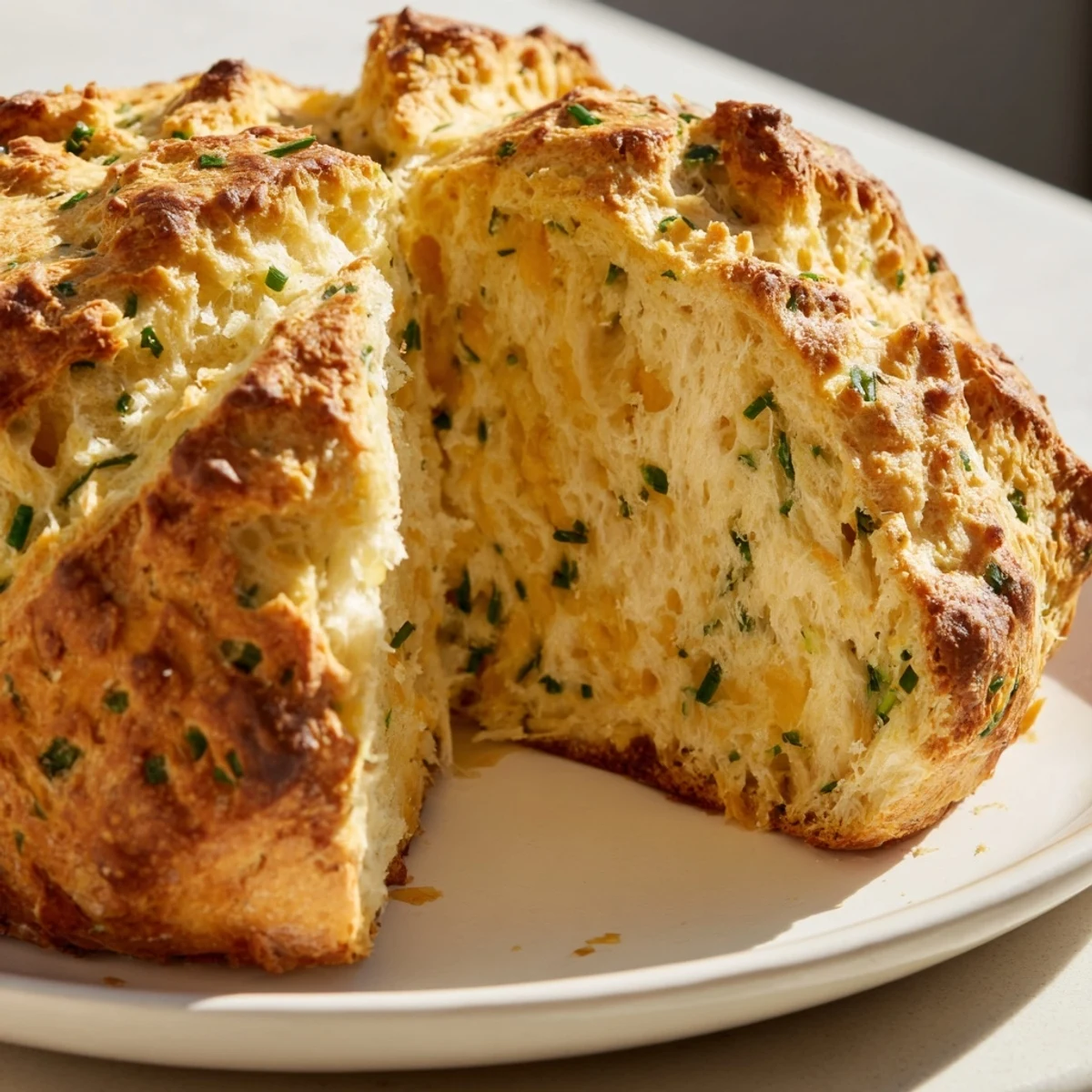
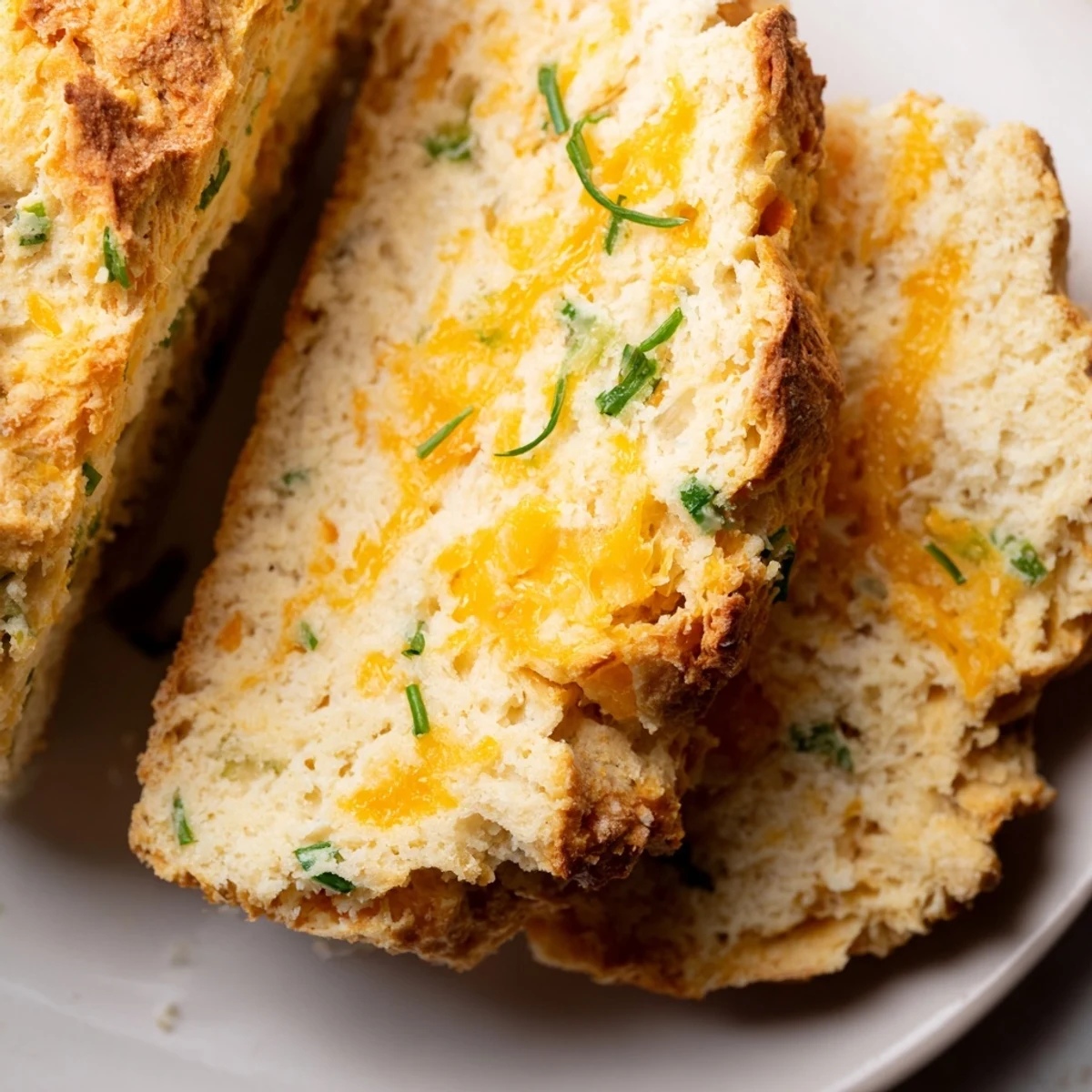
 This Irish soda bread blends sharp cheddar and fresh chives for a flavorful, savory loaf. Quick to prepare, it offers a tender crumb and a golden, cheesy crust that pairs well with butter, soups, or stews. The dough is simple, made from flour, baking soda, buttermilk, and melted butter, mixed gently to maintain a delicate texture. Baking yields a hearty, rustic bread perfect for a comforting accompaniment or a rustic breakfast.
The snow was falling sideways that Saturday when I decided my apartment needed to smell like a bakery. My grandmother had warned me about soda bread, how it needed respect more than skill, but I was twenty-two and impatient. When that first loaf came out of the oven with its dramatic X still scored across the top, I understood what she meant. The crumb was tender, the crust had that perfect resistance, and suddenly the weather outside didnt matter anymore.
Last March, my friend Sarah showed up with containers of beef stew after a rough week. I threw together this bread while she talked, and we ended up standing in the kitchen tearing pieces off the still-warm loaf. She paused mid-sentence after that first bite, looked at me with wide eyes, and asked if Id been hiding bread-making skills all along. The stew was forgotten for twenty minutes while we devoured half the loaf.
Ingredients
- 3 1/2 cups all-purpose flour: The structure holding everything together. Room temperature flour produces a more tender crumb.
- 1 tsp baking soda: Your leavening agent. Make sure its fresh, otherwise the bread wont rise properly.
- 1 tsp fine sea salt: Enhances all the flavors. Use salt youre comfortable tasting raw in the dough.
- 1/2 tsp freshly ground black pepper: A subtle warmth that plays beautifully against the sharp cheddar.
- 1 1/2 cups sharp cheddar cheese, coarsely grated: Coarse grating means better distribution and more distinct cheese pockets throughout.
- 1/3 cup fresh chives, finely chopped: Fresh is nonnegotiable here. The mild sweetness balances the rich cheese.
- 1 3/4 cups buttermilk: The acidity activates the baking soda. Add more if the dough feels dry.
- 2 tbsp unsalted butter, melted and cooled: Adds richness to the crumb and helps with browning.
Instructions
- Prepare your oven and pan:
- Preheat to 400°F and line a baking sheet with parchment. A hot oven is nonnegotiable for proper oven spring.
- Mix the dry foundation:
- Whisk together flour, baking soda, salt, and pepper in a large bowl until thoroughly combined.
- Add the cheese and chives:
- Stir in the grated cheddar and chopped chives until evenly distributed throughout the flour mixture.
- Bring the dough together:
- Make a well in the center and pour in the buttermilk and melted butter. Mix with a wooden spoon until a shaggy dough forms.
- Shape the loaf gently:
- Turn onto a floured surface and lightly knead just until it holds together. Shape into a 7-inch round.
- Score and bake:
- Transfer to the baking sheet and cut a deep X across the top. Bake 30 to 35 minutes until deeply golden and hollow-sounding when tapped.
- Cool before slicing:
- Let rest on a wire rack for at least 15 minutes. Cutting while hot will make the crumb gummy.
 Pin Recipe
 My sister called me at midnight once, asking if I could describe the smell of baking bread. I told her it smells like comfort, like somewhere you belong. When she visited the next weekend, I made this cheddar version while she slept. She woke up and followed the scent to the kitchen in her pajamas, and we ate warm slices with butter at the counter without saying a word. Some meals dont need conversation.
Choosing Your Cheese
Sharp cheddar has enough personality to stand up to the soda breads mild tang. I once used mild cheddar and the bread felt flat, like something was missing. The extra bite of sharp cheese creates this beautiful contrast that keeps every slice interesting. Orange or white cheddar both work perfectly.
Buttermilk Substitutions
If you dont have buttermilk, measure 1 3/4 cups of regular milk and add 1 tablespoon of white vinegar. Let it sit for five minutes until it thickens slightly. The acidity is crucial for activating the baking soda. Without it, your bread will be dense and heavy instead of light and tender.
Storage and Serving
This soda bread is at its absolute best within four hours of baking. The crust softens over time, but a quick refresh in a 350°F oven for five minutes brings back some of that original crunch. I keep leftover slices wrapped in a clean kitchen towel rather than plastic, which prevents the crust from getting soggy.
- Wrap cooled bread in a clean kitchen towel, never plastic.
- Freeze individual slices wrapped tightly and reheat in the toaster.
- Serve warm with salted butter alongside hearty soups or stews.
 Pin Recipe
 Theres something deeply satisfying about pulling a warm loaf from the oven and watching the steam rise. This bread reminds me that sometimes the simplest recipes are the ones that stay with you longest.
Recipe FAQs
- → What makes this bread different from traditional Irish soda bread?
-
The addition of sharp cheddar cheese and fresh chives enhances the flavor, giving the loaf a savory, cheesy twist beyond the classic plain version.
- → Can I substitute green onions for chives?
-
Yes, green onions can be used as an alternative to chives to give a slightly different but still fresh and mild onion flavor.
- → How do I know when the bread is fully baked?
-
The loaf should be deeply golden and sound hollow when tapped on the bottom, which indicates it is baked through properly.
- → Is buttermilk essential for this bread?
-
Buttermilk provides acidity which reacts with baking soda for leavening and adds moisture and tanginess, but you can substitute with milk plus lemon juice or vinegar if necessary.
- → Can this bread be frozen for later use?
-
Yes, once cooled completely, slice and wrap tightly before freezing. Thaw at room temperature and warm slightly before serving.
